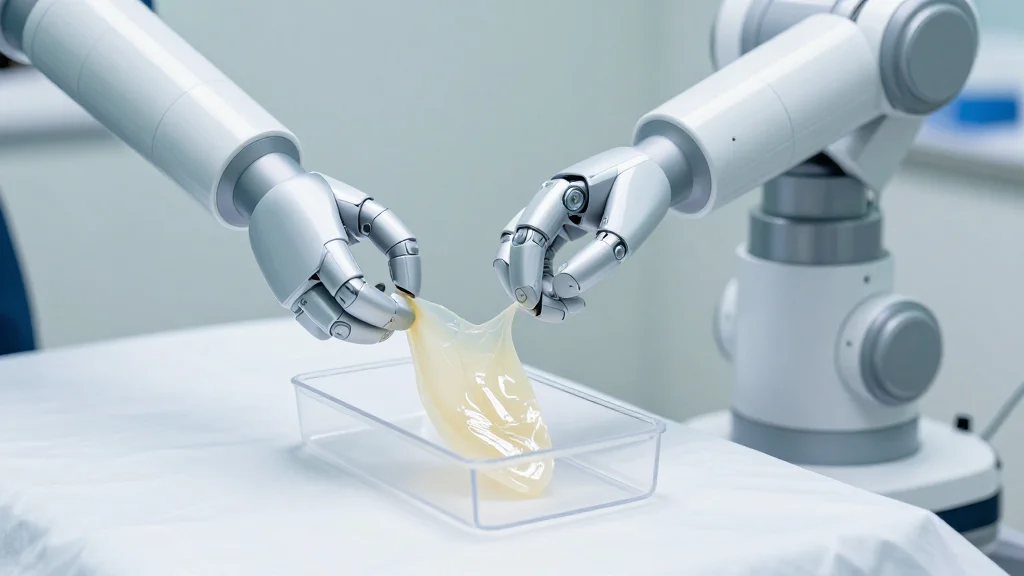
Clarapath Unveils TrimStar Pro, a Compact FDA‑Registered Robotic Microtomy System

Why It Matters
TrimStar Pro could reshape the economics of histology labs by delivering automation benefits—speed, consistency, and reduced labor—at a price point accessible to mid‑size facilities. Faster, more reliable tissue preparation directly influences diagnostic turnaround, which in turn affects treatment decisions and patient outcomes. Moreover, the modular upgrade path encourages incremental capital spending, reducing financial risk for labs navigating tight budgets. By manufacturing the system entirely in the United States, Clarapath also strengthens domestic supply chains for critical pathology equipment, a factor that has gained prominence amid recent global component shortages. The move may prompt competitors to reconsider offshore production models and could spur further innovation in U.S.‑based health‑tech manufacturing.
Key Takeaways
- •Clarapath launched TrimStar Pro, an FDA‑registered robotic microtomy system on May 4, 2026
- •TrimStar Pro’s footprint is roughly half the size of the SectionStar full‑automation platform
- •Modular design allows labs to upgrade to SectionStar without replacing core hardware
- •Built in Clarapath’s ISO 13485‑certified U.S. facility, the only domestic provider in this category
- •Targeted at labs seeking immediate throughput gains and a scalable path to full automation
Pulse Analysis
Clarapath’s TrimStar Pro arrives at a moment when pathology departments are under intense pressure to deliver faster diagnoses while containing labor costs. Historically, automation in histology has been limited to high‑volume academic centers that could absorb the steep price of full‑scale systems like SectionStar. By offering a half‑size, lower‑capital entry point, Clarapath is effectively democratizing robotic microtomy. This mirrors a broader health‑tech trend where manufacturers create tiered ecosystems—think of imaging vendors that sell entry‑level scanners that later feed into advanced AI‑driven analysis suites.
The strategic emphasis on a U.S. manufacturing base also differentiates Clarapath from overseas competitors that rely on Asian supply chains. In a post‑pandemic environment where supply‑chain resilience is a competitive advantage, domestic production may become a selling point for hospitals with strict procurement policies. If Clarapath can secure early adopters and demonstrate measurable gains in turnaround time and reproducibility, it could set a new benchmark that forces rivals to accelerate their own modular offerings.
Looking ahead, the real test will be how quickly labs move from the TrimStar Pro pilot phase to full SectionStar integration. Adoption curves in pathology have traditionally been slow due to regulatory scrutiny and entrenched workflows. However, the combination of FDA registration, a clear upgrade path, and the promise of reduced labor intensity could compress that timeline. Should Clarapath achieve a critical mass of installations by the end of 2026, it may trigger a wave of ancillary software and data‑analytics services, expanding the company’s revenue beyond hardware sales and cementing its position as a platform provider in the evolving digital pathology market.
Clarapath Unveils TrimStar Pro, a Compact FDA‑Registered Robotic Microtomy System
Comments
Want to join the conversation?
Loading comments...