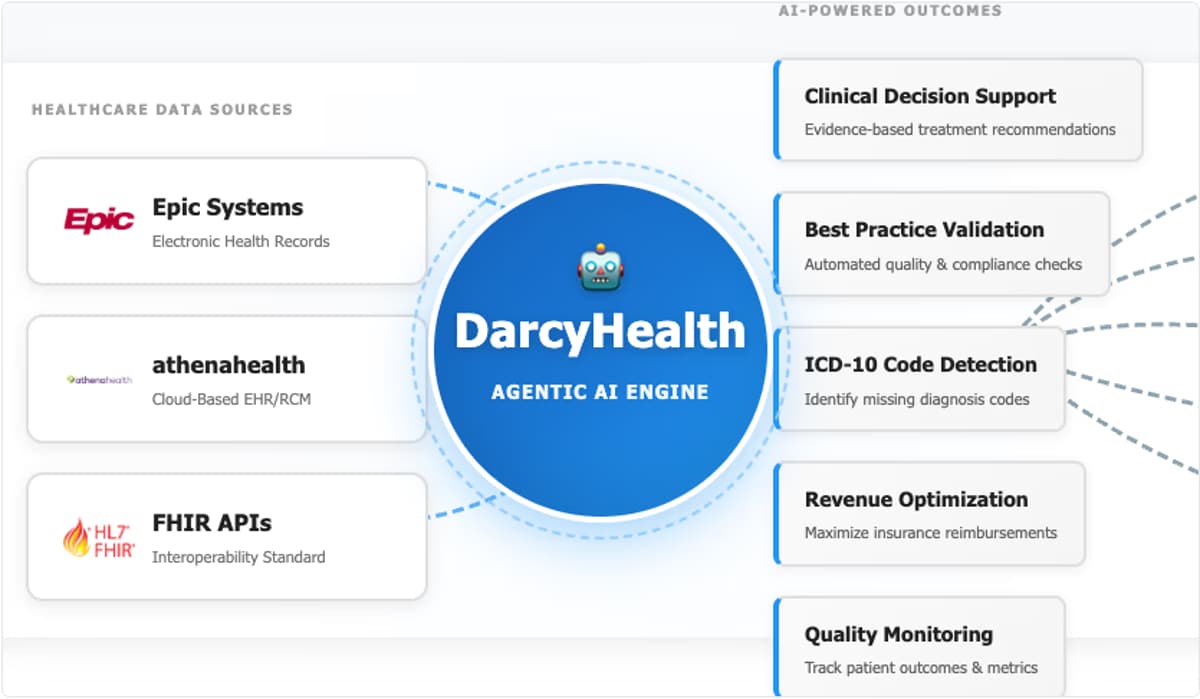
DarcyIQ Integrates with Epic and Athenahealth to Slash Admin Time
•March 3, 2026
0
Why It Matters
By slashing admin overhead and accelerating revenue‑cycle tasks, the integrations boost provider efficiency and profitability, addressing a core bottleneck in U.S. healthcare operations.
Key Takeaways
- •55% admin time reduction via conversational AI.
- •40% faster billing and claims resolution.
- •Secure HIPAA‑aligned integration using Model Context Protocol.
- •Clinicians access charts, scheduling, referrals via natural language.
- •Revenue teams identify denied claims without manual reports.
Pulse Analysis
The rise of conversational AI in healthcare is reshaping how providers manage massive data flows. DarcyIQ’s integration leverages the Model Context Protocol to create a secure bridge between EHRs and natural‑language interfaces, ensuring HIPAA compliance while reducing the cognitive load on staff. This approach reflects a broader industry shift toward AI‑driven workflow automation, where real‑time data retrieval replaces manual navigation, freeing clinicians to focus on patient care rather than software logistics.
For Epic‑based health systems, the new layer acts as a digital liaison between clinical and operational domains. Physicians can summon patient histories, care plans, and scheduling details with a single prompt, while revenue cycle teams query billing modules to surface denied claims and coding anomalies instantly. This dual‑front capability shortens the feedback loop, cuts claim turnaround times, and supports proactive outreach through MyChart insights, directly influencing both clinical outcomes and financial performance.
The athenaOne integration extends these benefits to ambulatory practices, where high‑volume appointment scheduling and revenue leakage are persistent challenges. By allowing staff to create or modify appointments, referrals, and payer communications through voice or text, DarcyIQ reduces manual entry errors and accelerates revenue capture. As healthcare organizations grapple with mounting administrative complexity, such AI‑enabled copilots are poised to become standard infrastructure, driving operational efficiency and setting new benchmarks for AI adoption across the sector.
DarcyIQ Integrates with Epic and athenahealth to Slash Admin Time
0
Comments
Want to join the conversation?
Loading comments...