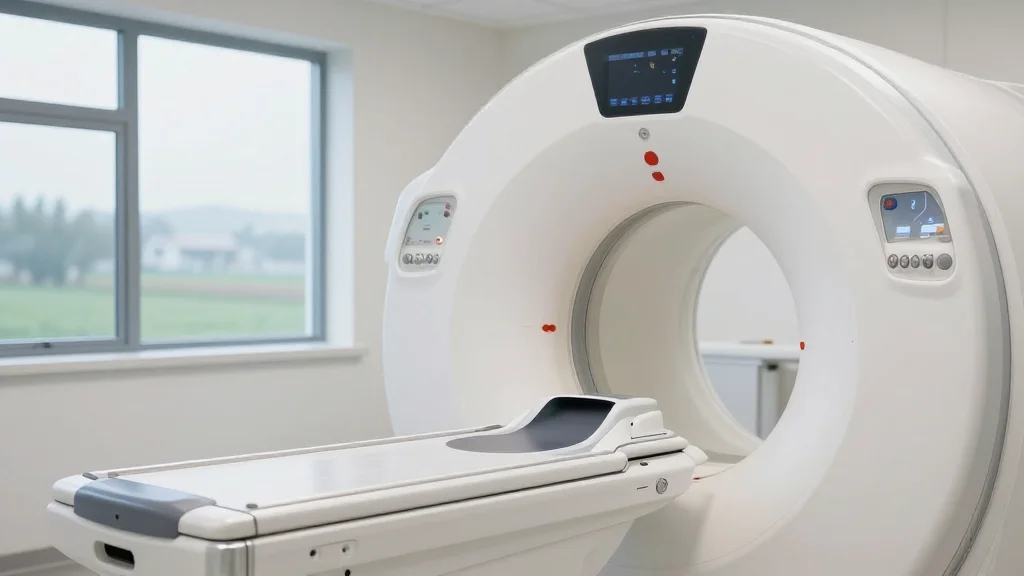
Deaconess Illinois Launches First‑in‑Nation 3‑Tesla MRI, Cutting Scan Times to Under 7 Minutes

Companies Mentioned
Why It Matters
The deployment of a first‑in‑nation 3‑Tesla MRI in a rural hospital signals a shift in how advanced imaging technology is distributed beyond major academic centers. Faster, higher‑resolution scans can shorten diagnostic pathways, leading to earlier treatment and potentially better survival rates for conditions like cancer and multiple sclerosis. Moreover, the project demonstrates how public‑private partnerships—here between a health system, a municipal chamber and a global equipment maker—can accelerate technology diffusion in underserved markets, addressing longstanding disparities in access to cutting‑edge care. By reducing the need for patients to travel to urban tertiary centers, the new MRI also has economic implications. It keeps healthcare dollars within the local economy, supports job creation in imaging services, and may attract ancillary businesses such as outpatient rehab and specialty clinics. If other rural health systems replicate this model, the cumulative effect could reshape the national health‑tech landscape, making high‑performance imaging a standard rather than an exception in community hospitals.
Key Takeaways
- •Deaconess Illinois Medical Center installs first‑in‑nation 3‑Tesla MRI with hardware upgrade
- •Knee scan completed in under seven minutes, showcasing speed advantage
- •Partnership includes GE HealthCare and Marion Chamber of Commerce
- •System expands neuro‑ and vascular imaging capabilities for rural patients
- •Expected to draw referrals from multiple states, boosting regional health access
Pulse Analysis
The Marion MRI rollout underscores a broader trend: manufacturers are increasingly targeting mid‑size and rural hospitals with premium imaging platforms, a market segment traditionally overlooked in favor of large academic centers. GE HealthCare’s willingness to place its flagship 3‑Tesla magnet in a community setting suggests confidence that the economics of high‑throughput scanning can offset the capital outlay, especially when paired with local partnerships that share risk and reward.
Historically, the diffusion of 3‑Tesla MRI has been slow, constrained by cost, space requirements and the need for specialized staff. Deaconess’s collaboration with the Marion Chamber of Commerce indicates a novel financing and community‑engagement model that could lower barriers for similar institutions. By bundling the equipment purchase with local economic development incentives, the hospital mitigates financial exposure while delivering a tangible public‑health benefit.
From a competitive standpoint, the move may pressure neighboring health systems to accelerate their own technology upgrades or risk losing referral volume. As imaging becomes a differentiator for patient acquisition, we can expect a cascade of similar installations, especially in regions where travel distances to tertiary centers are prohibitive. The key question will be whether the increased diagnostic capacity translates into measurable improvements in health outcomes and cost savings, a metric that insurers and policymakers will scrutinize closely in the coming years.
Deaconess Illinois Launches First‑in‑Nation 3‑Tesla MRI, Cutting Scan Times to Under 7 Minutes
Comments
Want to join the conversation?
Loading comments...