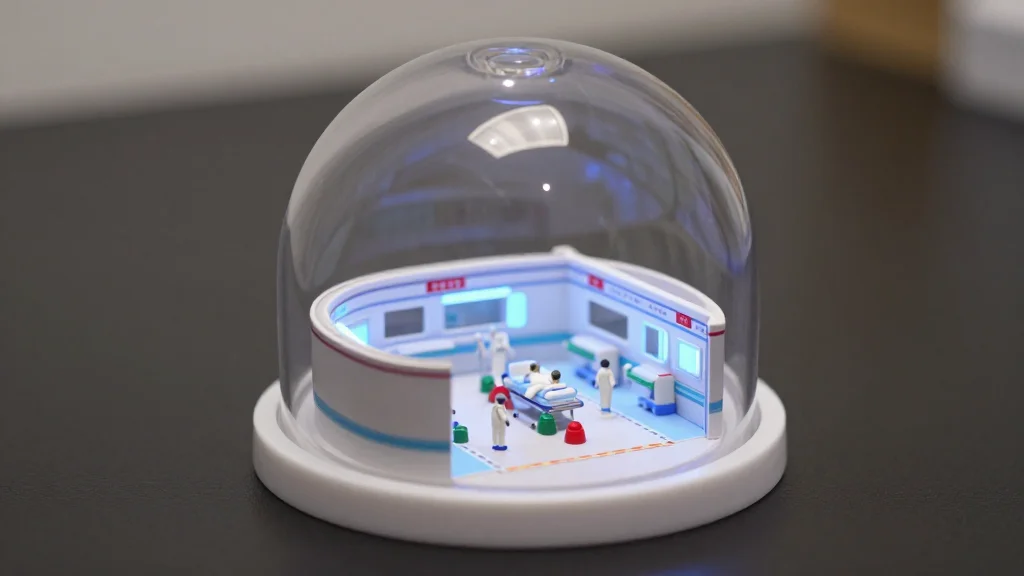
Digital Twin Technology Helps Reduce ED Wait Times
Why It Matters
Accelerating evidence‑based process redesign cuts wait times, boosts patient satisfaction and staff morale, and positions digital twins as a scalable tool for cost‑effective emergency‑care optimization across health systems.
Key Takeaways
- •Digital twin cut average assessment time from 7.7 to 4.5 hours
- •Staggered physician shifts reduced 90th‑percentile wait times
- •Routing more patients to low‑acuity zone accelerated care
- •Transparent productivity boards improved physician performance
- •Model can expand to imaging and inpatient departments
Pulse Analysis
Digital‑twin technology is reshaping hospital operations by turning complex, stochastic patient flows into controllable, data‑driven simulations. SiMLQ’s platform ingests granular event logs—from triage timestamps to staff allocations—and runs thousands of what‑if scenarios in seconds. This capability eliminates the months‑long trial‑and‑error cycles traditionally required to gauge the impact of scheduling or routing changes, allowing administrators to act on solid evidence rather than intuition. In the case of Erie Shores HealthCare, the model identified that physician shift overlap created bottlenecks, prompting a staggered start schedule that compressed the longest waits and lifted overall average assessment times.
Beyond the immediate time savings, the digital twin delivered measurable morale benefits. Staff no longer begin shifts confronting patients who have waited eight hours, reducing frustration and burnout. Transparent productivity dashboards further aligned physician behavior with departmental goals, fostering a culture of continuous improvement. For health systems grappling with rising acuity and limited resources, such tools provide a low‑cost lever to enhance capacity without expanding physical infrastructure, directly supporting performance‑based funding models like Ontario’s Pay‑for‑Results program.
The success at Erie Shores signals a broader shift toward predictive operations management in healthcare. As hospitals adopt similar twins for diagnostic imaging, inpatient flow, and even supply chain logistics, the cumulative effect could be a more resilient, patient‑centric ecosystem. Stakeholders—from policymakers to investors—should watch this space closely, as the convergence of simulation, machine learning and real‑time data promises to unlock efficiencies that were previously unattainable in the high‑stakes environment of emergency medicine.
Digital twin technology helps reduce ED wait times
Comments
Want to join the conversation?
Loading comments...