Elation Health Launches AI Fast Lane to Automate Primary Care Billing Workflows
•March 6, 2026
0
Why It Matters
By automating coding and submission, Elation cuts administrative overhead and boosts cash flow, directly improving clinician productivity and practice profitability.
Key Takeaways
- •72% routine claims generated touchlessly in pilot
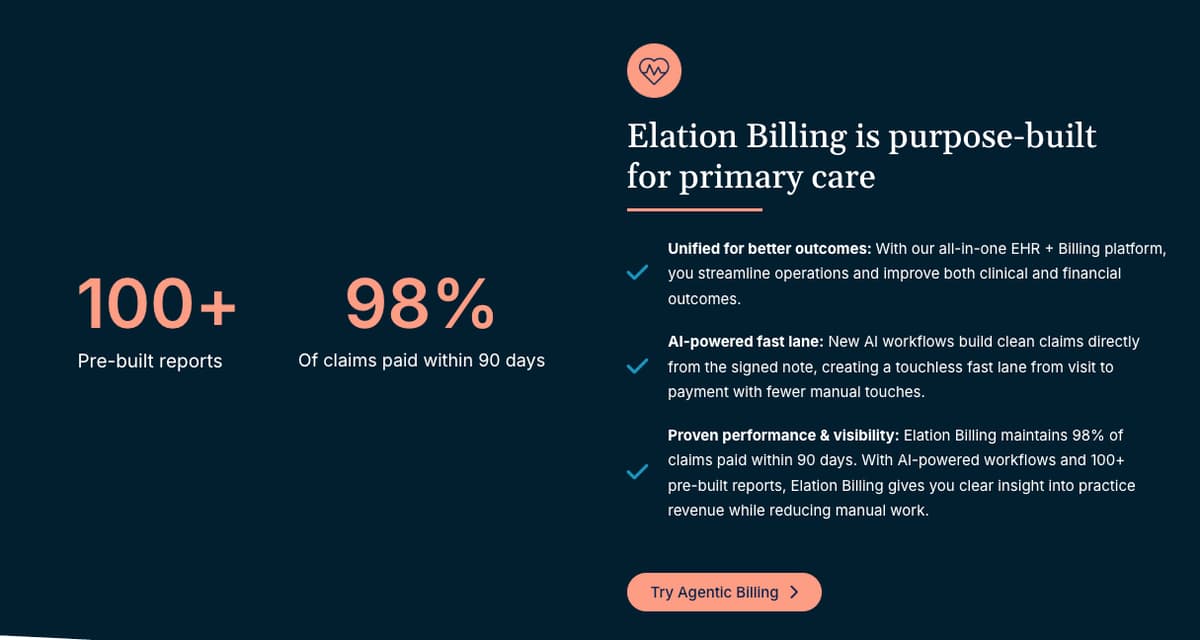
- •Over 95% submitted without manual intervention
- •AI suggests codes using EHR context before billing
- •Fast lane reduces denial rates below 5%
- •Clinicians regain time previously spent on billing
Pulse Analysis
The primary‑care revenue cycle has long suffered from fragmented workflows, with clinicians documenting care in an EHR while billers translate that narrative into CPT and ICD‑10 codes. Elation Health’s new AI Fast Lane collapses that divide by embedding smart coding directly into the clinical chart. Leveraging pre‑visit information, AI‑drafted notes and medication lists, the platform predicts the appropriate codes before a claim is even built, turning a traditionally manual process into a verification step.
Early pilot data underscore the financial upside. Seventy‑two percent of eligible routine claims were created without any human touch, and of those, more than ninety‑five percent sailed through to submission untouched. Those figures translate into sub‑5% denial rates and first‑pass paid rates exceeding ninety‑five percent—benchmarks that place participating practices among the elite in revenue‑cycle performance. The reduction in days sales outstanding and the elimination of repetitive data entry free up clinician time, allowing providers to focus on patient care rather than paperwork.
The broader market is watching as AI‑enabled billing gains traction. If Elation’s model scales, it could pressure legacy EHR and billing vendors to integrate similar capabilities or risk losing market share. However, adoption will hinge on trust in algorithmic coding accuracy and the ability to handle complex, high‑risk claims. Practices that successfully blend AI efficiency with human oversight stand to achieve faster cash cycles, lower administrative costs, and a more sustainable primary‑care workforce.
Elation Health Launches AI Fast Lane to Automate Primary Care Billing Workflows
0
Comments
Want to join the conversation?
Loading comments...