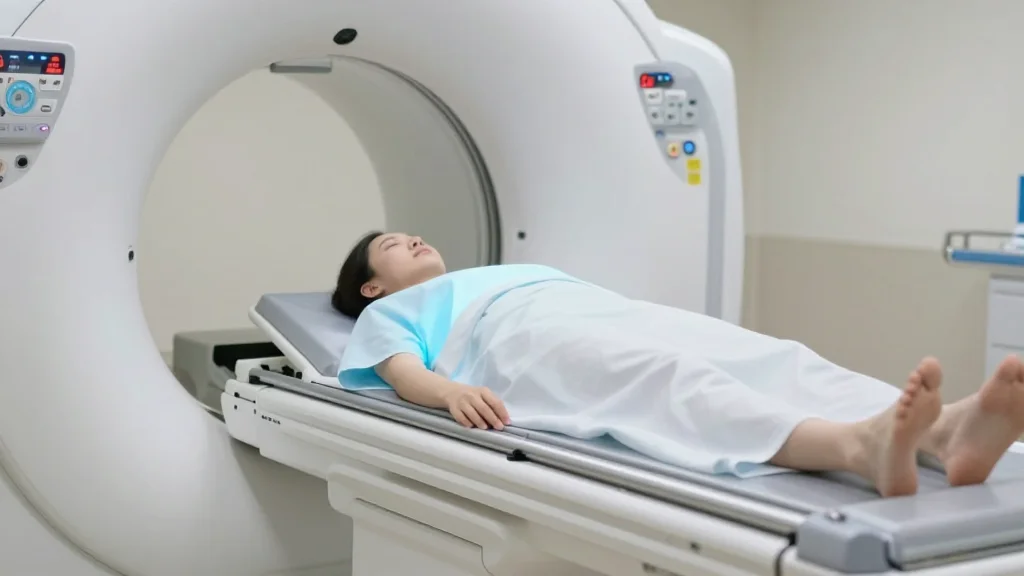
Enhanced Diagnostic Value of Deep-Inspiration Breath-Hold Total-Body PET/CT Imaging for Upper Abdominal Lesions Compared to Free-Breathing
Why It Matters
The enhanced detection and quantification of small, low‑uptake lesions can lead to earlier cancer diagnosis and more reliable staging, prompting a shift toward breath‑hold protocols on high‑sensitivity TB‑PET systems.
Key Takeaways
- •DIBH‑30s TB‑PET achieved 98.2% detection sensitivity for upper‑abdomen lesions
- •Missed FB lesions (<2 cm, SUVmax < 4.5) were all identified with DIBH
- •SUVmax and tumor‑to‑liver ratios increased significantly in DIBH scans
- •Liver‑dome PET/CT misregistration reduced, improving spatial accuracy
- •30‑second breath‑hold feasible on total‑body scanners, enabling rapid protocols
Pulse Analysis
Total‑body PET scanners have reshaped nuclear imaging by delivering up to 40‑fold greater sensitivity than conventional systems. This boost enables ultrafast acquisitions that were previously impossible, such as a 30‑second deep‑inspiration breath‑hold (DIBH) scan. Respiratory motion is a longstanding source of blurring and PET/CT misregistration, especially in the upper abdomen where liver and pancreatic lesions reside. By capturing the entire scan in a single breath‑hold, DIBH eliminates motion artifacts, aligning PET and CT data with sub‑millimeter precision and preserving lesion contrast.
The clinical trial involving 116 subjects highlighted the practical benefits of this technology. Detection sensitivity rose from 91.8% with a standard 300‑second free‑breathing protocol to 98.2% with DIBH‑30s, and every sub‑2 cm lesion that escaped FB detection was visualized under breath‑hold conditions. Quantitative metrics such as SUVmax and tumor‑to‑liver ratio (TLR) improved markedly, providing radiologists with clearer confidence scores. Moreover, the reduced scan time streamlines workflow, allowing higher patient throughput and less discomfort, while maintaining diagnostic rigor.
These findings could accelerate adoption of DIBH protocols across oncology imaging centers, especially as manufacturers roll out more cost‑effective total‑body PET units. Earlier and more accurate lesion detection supports timely therapeutic decisions, potentially improving patient outcomes and reducing downstream treatment costs. Guidelines may soon recommend breath‑hold imaging for liver and upper‑abdominal assessments, prompting further research into automated breath‑hold techniques and AI‑driven motion correction to broaden the impact across other organ systems.
Enhanced Diagnostic Value of Deep-Inspiration Breath-Hold Total-Body PET/CT Imaging for Upper Abdominal Lesions Compared to Free-Breathing
Comments
Want to join the conversation?
Loading comments...