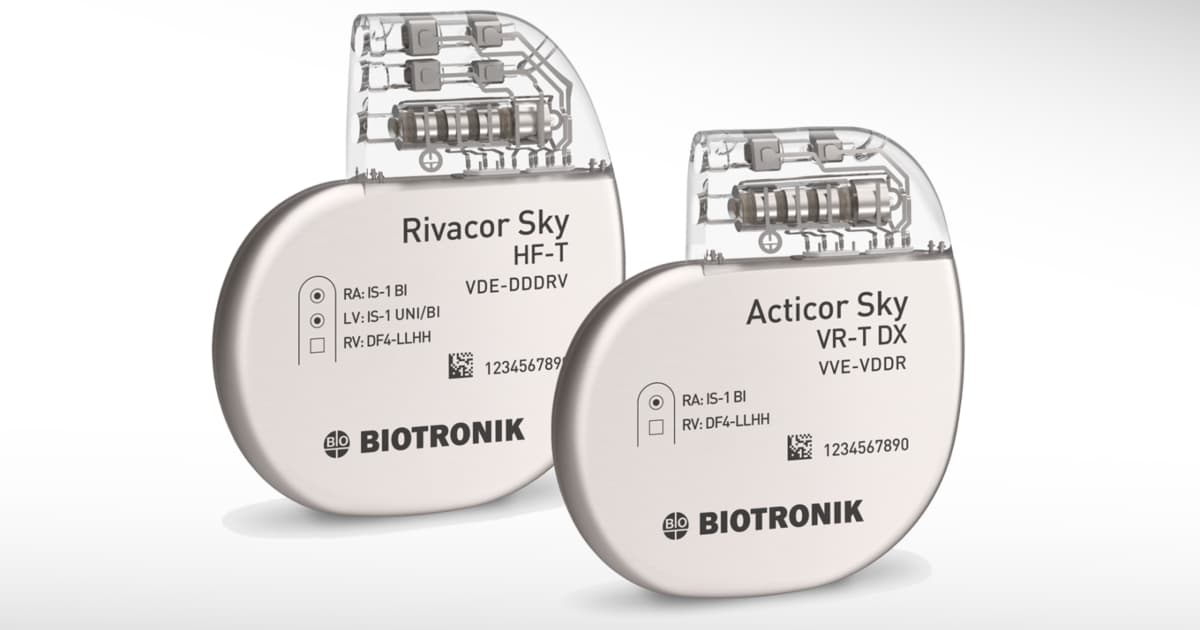
FDA Approves 2 Implantable Heart Devices From Biotronik
Why It Matters
The clearance gives clinicians advanced pacing options and faster MRI access, potentially improving outcomes and reducing procedural delays in cardiac care.
Key Takeaways
- •Acticor Sky and Rivacor Sky receive FDA clearance, debut at HRS 2026
- •Single‑lead DX tech enables atrial sensing without extra lead
- •HeartInsight alerts clinicians to worsening heart failure via one notification
- •MRI Guard 24/7 cuts MRI scheduling wait times by up to 48%
- •New anti‑tachycardia pacing suite supports both atrial and ventricular ATP
Pulse Analysis
The U.S. Food and Drug Administration’s recent clearance of Biotronik’s Acticor Sky and Rivacor Sky systems marks a notable expansion in the implantable cardioverter‑defibrillator (ICD) and cardiac resynchronization therapy defibrillator (CRT‑D) portfolio. As the first devices in Biotronik’s Sky family, they arrive at a time when demand for more physiologic pacing and streamlined procedural workflows is accelerating. The timing coincides with the Heart Rhythm Society’s 2026 meeting in Chicago, giving the company a high‑visibility platform to showcase technology that competes directly with Medtronic, Abbott and Boston Scientific in a crowded market.
The Sky platforms integrate several forward‑looking features. Left bundle branch area pacing (LBBAP) offers a more natural activation pattern, potentially reducing heart‑failure progression compared with traditional right‑ventricular leads. A single‑lead DX architecture provides atrial sensing without a dedicated atrial lead, simplifying implantation and lowering infection risk. The built‑in anti‑tachycardia pacing suite delivers both atrial and ventricular ATP, expanding therapeutic options. HeartInsight automatically aggregates multi‑parameter data to generate a single actionable alert for worsening heart failure, while MRI Guard 24/7 eliminates pre‑ and post‑scan programming, cutting MRI wait times by up to 48 %.
For hospitals, the combined clinical and operational benefits translate into faster case turnover and reduced resource utilization, which can improve revenue cycles and patient satisfaction. Patients stand to gain from less invasive procedures, earlier detection of decompensation, and more reliable access to MRI diagnostics—critical for ongoing cardiac monitoring. Industry analysts view Biotronik’s clearance as a catalyst that could shift market share toward manufacturers emphasizing workflow efficiency and data‑driven care pathways. As value‑based reimbursement models gain traction, devices that demonstrably lower procedural time and readmission risk are likely to see accelerated adoption.
FDA approves 2 implantable heart devices from Biotronik
Comments
Want to join the conversation?
Loading comments...