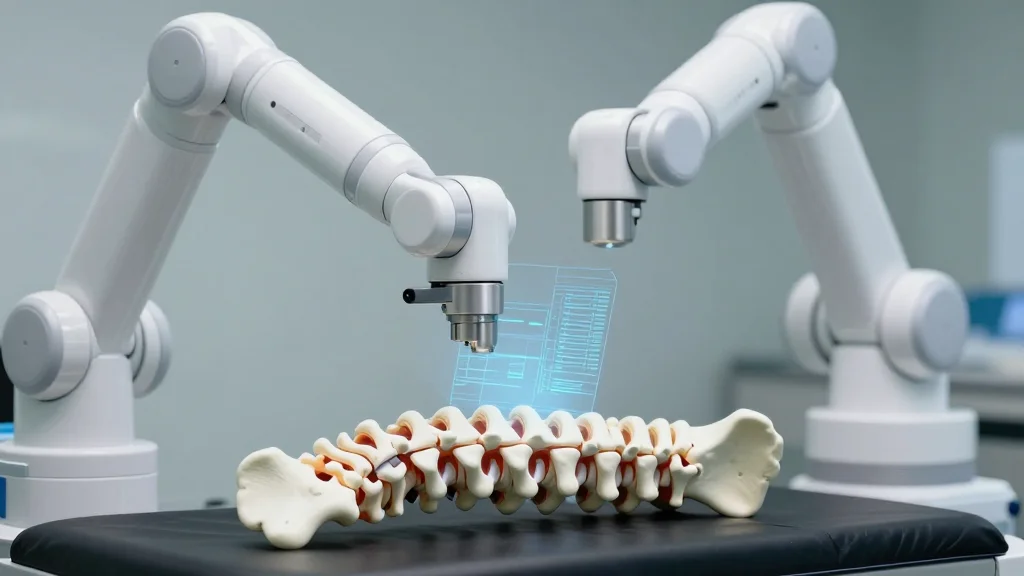
First-in-World Spine Surgery Performed with Medtronic’s AI‑Powered Robot

Companies Mentioned
Why It Matters
The procedure proves that AI‑powered robotics can achieve the precision required for delicate spinal work, a field traditionally limited by manual dexterity and surgeon fatigue. By reducing radiation exposure and operative time, the technology promises better patient outcomes and lower overall costs, addressing two persistent pain points in surgical care. Beyond the operating room, the cloud‑connected ecosystem creates a data pipeline that can fuel predictive analytics, quality improvement programs and personalized surgical planning. As health systems seek scalable ways to improve value, the Stealth AXiS model could become a template for future AI‑driven medical devices.
Key Takeaways
- •Dr. Jeffrey L. Gum performed the first spine surgery with Medtronic’s Stealth AXiS robot
- •System integrates AI‑based real‑time alignment tracking to adjust for patient movement
- •FDA cleared in February 2026, enabling immediate clinical use
- •Robot’s cloud platform streamlines pre‑op planning and intra‑op workflow
- •Potential to lower radiation exposure, reduce OR time and improve patient safety
Pulse Analysis
Medtronic’s entry into AI‑augmented spine robotics arrives at a moment when the market is hungry for solutions that can demonstrably improve outcomes while containing costs. Historically, robotic platforms have struggled to gain traction beyond niche applications because surgeons questioned the added value versus the learning curve. Dr. Gum’s involvement in both design and first‑in‑human use helps bridge that trust gap, offering a clinician‑validated narrative that can accelerate diffusion.
From a competitive standpoint, the Stealth AXiS differentiates itself by marrying real‑time motion tracking with a cloud‑based analytics layer, a combination that rivals have yet to replicate at scale. If Medtronic can leverage its extensive sales force and existing relationships with hospitals, the robot could quickly become the de‑facto standard for spinal procedures, forcing competitors to either acquire similar capabilities or risk obsolescence. The upcoming multicenter study will be a litmus test; robust data on reduced complications and shorter stays could unlock bundled‑payment models that reward technology adoption.
Looking forward, the broader implication is a shift toward data‑centric surgery where every case feeds an algorithmic learning loop. As more procedures are performed under AI guidance, the industry may see a new class of evidence‑based surgical standards, reshaping training curricula and credentialing. For patients, the promise is clearer: fewer revisions, faster recoveries, and a higher likelihood of returning to normal activity. For investors, the story underscores why health‑tech capital is gravitating toward platforms that combine hardware, software and cloud services into a single value proposition.
First-in-World Spine Surgery Performed with Medtronic’s AI‑Powered Robot
Comments
Want to join the conversation?
Loading comments...