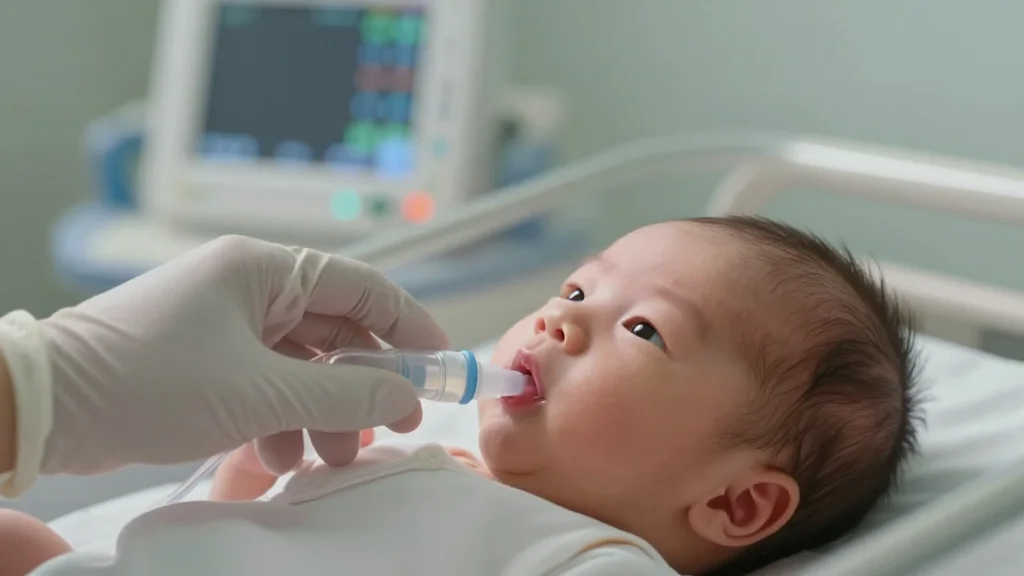
Gravitas Medical Begins Multicenter NICU Trial of Smart Feeding Tube to Cut Misplacement Rates

Why It Matters
The study tackles a persistent safety gap in neonatal care: blind feeding‑tube placement, which carries a misplacement risk as high as 59%. By delivering real‑time guidance and continuous monitoring, the Entarik system could dramatically lower radiation exposure from confirmatory X‑rays and accelerate the initiation of life‑sustaining nutrition. A successful trial would also validate a broader trend toward IoT‑enabled, data‑rich medical devices that move beyond single‑use tools to become integrated decision‑support platforms. Beyond patient outcomes, the technology promises operational efficiencies for hospitals. Fewer X‑rays translate to lower imaging costs and reduced staff time spent on repeat procedures. Continuous gastric monitoring could enable earlier detection of feeding intolerance, potentially shortening NICU lengths of stay and freeing up critical‑care beds. In a market where neonatal mortality and morbidity remain key quality metrics, a proven solution could become a differentiator for health systems seeking to improve both clinical and financial performance.
Key Takeaways
- •Gravitas Medical launches a multicenter NICU study enrolling up to 100 neonates
- •Study will assess placement accuracy, time to feeding, X‑ray usage and feeding tolerance
- •Current blind tube placement misplacement rates range from 4% to 59%
- •Entarik system provides real‑time guidance and continuous impedance/temperature monitoring
- •Positive results could accelerate regulatory approval and hospital adoption
Pulse Analysis
Gravitas Medical’s Entarik trial arrives at a crossroads where clinical need, regulatory appetite and investor interest converge. Historically, enteral feeding devices have been low‑tech, with safety improvements relying on incremental design tweaks rather than digital augmentation. The shift toward a sensor‑rich, IoT‑enabled platform reflects a broader industry pivot: manufacturers are leveraging miniaturized electronics and cloud analytics to transform routine procedures into data‑driven interventions.
From a market perspective, the neonatal feeding‑tube niche is modest in dollar terms—estimated at under $200 million globally—but it is strategically valuable. Success in the NICU can serve as a proof point for expansion into adult intensive‑care units, where tube misplacement also poses risks but where patient volumes are larger. Competitors such as Medtronic and B. Braun have begun exploring smart catheter technologies, yet none have announced a dedicated, real‑time placement system for neonates. Gravitas could therefore capture first‑mover advantage, especially if the trial demonstrates a statistically significant reduction in X‑ray exposure—a metric that resonates with both clinicians and hospital administrators.
Regulatory pathways are also favorable. The FDA’s Breakthrough Devices Program has signaled openness to novel, data‑rich medical devices that address unmet safety concerns. Should Gravitas submit a pre‑market approval (PMA) application backed by robust trial data, the agency may grant expedited review, shortening time‑to‑market. However, the company must also navigate reimbursement hurdles; insurers will demand clear cost‑benefit evidence, likely hinging on reduced imaging fees and shorter NICU stays. The upcoming presentation at the Pediatric Academic Societies meeting will be a litmus test for payer interest.
In the longer term, the Entarik platform could evolve into a broader ecosystem, feeding anonymized data into machine‑learning models that predict feeding readiness or identify early signs of necrotizing enterocolitis. Such capabilities would align with the health‑tech industry’s push toward predictive analytics and personalized care pathways. If Gravitas can sustain its innovation pipeline and secure strategic partnerships with EHR vendors, the Entarik system could become a cornerstone of next‑generation neonatal care, setting a template for other smart medical devices across the continuum of care.
Gravitas Medical Begins Multicenter NICU Trial of Smart Feeding Tube to Cut Misplacement Rates
Comments
Want to join the conversation?
Loading comments...