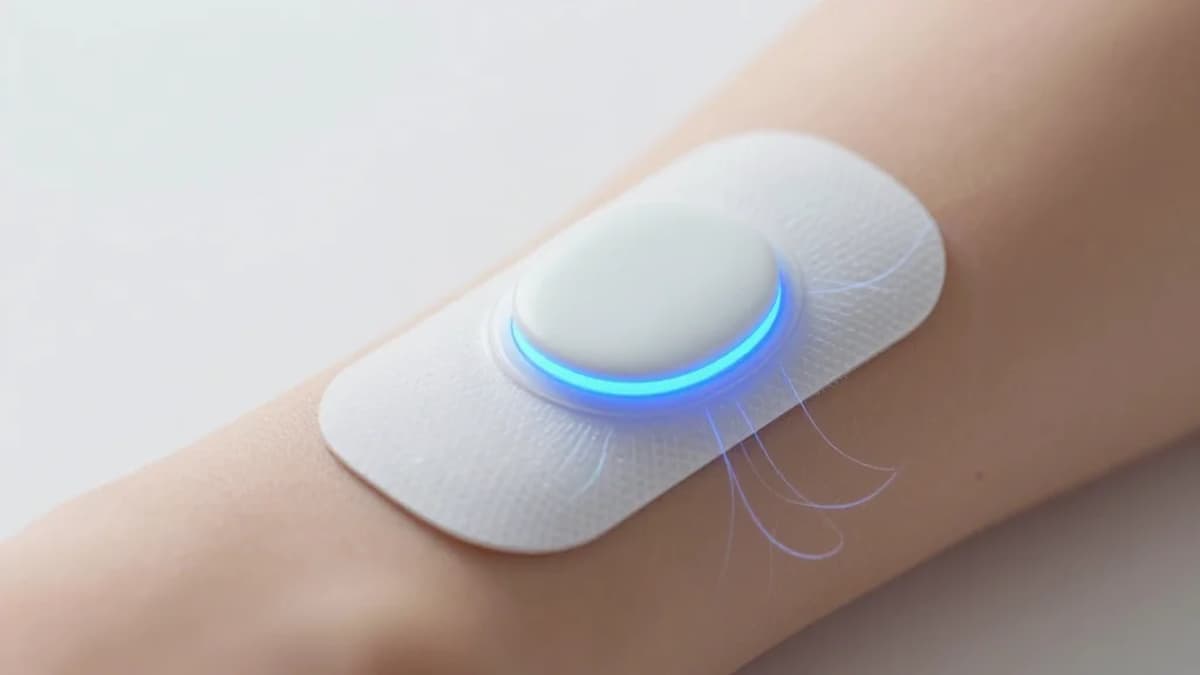
Advanced digital capabilities directly improve safety, quality, and patient experience, making them essential for competitive survival in the evolving healthcare market.
The post‑pandemic era has turned digital health transformation from a strategic option into a survival imperative. HIMSS’s assessment of over 1,000 U.S. hospitals reveals a clear link between digital maturity and clinical outcomes: institutions with sophisticated electronic medical record ecosystems achieve significantly higher safety grades, reduced infection rates, and fewer adverse events. This evidence underscores that investments in data governance, interoperable platforms, and real‑time analytics are no longer optional—they are core drivers of population health performance and financial resilience.
Patients have emerged as "negotiators" of their own care, demanding seamless digital experiences that extend beyond portal logins. They expect tools that enable condition monitoring, personalized alerts, and direct communication with care teams. Health systems that fail to provide such engagement risk eroding trust and losing market share. Bridging the gap requires integrating patient‑generated data, deploying intuitive self‑management applications, and ensuring that clinicians have actionable insights about each individual's health trajectory.
Artificial intelligence promises to amplify these gains, but its rollout hinges on mature governance frameworks and proven model accuracy. Early adopters are leveraging AI for predictive risk scoring, chronic disease support, and workflow optimization, yet many organizations remain hesitant due to concerns over bias and regulatory compliance. As interoperability matures and analytics capabilities strengthen, AI can transition from experimental to operational, delivering measurable improvements in safety, efficiency, and patient outcomes across the global health system landscape.
By Andrea Fox, senior editor, Healthcare IT News
It's no secret that the world has changed profoundly since COVID‑19, and research reveals one of the biggest changes is striking shifts related to IT maturity at health systems worldwide.
The pandemic “really set the stage for why and how digital health transformation matters,” said Anne Snowdon, Ph.D., HIMSS chief scientific research officer. “It now matters more than ever.”
Snowdon, along with Alexandra Wright, Ph.D., director of research at HIMSS’ Office of Scientific Research, will discuss the progress health systems in North America, Europe and the Asia‑Pacific have made toward digital transformation at the 2026 HIMSS Global Health Conference & Exhibition next month in Las Vegas.
“Not just what have we learned, and where we are, but where do we need to continue to progress and accelerate,” Snowdon told Healthcare IT News.
The bottom line is that digital transformation is not just a choice – but a survival strategy, according to the research.
“Given what health systems are facing, advanced digital healthcare can mean statistically significant better quality, better safety and better patient experience,” Snowdon said. “So, if ever there was a time to accelerate digital health transformation, this is the time.”
HIMSS, the parent company of Healthcare IT News, has long focused on helping participating health systems build data governance, quality measures and data repositories that support decision‑making aligned with organizational goals.
In trying to understand digital maturity as a predictor of quality and safety outcomes, the organization evaluated the digital maturity of more than 1,000 U.S. hospitals.
The researchers used the HIMSS Electronic Medical Record Assessment Model and compared results with The Leapfrog Group’s Hospital Safety Grades. They found that the odds of achieving a higher safety grade were 3.25 times higher for hospitals with advanced digital maturity. Such hospitals also had reduced infection rates, fewer adverse events and improved surgical safety outcomes compared with hospitals with underdeveloped digital maturity.
While the pandemic caused intense financial strain and a surge of workforce departures—including a massive exit of senior clinicians—Snowdon said the most striking effect on healthcare delivery is how patient “consumership” has evolved.
“They are partners and negotiators of what care looks like, and how they want it to happen, because they’ve learned that they can manage. They had to,” she said.
With patient roles shifting from passive recipients to active negotiators, they now expect digital options and transparency.
“Health systems are at that point where they’ve got to meaningfully engage the public, the communities, the populations they serve and offer options and choices,” Snowdon said.
However, advanced digital health systems require more than electronic health records.
“It’s great that we document the care given, and who got the care and who gave the care,” Snowdon said. “That’s not necessarily going to be enough to be able to meaningfully engage communities, people and populations, and help them support their health and care.”
Clinicians must have access to data about who patients are and what their health needs are. If health systems lack tools to help patients manage their conditions and alert care teams when help is needed, “we’re not meaningfully engaging or connecting with patients,” she added.
“That’s really the hallmark of a very advanced digital health ecosystem. We know who you are. We know how you’re doing and the progress you’re making. We know the risks you’re facing, and we can prevent those risks.”
Drawing data across healthcare is a fundamental building block for digital transformation.
“Organizations are starting to really understand what they do need to invest in their digital infrastructure because that is going to help them move the needle,” Wright said.
“When we look across the globe, when we look at everybody’s digital transformation, we’re seeing that people are starting that journey… they’re probably about halfway through,” she explained.
While data is flowing across organizations, HIMSS research revealed that analytics remains a weak metric.
“Our systems globally have made pretty good progress in interoperability,” Snowdon added. “Where they haven’t made any, and that was one of the lowest‑scoring areas, what does that data mean?”
With advanced analytics, health systems can turn “data into knowledge and insights that much more efficiently and rapidly inform decision‑making,” she said.
Another weakness is a lack of measuring engagement outside regulatory requirements. For example, despite high registration numbers in patient portals, meaningful digital tools for patient self‑management—such as AI‑driven chronic disease support—are still largely absent or underutilized, Snowdon noted.
Session attendees at HIMSS26 are likely to ask about the role of artificial intelligence in digital maturity, but presenters will emphasize that “holding feet to the fire” regarding outcomes is what matters most.
Digital transformation is not about having the “shiny” new technology; it’s about measurable impact on population health and organizational priorities.
“AI will play an exceptionally important role when the governance is so well developed that clinicians are confident in using it because they know that protections in the guardrails are placed and when the accuracy of these models and tools is so strong, you would be at risk if you didn’t use it,” Snowdon said.
“I would say we’re not quite there yet on either.”
Snowdon’s and Wright’s session, “Global Progress Toward Digital Transformation in the Post‑Pandemic Era,” is scheduled for Tuesday, March 10, from 2:15 p.m. to 3:15 p.m., in Palazzo M, Level 5 at the Venetian, Las Vegas (HIMSS26).
Andrea Fox can be reached at [email protected].
Comments
Want to join the conversation?
Loading comments...