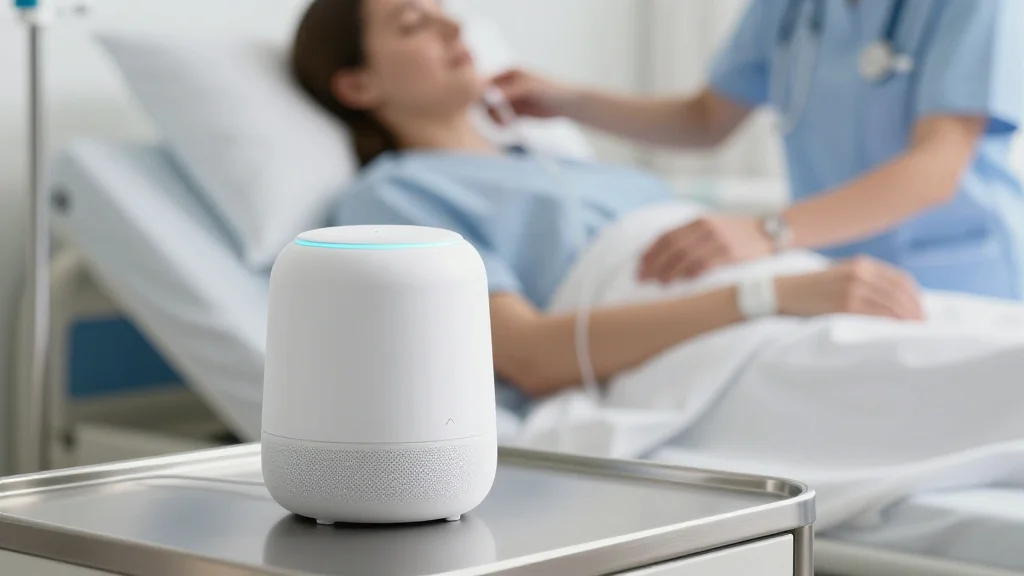
Hippocratic AI Debuts AI Front Door and Nurse Co-Pilot Voice Assistants for Hospitals

Companies Mentioned

Why It Matters
Voice‑AI tools like AI Front Door and Nurse Co‑Pilot could redefine how hospitals manage patient intake and routine nursing workflows. By automating repetitive tasks, these solutions address two persistent pain points: fragmented communication channels that frustrate patients, and clinician burnout driven by administrative overload. Successful adoption would not only improve operational efficiency but also free clinicians to deliver higher‑value care, potentially reshaping staffing models in an industry grappling with chronic workforce shortages. Moreover, Hippocratic AI’s focus on safety validation sets a benchmark for AI transparency in healthcare. As regulators tighten oversight of AI‑driven clinical tools, demonstrable safety records may become a prerequisite for widespread deployment, influencing how other health‑tech firms design and market their solutions.
Key Takeaways
- •Hippocratic AI launched AI Front Door, a unified voice interface for patient interactions.
- •Nurse Co‑Pilot, built with Cleveland Clinic, OhioHealth and Cincinnati Children’s, automates inpatient nursing tasks.
- •Early pilots at Cincinnati Children’s Hospital demonstrate multi‑channel coordination and documentation.
- •Polaris safety architecture claims validation across millions of interactions and thousands of clinicians.
- •Company targets full commercial rollout in early 2027, with additional pilots planned later this year.
Pulse Analysis
The introduction of AI Front Door and Nurse Co‑Pilot marks a strategic pivot from text‑based chatbots to conversational voice agents that can operate within the clinical workflow. Historically, health‑tech vendors have struggled to embed AI into the EHR environment due to integration complexity and liability concerns. Hippocratic AI’s decision to anchor its products in the Polaris safety framework—and to partner with heavyweight health systems for co‑development—suggests a maturation of the market where safety and interoperability are becoming non‑negotiable.
From a competitive standpoint, the move puts Hippocratic AI in direct contention with larger players like Nuance (now part of Microsoft) and Amazon Web Services, both of which offer voice‑enabled clinical assistants. However, Hippocratic AI’s niche focus on safety validation and its early traction with top pediatric and academic hospitals could carve out a defensible segment, especially among institutions wary of vendor lock‑in.
Looking ahead, the real test will be whether the promised efficiency gains translate into quantifiable metrics—reduced call‑center headcount, lower nurse overtime, and improved patient satisfaction scores. If the pilots deliver, the solutions could accelerate a broader industry shift toward AI‑augmented care delivery, prompting insurers to adjust reimbursement models to reward technology‑enabled efficiency. Conversely, any safety incidents or integration failures could reinforce skepticism and slow adoption, underscoring the high stakes of deploying AI in mission‑critical clinical settings.
Hippocratic AI Debuts AI Front Door and Nurse Co-Pilot Voice Assistants for Hospitals
Comments
Want to join the conversation?
Loading comments...