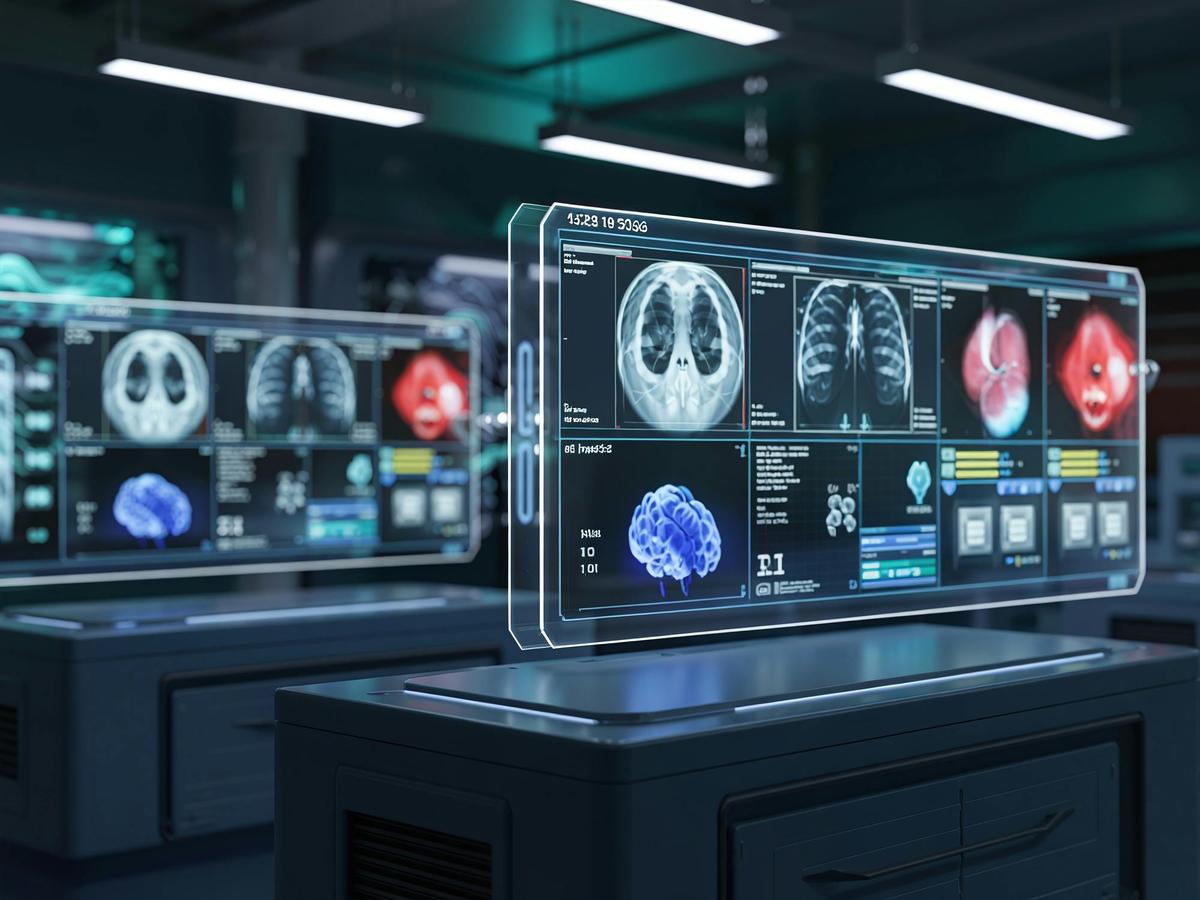
How Foundation Models Could Transform Radiology AI
Why It Matters
Foundation models could dramatically lower labeling costs and accelerate AI deployment across radiology, especially for rare diseases, reshaping diagnostic workflows and market dynamics.
Key Takeaways
- •Self‑supervised learning eliminates need for extensive image labeling
- •CheXone model trained on millions of X‑rays and reports
- •Synthetic data pre‑training boosts performance while reducing real data needs
- •Chain‑of‑thought traces capture radiologists' reasoning for AI training
- •Efficiency tricks cut required training data by two‑thirds
Pulse Analysis
The radiology AI landscape has long been dominated by supervised models that require costly expert annotation. As large language models have shown, scaling data and compute can unlock new capabilities, yet healthcare has lagged due to privacy constraints and fragmented datasets. By adopting self‑supervised techniques, researchers can ingest massive, unlabeled image collections, allowing models to learn visual patterns and clinical semantics without the bottleneck of manual labeling. This shift mirrors broader AI trends and sets the stage for more adaptable imaging tools.
Stanford’s CheXone exemplifies the multimodal approach, ingesting not only raw scans but also accompanying radiology reports and detailed reasoning chains from over 400 clinicians. These "chains of thought" provide a window into diagnostic decision‑making, enabling models to mimic the step‑by‑step reasoning of radiologists rather than merely reproducing final conclusions. Coupled with synthetic image generation—where diffusion models are fine‑tuned on chest X‑rays—researchers can augment scarce data, pre‑train models, and then fine‑tune on real cases, achieving comparable accuracy with far fewer genuine images. Efficiency hacks, such as pruning redundant studies, further slash computational demands, making petabyte‑scale training feasible for academic labs.
The commercial implications are significant. A universal foundation model could serve as a plug‑and‑play platform for hospitals, allowing rapid development of niche applications like rare‑disease detection with minimal additional data. An open‑source release slated for the next year promises broader adoption, fostering a collaborative ecosystem that could lower entry barriers for AI startups and accelerate innovation. While some fear AI might displace radiologists, experts argue the technology will instead become a productivity multiplier, rewarding clinicians who integrate AI into their practice and reshaping the competitive landscape of medical imaging services.
How Foundation Models Could Transform Radiology AI
Comments
Want to join the conversation?
Loading comments...