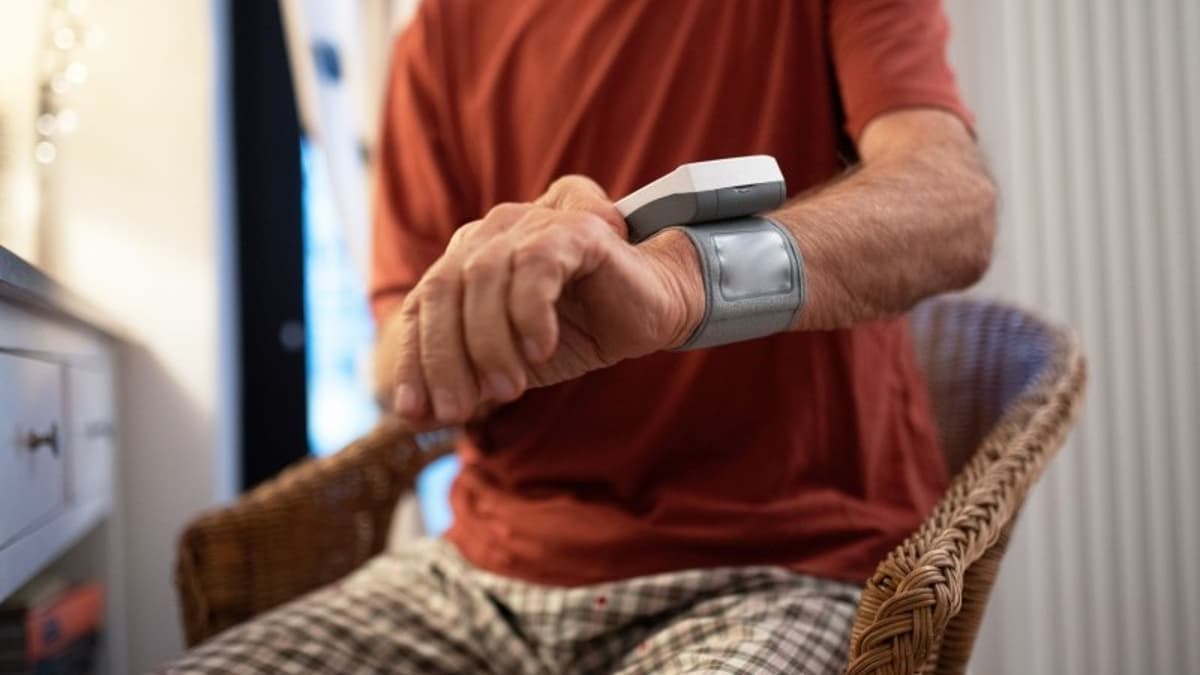
How Technology Could Cut Millions of Hospital Visits Across Europe
Companies Mentioned

Why It Matters
Cutting admissions eases chronic staffing shortages and reduces costs, while leveraging the EU4Health programme’s roughly $5.5 bn investment to transform European healthcare delivery.
Key Takeaways
- •Up to 25% of EU hospital patients could use remote monitoring.
- •Remote monitoring could cut EU admissions 12% and consultations 8%.
- •EU4Health program allocates about $5.5 bn for digital health.
- •Netherlands' Zorg bij jou monitors 33 k patients, aims 50 k by 2026.
- •US Medicare remote‑monitoring spending rose from $6.8 m to $194.5 m (2023).
Pulse Analysis
Europe’s healthcare systems face a looming staffing crisis, with the WHO projecting a shortfall of more than 4 million workers by 2030. Remote patient monitoring offers a pragmatic remedy by shifting routine measurements and chronic‑disease follow‑up out of crowded wards. Continuous data streams enable clinicians to intervene earlier, shorten lengths of stay and free up beds for acute cases, directly addressing the capacity squeeze while improving patient mobility and satisfaction.
Despite clear clinical benefits, RPM adoption varies sharply across the continent. The UK’s nationally funded virtual wards and the Scandinavian nations’ early telemedicine rollouts illustrate how centralized direction and unified reimbursement can drive scale‑up. In contrast, fragmented systems in Germany, France, Italy and Spain stall progress, even as the EU4Health programme earmarks roughly $5.5 bn for digital health innovation. Targeted policy levers—stronger central governance, clear reimbursement pathways for hybrid care, and interoperable data standards under the European Health Data Space—are essential to unlock the estimated 6.5 million admission reductions and 23 million consultation cuts.
The United States provides a benchmark, having expanded Medicare reimbursement for remote monitoring from $6.8 million in 2019 to $194.5 million in 2023. This fiscal commitment spurred rapid integration of RPM into major health systems, delivering measurable cost savings and patient outcomes. European leaders can emulate this model by aligning funding incentives with measurable performance metrics, fostering public‑private partnerships, and scaling successful pilots such as the Netherlands’ Zorg bij jou service centre, which grew to 33 000 monitored patients in three years. With coordinated action, RPM can become a cornerstone of a more resilient, cost‑effective European health ecosystem.
How technology could cut millions of hospital visits across Europe
Comments
Want to join the conversation?
Loading comments...