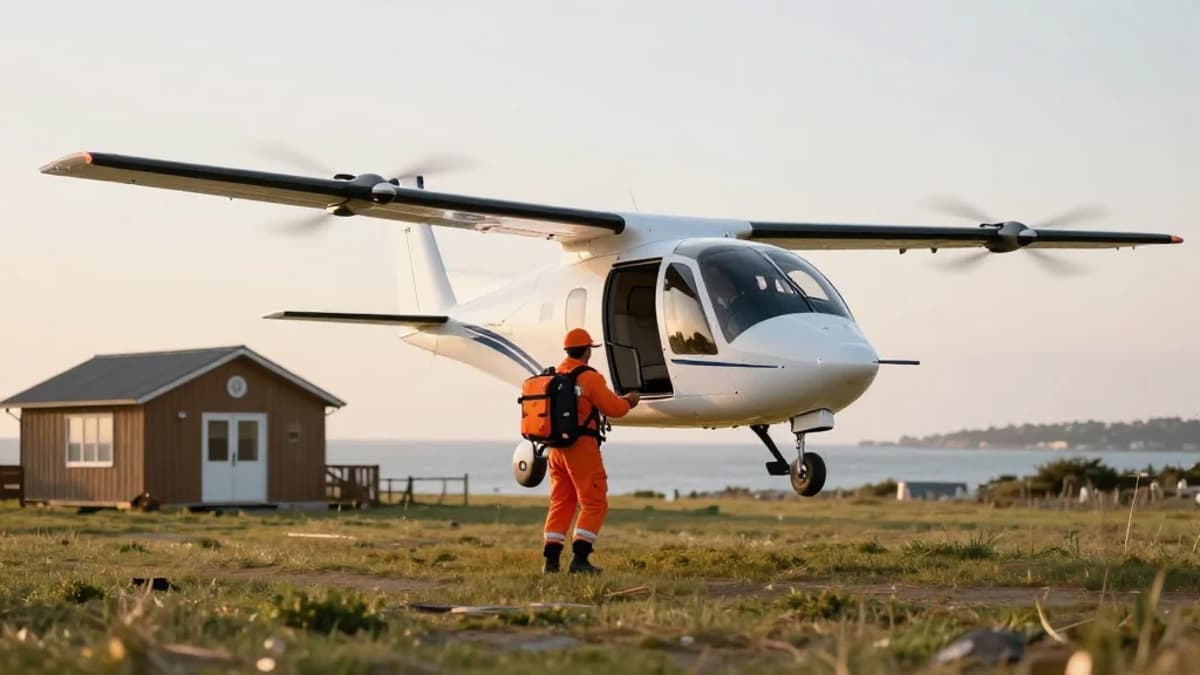
Hyde County (NC) to Trial Pivotal eVTOL Emergency Medical Response Operations
•March 9, 2026
0
Why It Matters
The trial marks the first public‑safety deployment of eVTOL technology, potentially transforming rural EMS by cutting response times and operational costs. It validates a cost‑efficient, runway‑free model that could be replicated nationwide.
Key Takeaways
- •eVTOLs provide runway‑free rapid medical dispatch
- •Paramedics act as volunteer pilots after Pivotal training
- •Project targets faster response in rural North Carolina
- •Multi‑agency use includes law enforcement and disaster assessment
- •FAA Part 103 ultralight classification avoids traditional pilot licence
Pulse Analysis
Advanced air mobility (AAM) has long promised faster, more flexible transportation, yet its application to public safety remains nascent. Rural emergency medical services (EMS) often grapple with long travel distances, limited infrastructure, and delayed on‑scene care, especially in regions like North Carolina’s Outer Coastal Plain. By leveraging ultralight eVTOLs that require no runways, Pivotal addresses these pain points, offering a platform that can launch from virtually any open space, dramatically shrinking the critical window between call and treatment.
The Hyde County pilot brings together Pivotal, local emergency services, and Code Blue Resources to test a novel operational model. Paramedics undergo Pivotal’s in‑house certification, allowing them to pilot the aircraft while delivering advanced care. This dual‑role approach eliminates the need for separate pilot staffing, reducing overhead and fostering tighter integration between aviation and medical teams. Beyond EMS, the program envisions coordinated deployments for law enforcement, fire suppression, and post‑disaster assessments, showcasing a versatile, multi‑agency response capability that could streamline resource allocation during complex incidents.
If successful, the trial could catalyze broader adoption of eVTOLs across municipal and county emergency frameworks. The Part 103 ultralight classification sidesteps traditional pilot licensing, simplifying regulatory compliance and lowering entry barriers for smaller jurisdictions. Moreover, the cost‑efficient nature of these vehicles—no fuel‑intensive runways, minimal maintenance, and rapid turnaround—offers a compelling business case for budget‑constrained agencies. Industry observers will watch closely as data on response times, safety outcomes, and operational costs emerge, potentially reshaping the future landscape of emergency response and establishing eVTOLs as a standard tool in the public‑safety arsenal.
Hyde County (NC) to trial Pivotal eVTOL emergency medical response operations
0
Comments
Want to join the conversation?
Loading comments...