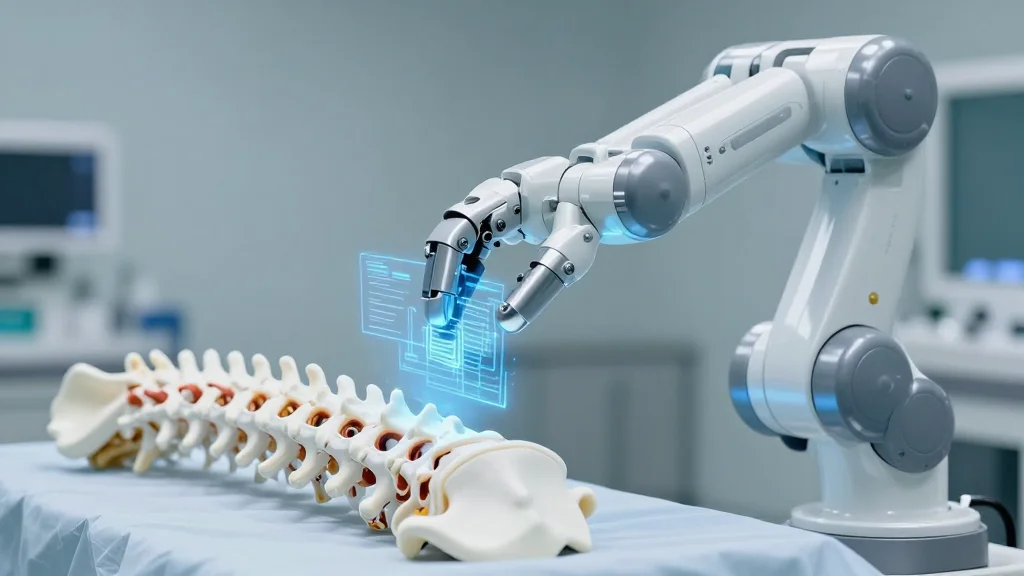
Medtronic Deploys AI‑Powered Stealth Axis Autopilot for Spine Surgery on West Coast

Companies Mentioned
Why It Matters
The introduction of AI‑driven guidance in spine surgery could reshape how complex orthopedic procedures are planned and executed. By automating implant selection and trajectory mapping, the technology promises to reduce operative time, lower inventory costs, and potentially improve patient outcomes. Moreover, the system’s real‑world validation at a leading academic medical center provides a data point for regulators and insurers evaluating the safety and cost‑effectiveness of AI‑assisted robotics. If the Stealth Axis Autopilot demonstrates measurable reductions in complication rates or length of stay, hospitals may accelerate adoption, prompting a wave of investment in AI‑centric surgical suites. This could also pressure competing manufacturers to integrate comparable analytics, intensifying competition and driving further innovation in the health‑tech ecosystem.
Key Takeaways
- •Medtronic’s Stealth Axis Autopilot performed its first West Coast surgery on April 29, 2026 at UC San Diego Health
- •The AI system recommended screw length, diameter and trajectory for six screws across three vertebrae
- •Dr. Joseph Osorio compared the AI’s assistance to an advanced writing tool, noting only minor adjustments were needed
- •The platform aims to cut intra‑operative supply adjustments by an estimated 15 %
- •Medtronic plans to gather data from at least 200 procedures before publishing outcomes
Pulse Analysis
Medtronic’s entry into AI‑augmented spine robotics arrives at a convergence of three market forces: rising demand for spinal fusions, a tightening surgeon workforce, and a broader push toward data‑driven clinical decision making. Historically, robotic assistance in orthopedics has focused on precision of tool placement, but the Stealth Axis Autopilot adds a predictive layer that could shift the surgeon’s role from manual planner to overseer of algorithmic recommendations. This shift mirrors trends in radiology and pathology, where AI is moving from triage to diagnostic support.
The competitive landscape will likely see rapid iteration. Intuitive Surgical, which has traditionally dominated minimally invasive platforms, announced a partnership with a machine‑learning startup earlier this year to embed AI into its da Vinci system. Stryker’s Mako already offers AI‑based pre‑operative planning for joint replacements, but its spine portfolio remains limited. Medtronic’s advantage lies in its deep data repository from decades of spine implants, giving its models a breadth that newcomers may lack. However, the reliance on proprietary datasets raises questions about model generalizability across varied patient populations, especially in community hospitals with different case mixes.
Regulatory scrutiny will be a decisive factor. The FDA’s recent guidance on AI/ML‑based medical devices emphasizes continuous learning and post‑market monitoring. Medtronic’s commitment to collect outcomes from 200 cases before a peer‑reviewed release suggests a proactive stance, but the agency may still require real‑world evidence of safety and efficacy before broader clearance. If the company can demonstrate that AI recommendations consistently reduce operative time and complications, insurers may adopt bundled‑payment models that reward technology‑driven efficiencies, accelerating market penetration. Conversely, any high‑profile adverse event could stall adoption and prompt tighter oversight, underscoring the delicate balance between innovation and patient safety.
Overall, the Stealth Axis Autopilot could serve as a bellwether for AI’s role in surgical robotics. Its success or failure will inform not only Medtronic’s roadmap but also the strategic calculations of rivals, investors, and healthcare systems navigating the next wave of health‑tech transformation.
Medtronic Deploys AI‑Powered Stealth Axis Autopilot for Spine Surgery on West Coast
Comments
Want to join the conversation?
Loading comments...