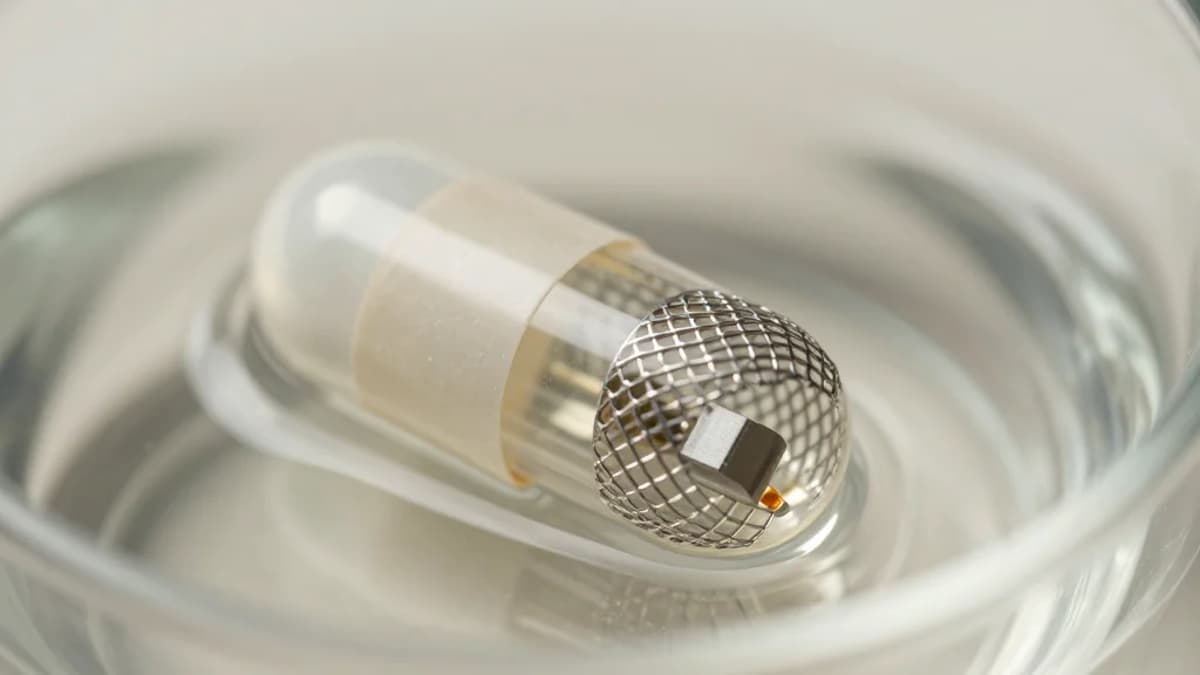
MIT Develops Biodegradable “Smart Pill” To Track Medication Adherence
•March 4, 2026
0
Why It Matters
Medication nonadherence costs the U.S. healthcare system billions; SAFARI offers a safe, eco‑friendly way to monitor and improve patient compliance.
Key Takeaways
- •SAFARI uses biodegradable Faraday cage to activate after ingestion
- •RFID tag transmits ingestion signal within ten minutes
- •Materials degrade safely, cleared from body in days
- •Wearable receiver sends data to secure cloud for clinicians
- •First large‑animal proof of fully bioresorbable ingestible sensor
Pulse Analysis
Medication nonadherence remains a chronic challenge, with roughly half of patients with chronic conditions missing doses, driving up costs and compromising outcomes. Traditional adherence tracking relies on self‑reporting, pharmacy refills, or invasive monitoring, each with limitations. Recent smart‑pill prototypes have demonstrated feasibility but often contain permanent electronics that persist after excretion, raising safety and environmental concerns. The industry therefore seeks a solution that combines reliable data capture with biocompatibility and sustainability.
Enter SAFARI, MIT’s biodegradable smart‑pill platform. Its core innovation is a cellulose‑based Faraday cage infused with trace molybdenum or tungsten that blocks radio signals until the gastrointestinal environment degrades the coating. Simultaneously, a miniature RFID microchip awakens, broadcasting an ingestion confirmation within ten minutes. Pre‑clinical trials in large animals indicate that the metallic constituents remain below FDA‑established toxicity thresholds and are fully eliminated from the body within days, mitigating long‑term exposure risks. This bioresorbable architecture marks a departure from rigid, non‑degradable ingestible electronics, positioning SAFARI as a pioneering example of transient medical devices.
The clinical implications are substantial. By linking the pill’s signal to a wearable receiver—such as a necklace—and a secure cloud service, healthcare providers gain near‑real‑time visibility into patient behavior, enabling timely interventions before therapeutic gaps widen. Moreover, the biodegradable design alleviates environmental waste concerns associated with disposable electronics. As payers and providers prioritize value‑based care, technologies that demonstrably improve adherence while maintaining safety and sustainability are likely to attract investment and regulatory support, potentially reshaping chronic disease management in the coming decade.
MIT Develops Biodegradable “Smart Pill” to Track Medication Adherence
0
Comments
Want to join the conversation?
Loading comments...