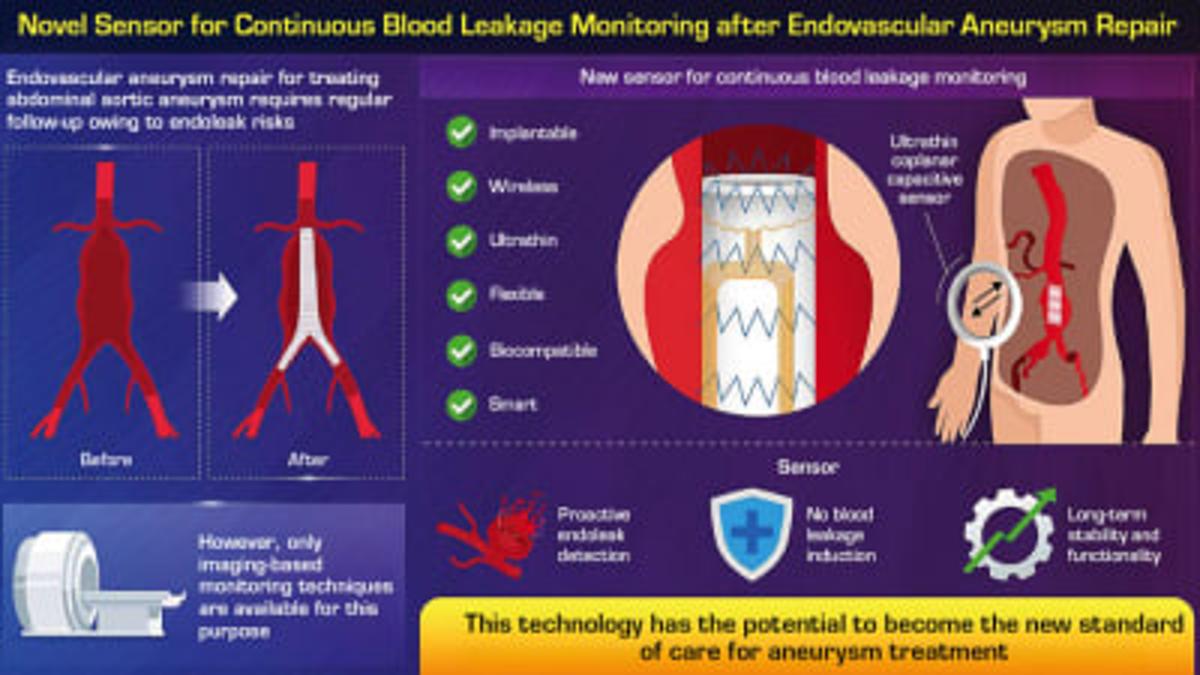
Novel Sensor Offers Continuous Blood Leakage Monitoring
Why It Matters
Continuous leak detection enables immediate intervention, reducing rupture risk and costly imaging procedures, while advancing smart implant adoption in vascular care.
Key Takeaways
- •Ultrathin sensor integrates onto stent graft without altering shape
- •Provides continuous, wireless detection of Type‑I endoleaks post‑procedure
- •Eliminates need for periodic CT or MRI follow‑ups
- •Platform adaptable to peripheral artery and dialysis graft monitoring
- •Could enable telemedicine alerts via smartphone to physicians
Pulse Analysis
Endovascular aneurysm repair has become the standard for treating abdominal aortic aneurysms, yet postoperative surveillance still relies on intermittent imaging such as CT angiography or MRI. These scans expose patients to radiation, incur high costs, and often miss early‑stage endoleaks that can precipitate catastrophic rupture. The emergence of a smart, implantable sensor addresses this gap by offering real‑time physiological data directly from the stent graft, shifting the paradigm from reactive imaging to proactive, continuous monitoring.
The Hanyang University team engineered a biocompatible, ultrathin sensor that can be crimped into a delivery catheter and deployed alongside the stent graft without compromising its mechanical integrity. Made from flexible polymeric substrates and equipped with wireless telemetry, the device transmits pressure‑derived signals that pinpoint fluid leakage at the graft‑vessel interface. Bench‑top and animal studies demonstrated that the sensor does not provoke additional bleeding and maintains signal fidelity under pulsatile flow, confirming its suitability for long‑term vascular implantation. This seamless integration transforms a passive prosthesis into an active diagnostic platform, delivering clinicians actionable insights the moment a Type‑I endoleak develops.
Beyond aneurysm repair, the sensor’s modular architecture can be repurposed for peripheral artery disease stents, arteriovenous dialysis grafts, and other fluid‑flow medical devices. Coupled with telehealth ecosystems, the data stream could be routed to smartphones and electronic health records, enabling remote alerts and reducing routine hospital visits, especially for elderly or rural patients. As healthcare systems prioritize value‑based care and digital health, such smart implants are poised to become a new standard, driving growth in the medical‑device market and reshaping postoperative management strategies.
Novel Sensor Offers Continuous Blood Leakage Monitoring
Comments
Want to join the conversation?
Loading comments...