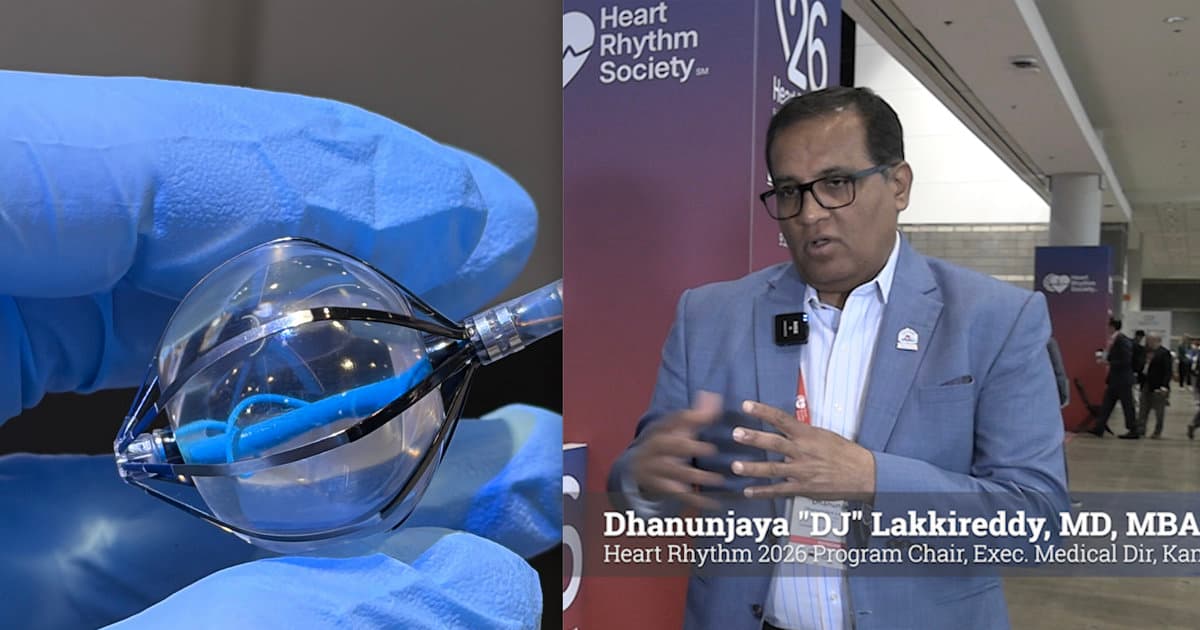
PFA's Dominance and Other Key Electrophysiology Trends on Display at Heart Rhythm 2026
Why It Matters
The convergence of advanced energy sources, leadless devices, and AI analytics promises better procedural outcomes, reduced complications, and a more personalized, preventive approach to arrhythmia and heart‑failure management.
Key Takeaways
- •PFA improves first-pass isolation, reducing repeat AFib ablations
- •Dual-energy approach combines PFA and RFA for thicker cardiac tissue
- •Leadless pacemakers now enable left bundle branch pacing via transjugular access
- •Subcutaneous ICDs evolve with comfort improvements, supporting modular therapy
- •AI-driven mapping and wearables enhance arrhythmia detection and procedural precision
Pulse Analysis
Pulse‑field ablation is reshaping atrial fibrillation therapy by offering a safety profile that minimizes esophageal injury and nerve damage while achieving unprecedented durability. Early‑generation catheters required repeat procedures in up to a third of patients, but newer high‑density platforms now deliver consistent first‑pass pulmonary vein isolation. Clinicians anticipate a "dual‑energy" paradigm, pairing PFA with radiofrequency ablation to address thicker myocardial regions and vasospasm‑prone zones, ultimately improving long‑term success rates.
On the device front, leadless pacing is moving beyond simple right‑ventricular support toward physiologic left bundle branch area pacing, achieved through transjugular implantation techniques. This innovation mirrors the broader trend of modular therapy, where subcutaneous ICDs—now refined for comfort and reduced unintended stimulation—can be paired with leadless pacemakers for patients without pacing needs. Concurrently, next‑generation systems aim to fuse rhythm management with heart‑failure monitoring, incorporating myocardial strain sensors that could provide early warnings of contractile decline.
Artificial intelligence and digital health are completing the ecosystem shift. Machine‑learning algorithms are being embedded in electro‑anatomical mapping tools to pinpoint arrhythmia substrates more precisely, while wearable monitors deliver continuous rhythm data to clinicians. These technologies enable a more proactive, team‑based care model that emphasizes lifestyle modification and risk‑factor control—obesity, hypertension, diabetes, and sleep apnea—alongside procedural interventions. Together, the hardware advances and data‑driven insights presented at Heart Rhythm 2026 signal a pivotal moment for electrophysiology, where precision therapy and holistic patient management converge.
PFA's dominance and other key electrophysiology trends on display at Heart Rhythm 2026
Comments
Want to join the conversation?
Loading comments...