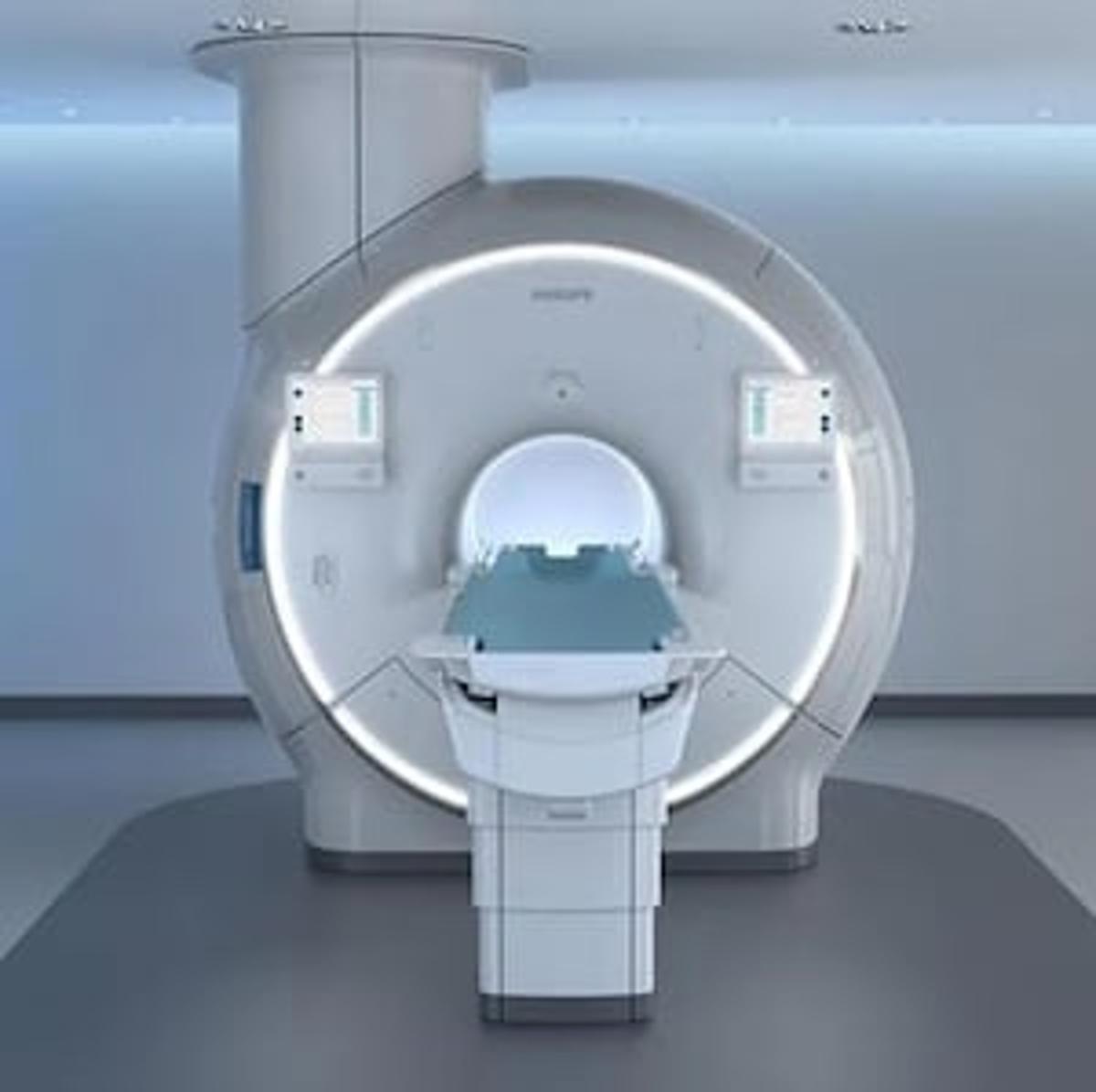
Philips Introduces Titanion MRI System
Why It Matters
Titanion’s blend of ultra‑high gradient performance and AI‑enhanced workflows could accelerate the adoption of quantitative MRI biomarkers, giving clinicians more precise, data‑driven insights and expanding high‑performance imaging to more hospitals.
Key Takeaways
- •Titanion delivers 150 mT/m gradients with 250 T/m/s slew rate
- •AI‑enhanced SmartSpeed Precise yields up to 80% sharper images
- •Scan times can be reduced up to threefold versus standard protocols
- •55 cm field of view enables whole‑body imaging in a single exam
- •Power draw of 115 kVA allows installation without major upgrades
Pulse Analysis
Quantitative magnetic resonance imaging has moved from research labs to the bedside, driven by demand for biomarkers that capture tissue microstructure. Philips’ new Titanion MR pushes the 3‑tesla platform into ultra‑high‑gradient territory, offering 150 mT/m gradients and a 250 T/m/s slew rate—levels previously seen only in specialized research scanners. The expanded 55 cm field of view lets clinicians acquire whole‑body datasets without repositioning, while the low‑eddy‑current design preserves signal fidelity. Together, these hardware advances create a foundation for diffusion‑weighted and microstructural studies across neurology, oncology, and musculoskeletal disorders.
The system’s software stack leverages Philips’ SmartSpeed Precise AI engine to sharpen images by up to 80 % and cut scan times by a factor of three compared with conventional SENSE techniques. Faster acquisitions translate directly into higher patient throughput and reduced motion artifacts, which are critical in pediatric and neurodegenerative imaging. Integrated workflow tools also automate parameter selection and quality control, lowering the expertise barrier for quantitative protocols. By embedding AI into the reconstruction pipeline, Titanion aims to deliver reproducible biomarker measurements that can be trusted for longitudinal clinical trials.
From a market perspective, Titanion positions Philips against competitors such as Siemens’ MAGNETOM Terra and GE’s SIGNA Premier, all of which are racing to commercialize ultra‑high‑gradient, AI‑driven scanners. The modest 115 kVA power requirement eases site‑installation constraints, potentially expanding the addressable hospital base beyond major academic centers. Although the system is still pending FDA and CE clearance, its announced capabilities suggest a shift toward routine, whole‑body quantitative MRI in everyday practice. Early adopters could gain a diagnostic edge, while the broader radiology community may see accelerated development of imaging biomarkers for personalized medicine.
Philips Introduces Titanion MRI System
Comments
Want to join the conversation?
Loading comments...