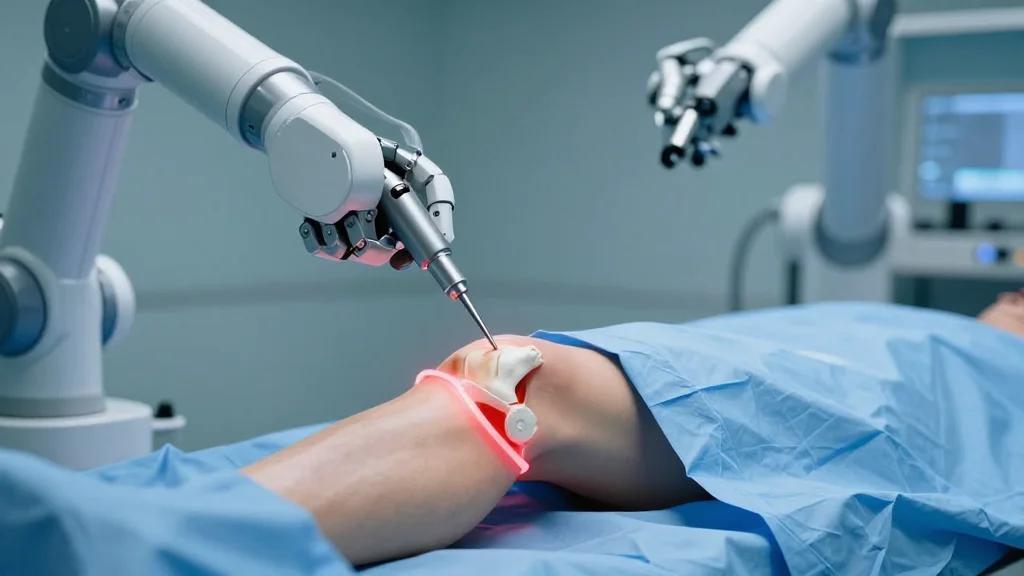
Problems with Robotic Knee Replacement: Study
Why It Matters
The findings challenge the assumption that robotic assistance automatically improves outcomes, prompting hospitals to reassess costly technology investments and focus on proven care pathways. For surgeons and payers, the higher complication risk underscores the need for evidence‑based adoption before widespread rollout.
Key Takeaways
- •Robotic-assisted TKA shows 2% major complication rate vs 1% conventional
- •Study analyzed 1,613 robotic and 72,746 conventional knee replacements in Ontario
- •Procedure time increased to 101 minutes with robots, adding cost and complexity
- •Adoption rose to 5.8% of cases by 2023 despite higher risk
- •Authors urge evidence‑based adoption and focus on implant design improvements
Pulse Analysis
Robotic assistance in total knee arthroplasty has been marketed as a precision tool to improve implant alignment, yet real‑world data remain sparse. Adoption in Canada has climbed steadily, reaching nearly six percent of knee replacements by 2023, driven by manufacturer promotion and the allure of high‑tech operating rooms. Hospitals often justify the expense by citing potential reductions in revision rates, but the technology adds hardware, extra pin sites, and longer surgical times, raising both direct and indirect costs.
The Ontario‑wide cohort study, published in The Journal of Arthroplasty, leveraged provincial health records to compare outcomes for over 1,600 robot‑assisted procedures against more than 72,000 conventional cases. Researchers matched patients on demographics and comorbidities, then tracked major complications—revision surgery, deep infection, or fracture—within one year. Results showed a doubled complication rate for the robotic group (2.0% versus 1.0%) and an average anesthesia duration 12 minutes longer. These figures suggest that, in routine practice, the theoretical alignment benefits do not translate into measurable safety gains.
For health systems and orthopedic surgeons, the study signals caution. Investing in expensive robotic platforms may not yield the expected return on patient outcomes, especially when conventional techniques already achieve low complication rates. Decision‑makers should prioritize evidence‑based technologies, such as enhanced implant designs and optimized peri‑operative pathways, which have demonstrated impact on recovery and longevity. Future research, ideally randomized trials, will be essential to determine whether next‑generation robots can overcome current limitations and justify broader implementation.
Problems with robotic knee replacement: study
Comments
Want to join the conversation?
Loading comments...