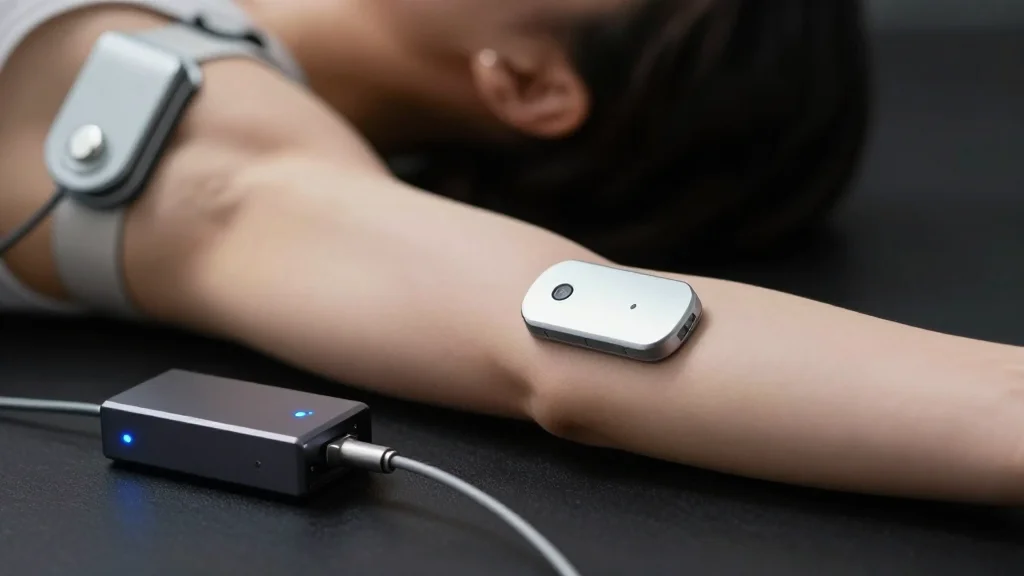
Researchers Develop World's First AI for Objective Pain Assessment
Why It Matters
Objective pain measurement could transform peri‑operative care, chronic‑pain management, and intensive‑care monitoring by eliminating subjective bias and enabling real‑time, data‑driven decisions.
Key Takeaways
- •AI classifies pain intensity from EEG with higher accuracy than prior models
- •Dual-model approach learns only from highly reliable data, reducing bias
- •Study used 41 participants, showing stable predictions in new stimulus environments
- •Delta-wave activity at electrodes F7/F8 linked to pain intensity
- •Researchers aim to create universal pain AI platform for clinical use
Pulse Analysis
Pain assessment has long relied on the Visual Analog Scale, a subjective tool that varies widely between patients and is unusable for those unable to communicate. This limitation hampers clinicians’ ability to gauge analgesic needs, especially in surgery, intensive care, and pediatric settings. By turning to brain‑wave data, researchers are seeking a quantifiable, physiological proxy for pain that can be measured continuously and objectively.
The new system leverages a twin‑model AI architecture that cross‑validates predictions and discards noisy labels, a departure from earlier EEG‑based approaches that trained directly on patient‑reported scores. Using thermal stimuli, the algorithm identified distinct delta‑wave patterns in the left and right anterior temporal lobes (electrodes F7 and F8) that correlate with pain intensity. In a cohort of 41 participants, the model not only surpassed traditional classifiers but also maintained performance when confronted with unfamiliar stimulus conditions, suggesting robust generalizability.
If scaled to clinical practice, this technology could enable real‑time pain monitoring during surgeries, guide personalized analgesic dosing, and provide continuous tracking for chronic‑pain patients. The researchers envision integrating additional biosignals to create a universal pain‑AI platform, potentially linking it to brain‑computer interfaces for automated feedback loops. Such an objective metric would likely reshape reimbursement models, accelerate drug trials for analgesics, and open new markets for neuro‑monitoring devices, marking a significant shift in how the healthcare industry quantifies and manages pain.
Researchers develop world's first AI for objective pain assessment
Comments
Want to join the conversation?
Loading comments...