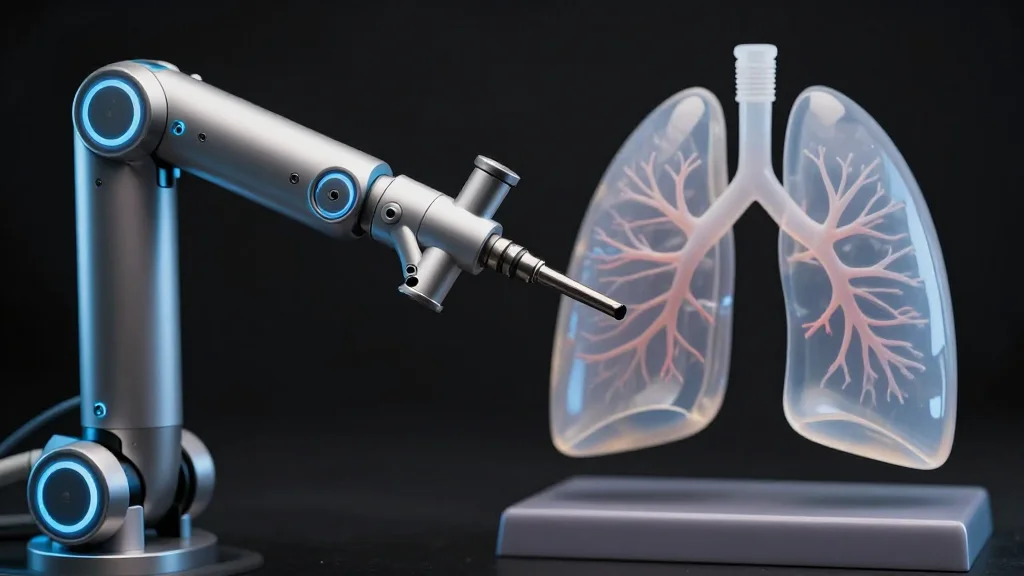
Robotic Bronchoscopy System Shows 96.7% Tool‑in‑Lesion Rate in New Study

Companies Mentioned
Why It Matters
The Galaxy System’s performance addresses two persistent barriers in lung‑cancer care: diagnostic accuracy and equitable access. High tool‑in‑lesion rates reduce the need for repeat biopsies, lowering procedural risk and healthcare costs. Moreover, the claim that the technology can be democratized suggests a shift from niche, high‑cost robotic suites to more widely deployable solutions, potentially reshaping the market dynamics among bronchoscopic device manufacturers. If the platform scales, insurers may favor robotic bronchoscopy for its efficiency, and hospitals could see faster turnaround times for lung‑cancer work‑ups. This could accelerate early‑stage detection, improve patient outcomes, and stimulate further investment in integrated imaging‑robotics hybrids across other interventional specialties.
Key Takeaways
- •Galaxy System achieved 96.7% tool‑in‑lesion rate in MATCH 2 trial (31 patients).
- •Cone‑beam CT confirmed tool‑in‑lesion in 93.5% of cases.
- •Mean nodule size was 16 mm; mean patient age 65 years.
- •Study builds on FRONTIER trial that also showed high diagnostic yield.
- •Developers aim to democratize robotic bronchoscopy for community hospitals.
Pulse Analysis
The MATCH 2 results signal a tipping point for robotic bronchoscopy, a niche that has struggled to prove superiority over conventional flexible scopes. By coupling robotic stability with real‑time digital tomosynthesis, Noah Medical has effectively closed the imaging‑navigation loop that has historically limited peripheral nodule access. Competitors such as Medtronic and Olympus have introduced robotic platforms, but none have integrated on‑board tomosynthesis, giving the Galaxy a distinct technical edge.
From a market perspective, the data could catalyze a wave of capital inflows into hybrid imaging‑robotics startups. Investors have already shown appetite for AI‑driven diagnostic tools; a device that demonstrably improves procedural success rates offers a tangible, reimbursable product line. Hospitals will weigh the capital outlay against potential reductions in repeat biopsies and shorter hospital stays, especially as bundled payment models gain traction.
Looking ahead, the real test will be whether larger, randomized trials replicate these outcomes and whether regulatory bodies grant clearance based on the combined navigation‑imaging claim. If successful, the Galaxy System could redefine the standard of care for peripheral lung lesions, prompting a re‑evaluation of current guidelines and potentially reshaping referral patterns from primary care to specialized interventional pulmonology centers.
Robotic Bronchoscopy System Shows 96.7% Tool‑in‑Lesion Rate in New Study
Comments
Want to join the conversation?
Loading comments...