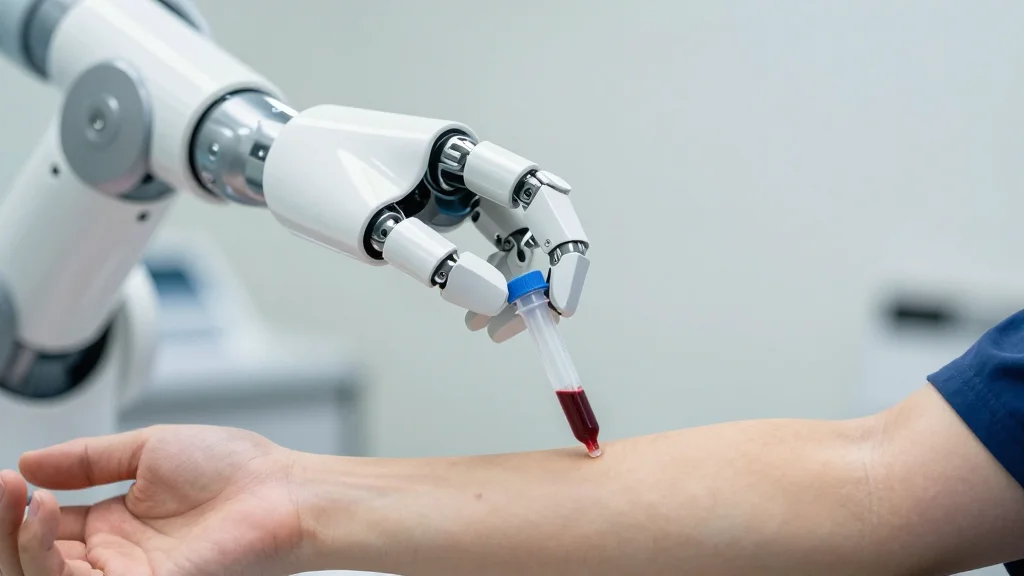
Robotic Phlebotomy Study Signals Automation Shift for Clinical Labs
Companies Mentioned
Why It Matters
The results demonstrate that robotic phlebotomy can standardize blood collection, reduce costly redraws, and alleviate lab staffing shortages, positioning it as a strategic investment for diagnostic providers.
Key Takeaways
- •94.5% first-stick success rate in multicenter trial
- •Hemolysis reduced to 0.3%, far below manual rates
- •90% of patients reported equal or less pain
- •Labs could cut redraws, improving turnaround and costs
Pulse Analysis
The pre‑analytical phase has long been a bottleneck for clinical labs, where variability in blood draws can compromise sample integrity and inflate operational costs. Vitestro’s Aletta robot, validated in the ADOPT trial, delivers a 94.5% first‑stick success rate and a hemolysis incidence of just 0.3%, metrics that outpace traditional manual phlebotomy. By automating vein selection and needle insertion, the system reduces human error, delivering more consistent specimens and shortening turnaround times for high‑throughput laboratories.
Beyond technical performance, patient experience emerges as a decisive factor for adoption. The study reports that 90% of participants felt the robot caused the same or less pain than a human phlebotomist, and 82% expressed willingness to use the technology again. Such acceptance mitigates a common barrier to automation—patient resistance—and aligns with the growing emphasis on patient‑centered care. For lab managers, the promise of fewer redraws translates directly into cost savings, lower labor demand, and enhanced capacity to meet rising test volumes amid nationwide staffing shortages.
The market implications are significant. Vitristo’s recent $70 million Series B round signals investor confidence that robotic phlebotomy will become a cornerstone of end‑to‑end laboratory automation. As regulatory bodies increasingly scrutinize pre‑analytical quality, platforms like Aletta could become a compliance differentiator. Continued multi‑site validation and integration with laboratory information systems will be critical, but the ADOPT trial provides a compelling proof point that automation is moving upstream, reshaping the economics and reliability of modern diagnostics.
Robotic Phlebotomy Study Signals Automation Shift for Clinical Labs
Comments
Want to join the conversation?
Loading comments...