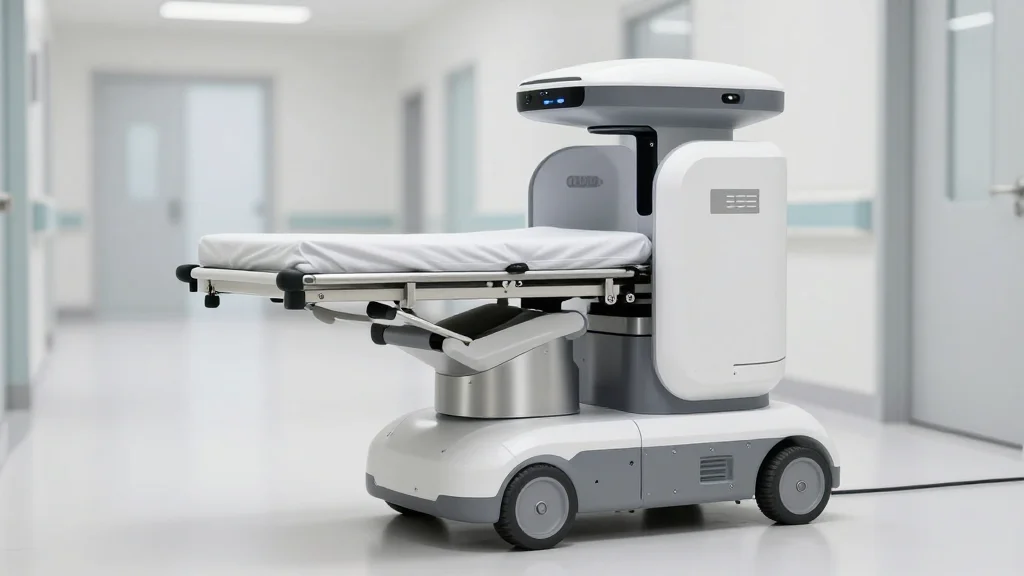
Rovex Unveils Rovi, Claiming First Autonomous In‑Hospital Patient Transport Robot

Why It Matters
Rovex’s Rovi targets a long‑standing pain point in hospital operations: the inefficient, labor‑intensive movement of patients. By automating this task, hospitals could reduce staff fatigue, lower labor costs and, most importantly, increase the number of procedures performed each day. In a sector where capacity constraints directly affect revenue and patient outcomes, any technology that can accelerate bed turnover has strategic value. Beyond immediate operational gains, Rovi’s data‑capture capability could usher in a new era of analytics‑driven workflow optimization. Hospitals would gain granular visibility into patient‑flow bottlenecks that are currently inferred from aggregate metrics, enabling more precise staffing and scheduling decisions. If successful, the robot could set a precedent for broader autonomous patient‑care applications, from medication delivery to bedside assistance.
Key Takeaways
- •Rovex unveiled Rovi, a robot it claims is the world’s first autonomous in‑hospital patient transport system.
- •Rovi uses a 360‑degree sensor suite and computer‑vision navigation to move patients without structural changes to facilities.
- •The robot features a universal stretcher attachment and plans to add compatibility with beds and wheelchairs.
- •Rovi records logistics data to help administrators identify workflow bottlenecks.
- •Rovex has not disclosed commercial contracts; a brief reference to BayCare Health System suggests early interest.
Pulse Analysis
The introduction of Rovi reflects a broader shift toward automation in clinical logistics, a space traditionally dominated by manual labor. While supply‑chain robots have been deployed for inventory movement, patient transport adds layers of safety, regulatory, and human‑interaction complexity. Rovex’s claim of being the first to automate patient transport positions it as a pioneer, but the lack of third‑party validation means the market will likely demand rigorous pilot data before large‑scale adoption.
Historically, hospitals have been cautious about integrating autonomous systems that directly contact patients, citing liability and patient‑comfort concerns. Rovi’s reliance on computer vision and sensor fusion mirrors advances in autonomous vehicles, yet the stakes in a hospital corridor differ: obstacles are unpredictable, and the robot must coordinate with staff in real time. Successful pilots could alleviate these concerns, prompting larger health systems to allocate capital toward similar solutions.
From an investment perspective, the autonomous patient‑transport niche could attract strategic capital from both robotics firms and medical‑device giants seeking to diversify their portfolios. If Rovi demonstrates measurable throughput improvements—such as a 10‑15% reduction in patient‑transfer time—its value proposition could extend beyond cost savings to revenue generation, making it an attractive acquisition target for larger players looking to embed autonomous logistics into their service offerings.
Rovex Unveils Rovi, Claiming First Autonomous In‑Hospital Patient Transport Robot
Comments
Want to join the conversation?
Loading comments...