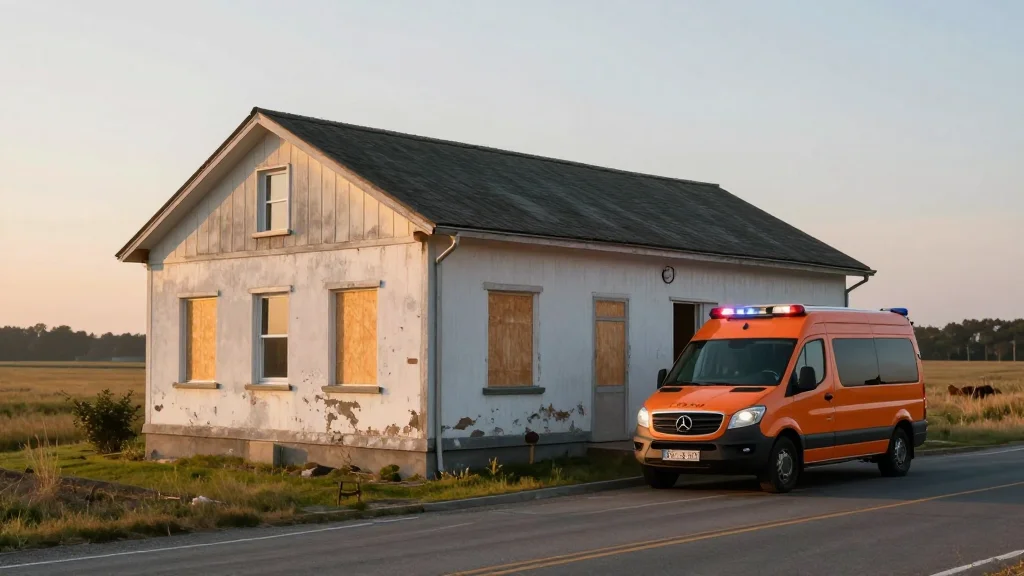
Rural Health Fund Gaps Exposed as North Carolina Hospital Remains Closed

Companies Mentioned
Why It Matters
The gap between the $50 billion Rural Health Fund and the reality of closed rural hospitals illustrates a systemic flaw in how federal health dollars are allocated. Without mechanisms to reopen facilities, funds may only reinforce existing providers, leaving vulnerable populations without timely emergency care. The situation in Martin County could become a bellwether for other rural areas facing similar closures, prompting a reevaluation of federal‑state coordination on health infrastructure. Moreover, the political use of the fund in upcoming elections risks turning a genuine health crisis into a partisan talking point, potentially obscuring the need for concrete policy reforms. If lawmakers fail to address the construction and reopening constraints, the fund’s impact will remain limited, perpetuating health disparities in America’s heartland.
Key Takeaways
- •Martin General Hospital closed in 2023, leaving 22,000 residents without a local ER
- •$50 billion Rural Health Fund created by the One Big Beautiful Bill Act
- •$213 million earmarked for North Carolina, but not earmarked for new hospital construction
- •County has spent $2.9 million on maintenance and plans $1.5 million for advanced paramedic units
- •County Manager Drew Batts says the federal fund "won't help us get this place reopened"
Pulse Analysis
The Rural Health Fund’s design reflects a classic policy paradox: abundant capital paired with restrictive eligibility criteria. By channeling money primarily to existing health and social service entities, the legislation sidesteps the costly, politically fraught process of reopening or building hospitals. This approach benefits larger health systems, like ECU Health, which can absorb additional patients, but it does little to restore critical access points in truly underserved locales.
Historically, rural hospital closures have accelerated since the early 2000s, driven by declining reimbursements and consolidation. The current fund, while sizable, repeats past mistakes by not providing a dedicated pipeline for capital projects aimed at reopening facilities. If Congress does not amend the allocation rules to include construction grants or low‑interest loans for closed hospitals, the $50 billion will likely reinforce the status quo, widening the urban‑rural health divide.
Looking ahead, the political calculus will be pivotal. Midterm candidates are already leveraging the fund as a campaign asset, but without substantive policy changes, the rhetoric may ring hollow. Stakeholders—county officials, health system leaders, and patient advocates—must push for a restructuring that ties a portion of the fund directly to reopening projects, perhaps through a competitive grant process that rewards community‑driven plans. Only then can the federal investment translate into measurable improvements in rural health outcomes.
Rural Health Fund Gaps Exposed as North Carolina Hospital Remains Closed
Comments
Want to join the conversation?
Loading comments...