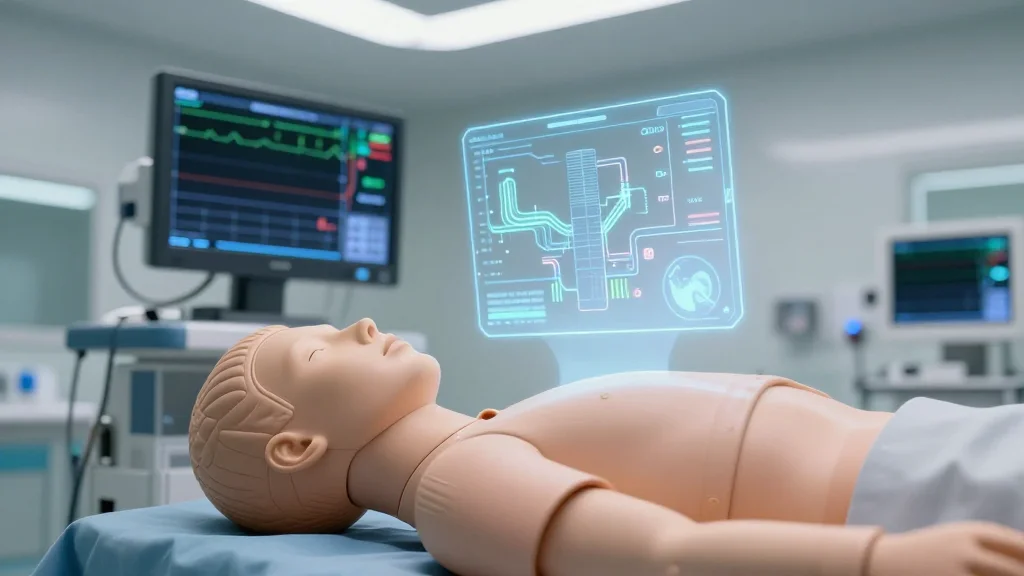
Seoul National University Hospital and Harvard Launch AI-Powered Hospital Simulator

Why It Matters
The Clinical Environment Simulator addresses a longstanding bottleneck in health‑tech: the inability to evaluate AI tools under realistic, system‑wide pressures before patient rollout. By quantifying both clinical outcomes and operational efficiency, the platform offers a data‑driven bridge between algorithmic promise and practical utility, potentially accelerating adoption while mitigating safety concerns. Its dual‑engine design also sets a new benchmark for AI validation, encouraging other institutions to adopt similar pre‑clinical testing standards. If widely adopted, the simulator could influence regulatory frameworks that currently rely on limited, static validation studies. Demonstrating AI performance under stress scenarios may become a prerequisite for approval, prompting vendors to invest more heavily in robust testing pipelines. Ultimately, the technology could reshape how hospitals evaluate, purchase, and integrate AI, fostering a more evidence‑based ecosystem that balances innovation with patient safety.
Key Takeaways
- •SNUH and Harvard launch Clinical Environment Simulator to test medical AI in dynamic settings.
- •Simulator uses a Patient Engine and Hospital Engine to generate dual‑metric scores for outcomes and efficiency.
- •Research Professor Seong‑Eun Kim notes the system offers a step toward realistic AI evaluation despite biological limitations.
- •Platform can stress‑test AI under network failures and simultaneous emergency cases.
- •Pilot programs with AI vendors slated for later 2026, with results to be presented at the International Conference on Medical Informatics.
Pulse Analysis
The introduction of a virtual hospital simulator arrives at a pivotal moment for AI in healthcare, where skepticism over algorithmic safety has slowed market penetration. Historically, AI tools have been validated on static datasets, often leading to performance gaps once deployed in the chaotic reality of a busy ward. By embedding AI decisions within a simulated workflow, SNUH and Harvard are effectively creating a sandbox that mirrors the stochastic nature of patient flow, resource constraints, and clinical decision‑making. This approach could become a de‑facto standard, especially as payers and regulators demand evidence that AI improves not just diagnostic accuracy but also system‑level efficiency.
From a competitive standpoint, the simulator gives early adopters a strategic advantage. Vendors that can demonstrate superior performance in the dual‑metric framework will likely secure contracts with larger health systems that are increasingly data‑driven. Conversely, firms that rely solely on traditional validation may find themselves at a disadvantage, forced to retrofit their products for this new testing regime. The partnership also signals a shift toward cross‑border collaboration in health‑tech R&D, blending South Korea’s rapid implementation capabilities with Harvard’s academic rigor.
Looking ahead, the scalability of the simulator will be the litmus test. If the technology can be adapted to smaller community hospitals or integrated with diverse EHR platforms, its impact could ripple across the entire industry. However, challenges remain: ensuring the fidelity of disease‑trajectory models, securing buy‑in from clinicians wary of simulation bias, and navigating the regulatory pathways that will eventually codify such pre‑clinical testing. Should these hurdles be overcome, the Clinical Environment Simulator could usher in a new era where AI is vetted as rigorously as any pharmaceutical, fundamentally reshaping the health‑tech innovation pipeline.
Seoul National University Hospital and Harvard Launch AI-Powered Hospital Simulator
Comments
Want to join the conversation?
Loading comments...