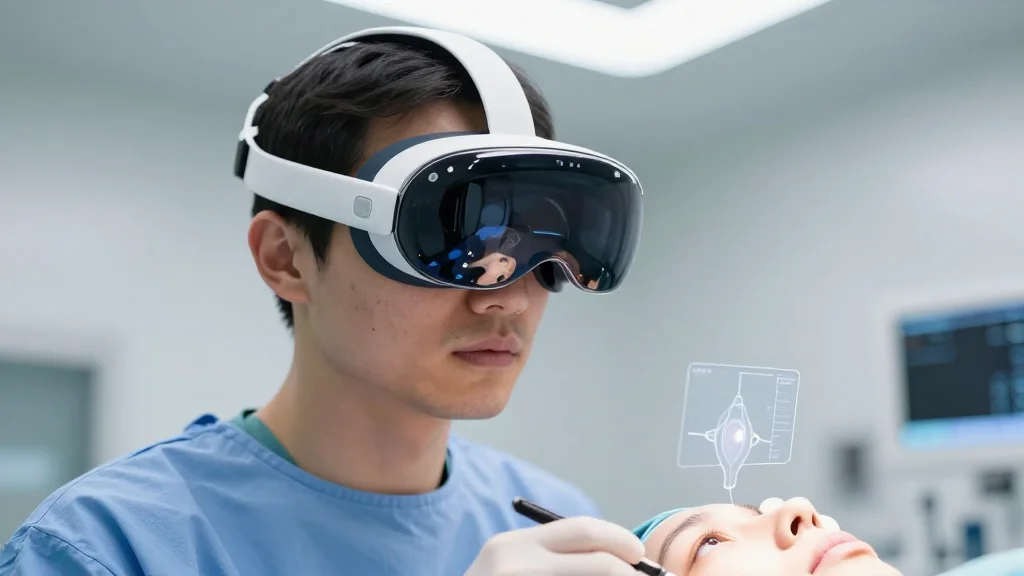
Sharp HealthCare Taps Apple Vision Pro for Surgical Innovation
Why It Matters
If the Vision Pro proves safe and effective, it could reshape ophthalmic procedures by enhancing visualization and reducing surgeon fatigue, accelerating broader adoption of mixed‑reality technology in operating rooms.
Key Takeaways
- •Sharp HealthCare begins IRB‑approved study of Apple Vision Pro in cataract surgery
- •Study will assess depth perception, workflow efficiency, and surgeon ergonomics
- •Research conducted at Sharp HealthCare and Sharp Otay Lakes Ambulatory Surgery Center
- •Funding provided by Sharp HealthCare Foundation
- •One of the first clinical evaluations of spatial computing in ocular microsurgery
Pulse Analysis
Mixed‑reality headsets are moving from consumer hype to clinical utility, and Apple’s Vision Pro is at the forefront of that transition. With ultra‑high‑resolution displays, eye‑tracking, and spatial audio, the device offers surgeons a hands‑free, three‑dimensional view of the operative field. Early adopters in orthopedics and neurosurgery have reported improved precision, prompting eye care institutions to explore similar benefits. Sharp HealthCare’s initiative signals a willingness among large health systems to invest in cutting‑edge visualization tools, even as the technology remains expensive and requires integration with existing surgical platforms.
The Sharp study focuses on cataract extraction, a procedure that demands meticulous depth perception and steady hand positioning. By overlaying digital imaging onto the surgeon’s natural view, the Vision Pro could enhance the perception of tissue layers, potentially reducing intra‑operative complications. Moreover, the headset’s ergonomic design may alleviate neck strain associated with traditional microscopes, improving surgeon comfort during lengthy cases. The trial’s dual sites—Sharp’s main hospital and the Otay Lakes Ambulatory Surgery Center—provide a diverse patient cohort, allowing researchers to assess safety across varying surgical environments.
Success in this feasibility study could accelerate regulatory acceptance and spur investment in AR‑enabled operating rooms. Hospital executives are watching closely, as improved outcomes and reduced surgeon fatigue translate into cost savings and higher procedural throughput. However, challenges remain, including data security, integration with electronic health records, and the need for robust training programs. As the healthcare industry continues to digitize, the Vision Pro trial exemplifies how spatial computing may become a standard adjunct in the surgeon’s toolkit, reshaping the future of minimally invasive eye surgery.
Sharp HealthCare taps Apple Vision Pro for surgical innovation
Comments
Want to join the conversation?
Loading comments...