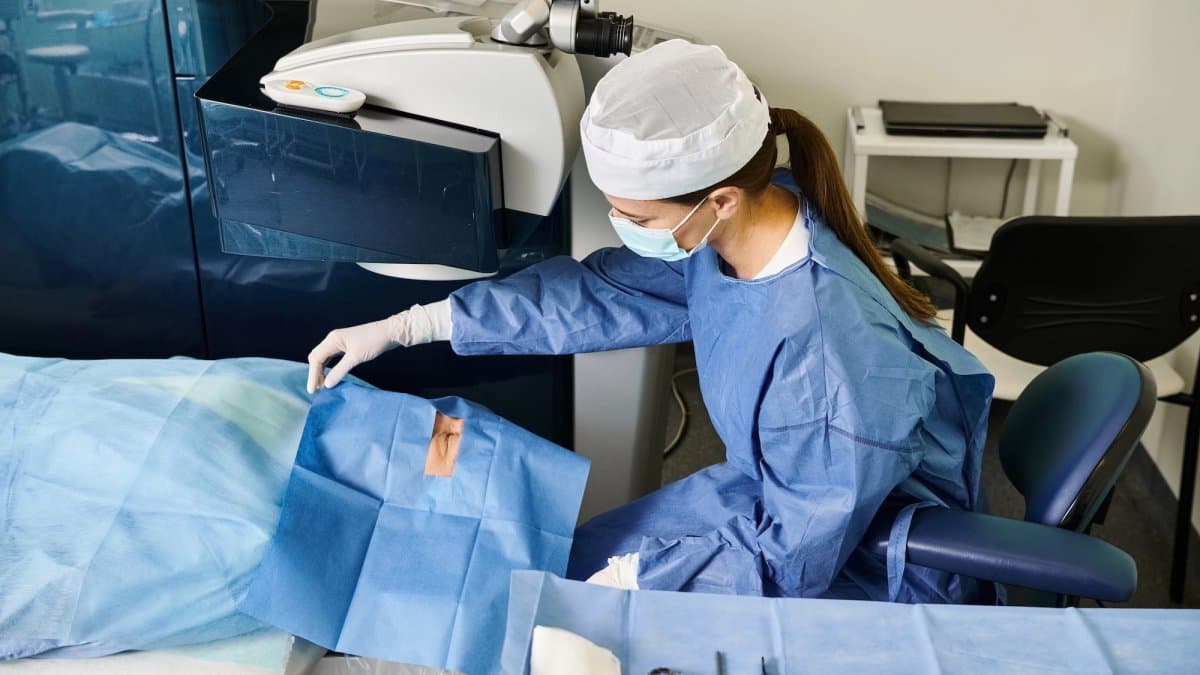
Surgeon Wears Apple Vision Pro to Fix Cataract in Medical First
Companies Mentioned
Why It Matters
The breakthrough proves mixed‑reality headsets can enhance surgical precision and democratize specialist knowledge, potentially reshaping operating‑room workflows and creating a niche market for consumer‑grade devices in healthcare.
Key Takeaways
- •Vision Pro used for first cataract surgery via mixed‑reality platform
- •Custom ScopeXR app streams 3D microscope data to headset
- •Remote experts can view surgeon’s perspective in real time
- •$3,500 headset cost rivals traditional surgical imaging systems
Pulse Analysis
Mixed reality has long promised to bridge the gap between digital data and the physical operating room, but early attempts with Google Glass and HoloLens fell short due to limited resolution and clunky ergonomics. Apple’s Vision Pro, launched in February 2024, offers best‑in‑class visual fidelity and a comfortable, lightweight design, making it a more viable candidate for clinical environments. By integrating high‑resolution video feeds from surgical microscopes, the headset transforms static imaging into an immersive, stereoscopic experience that can be overlaid with patient vitals, anatomical maps, and procedural checklists.
Dr. Eric Rosenberg’s October 2025 cataract operation leveraged a purpose‑built application, ScopeXR, to funnel real‑time 3D data into the Vision Pro. The surgeon could toggle between a direct view of the eye and an augmented overlay of critical metrics, while colleagues in distant hospitals logged in to observe the procedure as if standing beside him. This remote collaboration model not only accelerates knowledge transfer but also provides a safety net for complex cases, allowing senior specialists to intervene virtually when complications arise. The ability to record and replay first‑person footage also creates a powerful training tool for residents and medical students.
The successful deployment signals a potential pivot for Apple’s mixed‑reality hardware from consumer novelty to a specialized medical instrument. At roughly $3,500, the Vision Pro is inexpensive compared with traditional surgical imaging rigs that can cost tens of thousands of dollars, making it attractive to community hospitals with tighter budgets. If adoption scales, we may see a new ecosystem of MR‑focused surgical software, reimbursement pathways, and regulatory frameworks, positioning mixed reality as a cost‑effective catalyst for precision medicine and global surgical education.
Surgeon wears Apple Vision Pro to fix cataract in medical first
Comments
Want to join the conversation?
Loading comments...