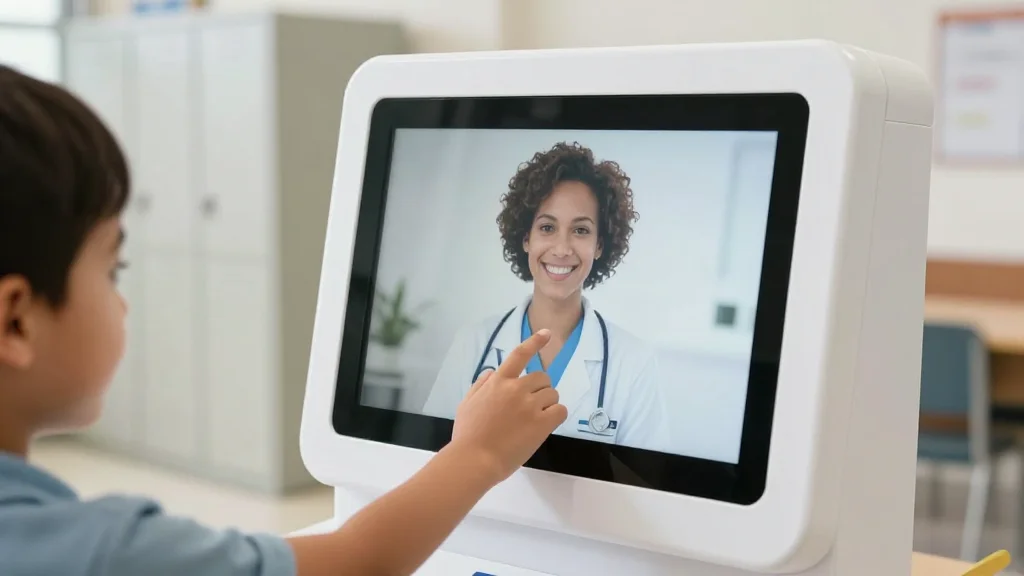
Telehealth in Schools: Expanding Student Access in a Hybrid Health Care System
Why It Matters
School‑based telehealth directly tackles the provider shortage while boosting student health outcomes, which in turn supports academic performance and reduces costly emergency care. Its expansion could reshape how K‑12 institutions contribute to public health equity nationwide.
Key Takeaways
- •Clinician shortage drives schools to adopt telehealth services.
- •School telehealth cuts student absenteeism and emergency department visits.
- •Programs in Texas and North Carolina improve attendance and mental‑health access.
- •Rural students gain provider access regardless of ZIP code.
- •Sustainable funding and policy coordination needed for nationwide rollout.
Pulse Analysis
As the nation grapples with a widening gap between patient demand and clinician supply, policymakers are looking beyond traditional clinics for solutions. Schools, already embedded in daily family routines, present a logical extension of the hybrid health‑care model, allowing children to connect with licensed providers without travel or scheduling hurdles. This shift aligns with broader federal initiatives aimed at preventive care and behavioral health, positioning education venues as critical touchpoints for early intervention and health education.
Data from pilot programs in Texas and North Carolina illustrate tangible benefits: attendance rates rose by up to 5 percent, while emergency‑department utilization among participating students fell by roughly 12 percent. Mental‑health access, a chronic shortfall in many districts, saw a 30 percent increase in completed virtual visits, demonstrating that telehealth can deliver specialty services even in resource‑constrained settings. These outcomes underscore the potential for school‑based telehealth to serve as a scalable equity lever, especially in rural zip codes where provider scarcity is most acute.
Realizing this promise, however, hinges on robust policy frameworks and reliable financing. State Medicaid waivers, federal grant programs, and public‑private partnerships can supply the infrastructure and staffing needed for sustainable operations. Additionally, integrating telehealth workflows with existing school health staff—nurses, counselors, and administrators—ensures continuity of care and reduces provider burnout. As districts adopt standardized protocols and data‑sharing agreements, the education sector can evolve into a proactive health hub, delivering preventive services, chronic‑disease management, and health literacy that benefit students and their families for a lifetime.
Telehealth in Schools: Expanding Student Access in a Hybrid Health Care System
Comments
Want to join the conversation?
Loading comments...