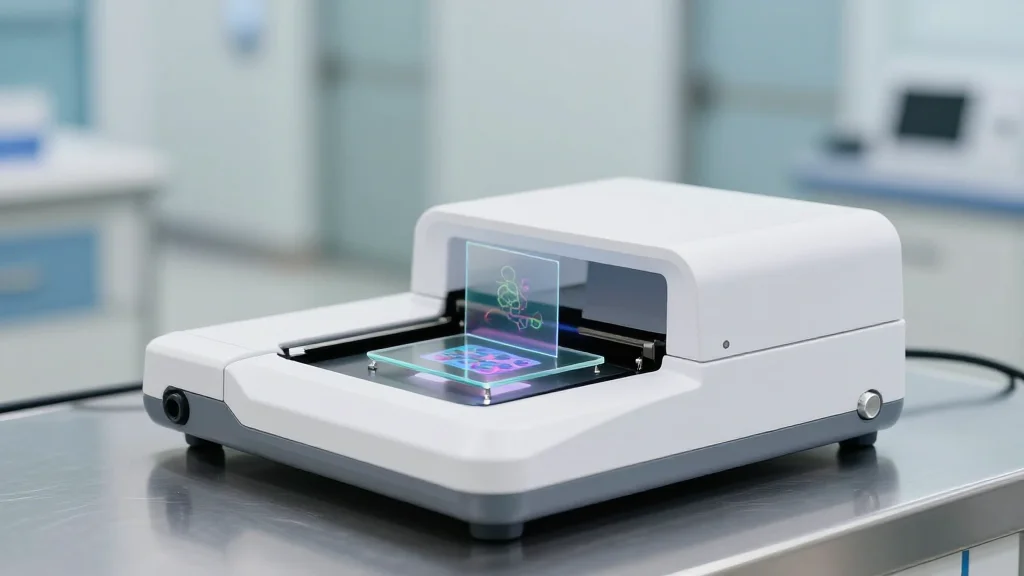
Transforming Pathology at Scale: NYU Langone’s Achievement of a Fully Digital Workflow in One Year to Accelerate Diagnosis, Collaboration, and AI-Enabled Innovation
Why It Matters
By eliminating physical slide handling, NYU dramatically speeds diagnosis, improves diagnostic consistency, and creates a data foundation for AI‑driven insights—an emerging competitive edge for health systems seeking precision medicine at scale.
Key Takeaways
- •NYU Langone digitized 100% of pathology slides within 12 months
- •Digital workflow cut average diagnosis turnaround from 48 to 30 hours
- •Integrated AI tools flag 15% of cases for secondary review
- •Real‑time image sharing enabled multi‑site collaboration across three hospitals
- •Project cost $45 million (≈ $45 M) with projected ROI in five years
Pulse Analysis
The shift to digital pathology is reshaping how hospitals process and interpret tissue samples. Traditional glass‑slide workflows are labor‑intensive, prone to loss, and limit remote consultation. NYU Langone’s rapid, institution‑wide digitization—covering over a million slides in twelve months—demonstrates that large health systems can overcome these barriers with coordinated investment in high‑throughput scanners, cloud storage, and standardized image formats. This move not only accelerates turnaround times but also creates a uniform data set that fuels downstream analytics.
AI integration is the next frontier, and NYU’s deployment illustrates its practical impact. By embedding machine‑learning models that highlight suspicious regions, the system automatically flags roughly 15% of cases for secondary review, reducing diagnostic errors and freeing pathologists to focus on complex interpretations. The AI layer also supports research pipelines, enabling rapid cohort identification for clinical trials and biomarker discovery. As more institutions adopt similar tools, the collective data pool will improve model robustness, driving a virtuous cycle of accuracy and efficiency.
From a business perspective, the $45 million investment is justified by projected cost savings, higher throughput, and new revenue streams from AI‑enabled services. Hospitals that replicate NYU’s model can expect faster patient care, stronger collaborative networks across campuses, and a competitive advantage in the burgeoning market for digital pathology solutions, which analysts forecast to exceed $5 billion globally by 2030. The NYU case underscores that strategic digital transformation, when paired with AI, can deliver measurable clinical and financial returns, setting a new standard for pathology departments nationwide.
Transforming Pathology at Scale: NYU Langone’s Achievement of a Fully Digital Workflow in One Year to Accelerate Diagnosis, Collaboration, and AI-Enabled Innovation
Comments
Want to join the conversation?
Loading comments...