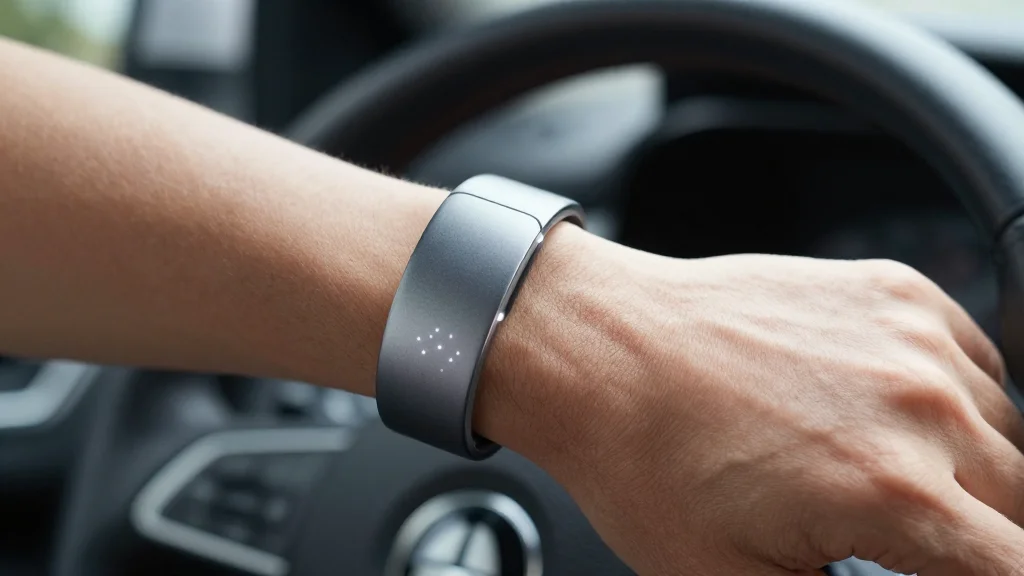
Triboelectric Wrist Sensor Achieves 98% Accuracy in Detecting Driver Fatigue

Why It Matters
The sensor addresses a long‑standing challenge in wearable health tech: maintaining signal fidelity when devices are pressed tightly against the skin. By preserving fine pulse‑wave details, it enables reliable fatigue detection, a critical factor in reducing road accidents caused by driver drowsiness. The technology also demonstrates how micro‑engineered interfaces can extend the utility of triboelectric sensors beyond laboratory settings, paving the way for broader health‑monitoring applications. Beyond road safety, the ability to capture high‑resolution pulse data under variable pressure conditions could improve remote cardiac monitoring, especially for patients who struggle with conventional chest straps. The integration of machine‑learning analytics further illustrates the convergence of hardware innovation and AI, a trend that is reshaping the health‑tech landscape.
Key Takeaways
- •Researchers from three universities created an interfacial engineered triboelectric sensor (IETS) for wrist wearables.
- •The sensor achieved 98% accuracy in classifying driver fatigue using a 1D‑CNN model.
- •Technical specs: 4.28 V/kPa sensitivity, 2 Pa detection limit, 70 ms response time, 110 kPa range.
- •Design features include piezo‑frustums and mountain‑like microstructures to maintain signal under preload.
- •Future plans include field trials with trucking firms and potential OEM partnerships.
Pulse Analysis
The IETS represents a strategic shift from purely optical or inertial fatigue monitors toward a hybrid biometric approach that leverages the pulse waveform. Historically, driver‑monitoring systems have relied on cameras to detect eye closure or head pose, which can be obstructed by lighting conditions or sunglasses. A wrist‑based sensor sidesteps these limitations, offering a discreet, always‑on solution that can be retrofitted to existing fleets without major vehicle modifications.
From a market perspective, the sensor’s high accuracy and low power consumption make it attractive for both consumer wearables and enterprise safety solutions. Companies like Garmin and Fitbit have already introduced basic fatigue alerts, but they lack the granular pulse‑wave analysis that the IETS provides. If the upcoming field trials confirm robustness across varied demographics, we could see a rapid influx of OEM licensing deals, similar to the way Apple’s HealthKit spurred a wave of third‑party health devices.
Looking ahead, the convergence of triboelectric sensing with edge AI could unlock continuous health monitoring for chronic disease management. The same micro‑engineered interface that preserves pulse fidelity under pressure could be adapted for blood‑pressure cuffs, glucose monitors, or even implantable devices. The key challenge will be scaling manufacturing while maintaining the precise microstructures that give the sensor its edge. Investors and industry watchers should monitor the partnership talks that are likely to follow the field‑trial results, as they will signal how quickly this technology moves from the lab to the road.
Triboelectric Wrist Sensor Achieves 98% Accuracy in Detecting Driver Fatigue
Comments
Want to join the conversation?
Loading comments...