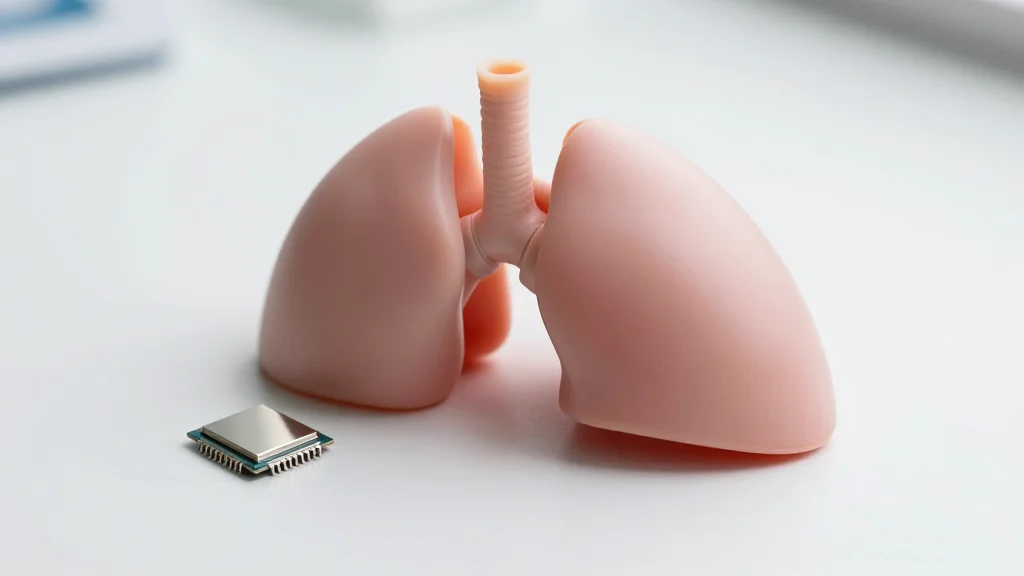
UB and Roswell Park Launch MIRACLE AI Tool to Predict Lung Cancer Surgery Complications

Why It Matters
MIRACLE represents a concrete step toward embedding explainable AI into everyday surgical workflows, moving beyond population‑level risk calculators to truly individualized assessments. By reducing postoperative complications, the tool could improve survival rates, lower healthcare costs associated with extended hospital stays, and enhance patient quality of life. Its multimodal design also sets a precedent for future health‑tech innovations that combine imaging, clinical data and natural‑language insights. Beyond thoracic surgery, MIRACLE’s architecture could be adapted for other high‑risk procedures—such as cardiac or hepatic resections—accelerating a broader shift toward data‑driven, patient‑centric care across the health system.
Key Takeaways
- •MIRACLE integrates clinical data, CT radiomics and LLM‑generated explanations into a single risk model
- •Post‑operative complications affect up to 40% of lung‑cancer surgeries, driving the need for better risk tools
- •Surgeons can edit AI‑generated risk summaries to incorporate nuanced patient factors
- •Pilot study of 500+ resections planned for later 2026 to validate and refine the model
- •If successful, the multimodal approach could be extended to other surgical specialties
Pulse Analysis
The launch of MIRACLE arrives at a moment when health‑tech investors are increasingly betting on AI that can demonstrate clear clinical utility. Unlike many diagnostic algorithms that remain confined to research labs, MIRACLE tackles a decision point—whether to operate—that directly influences patient outcomes and hospital revenue streams. Its multimodal design addresses a common criticism of AI in medicine: the reliance on a single data type that fails to capture patient heterogeneity. By marrying structured EHR variables with high‑resolution imaging and narrative explanations, the tool offers a richer, more interpretable risk profile.
Historically, thoracic surgery risk calculators have been static, derived from decades‑old cohort studies. MIRACLE’s ability to update risk estimates in real time as surgeons input additional observations could shift the paradigm from static scoring to dynamic decision support. This aligns with a broader industry trend toward "human‑in‑the‑loop" AI, where clinicians retain ultimate authority while benefiting from algorithmic precision. However, the path to widespread adoption will hinge on rigorous external validation, regulatory clearance, and integration with existing electronic health record systems—each a potential bottleneck.
If MIRACLE proves effective, it could catalyze a wave of specialty‑specific AI tools that blend multimodal data and explainability, reinforcing the market narrative that AI must be both accurate and transparent to earn clinician trust. For investors, the project signals a viable commercial opportunity: licensing the platform to hospital networks, embedding it within surgical planning suites, or offering it as a SaaS solution with continuous learning capabilities. The upcoming multi‑institutional trial will be a litmus test for both clinical impact and commercial scalability, setting the stage for the next generation of AI‑augmented surgical care.
UB and Roswell Park Launch MIRACLE AI Tool to Predict Lung Cancer Surgery Complications
Comments
Want to join the conversation?
Loading comments...