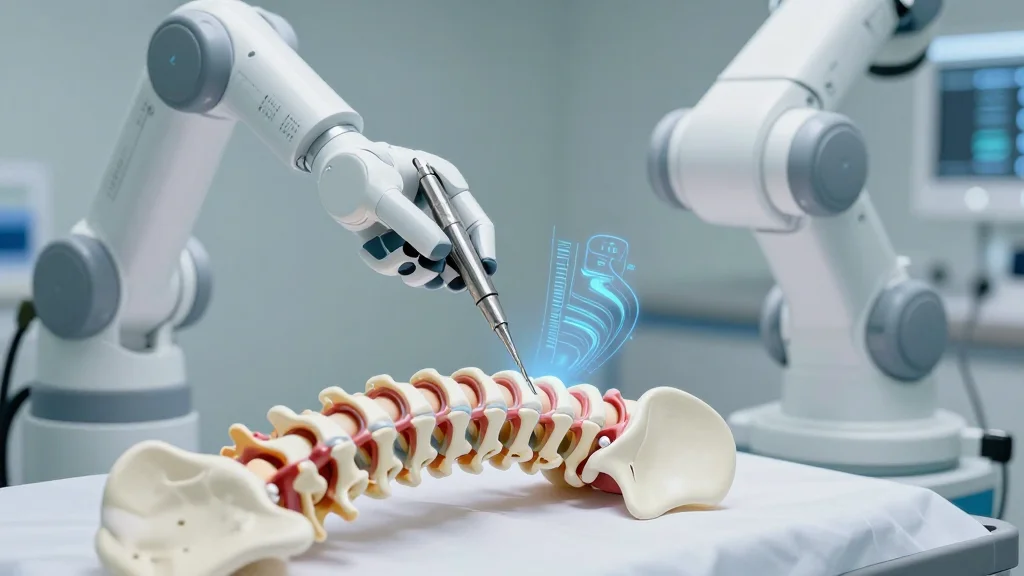
UC San Diego Health Performs First AI‑Guided Robotic Spine Surgery on West Coast

Companies Mentioned
Why It Matters
The integration of AI into robotic spine surgery could reshape the standard of care by delivering unprecedented precision, reducing radiation exposure, and shortening operative times. If the technology lives up to its promise, it may lower overall healthcare costs through fewer complications and readmissions, while setting a new benchmark for surgical safety. Beyond orthopedics, the platform demonstrates a viable pathway for AI‑driven assistance in other complex procedures, potentially accelerating the broader digital transformation of operating rooms and influencing policy on AI governance in clinical settings.
Key Takeaways
- •UC San Diego Health performed the West Coast's first AI‑guided robotic spine surgery on May 1, 2026.
- •The platform merges AI alignment planning, patient‑specific implants, navigation and robotic screw delivery.
- •Real‑time intra‑operative CT scanning reduces radiation dose while improving image quality.
- •Surgeons report faster procedures and higher accuracy, with AI suggesting optimal screw size and trajectory.
- •The breakthrough may pressure competitors to bundle AI analytics with existing robotic systems.
Pulse Analysis
The UC San Diego case arrives at a moment when health‑tech investors are pouring capital into AI‑enabled surgical tools. In 2025, venture funding for AI‑driven medical devices topped $2 billion, reflecting confidence that data‑rich algorithms can augment human expertise. By delivering a fully integrated solution, UCSD sidesteps the fragmented approach that has limited adoption of earlier robotic platforms, which often required surgeons to toggle between separate imaging, planning and execution tools.
Historically, robotic spine surgery has been dominated by hardware manufacturers, with software playing a supporting role. The new platform flips that paradigm, positioning AI as the central orchestrator of the procedure. This shift could force device makers to rethink product roadmaps, potentially leading to strategic partnerships with AI firms or in‑house development of proprietary algorithms. The competitive pressure may also accelerate regulatory clarity, as the FDA continues to refine its framework for AI/ML‑based medical devices.
Looking ahead, the real test will be outcome data. Early anecdotal reports of reduced radiation and faster screw placement are promising, but insurers and hospital administrators will demand robust evidence of cost savings and patient‑centered benefits. If UCSD can publish statistically significant improvements in complication rates and length of stay, the platform could become the new gold standard, prompting a wave of adoption across academic medical centers and large health systems. The ripple effect would not only reshape spine surgery but also set a precedent for AI‑guided interventions in other high‑risk specialties.
UC San Diego Health Performs First AI‑Guided Robotic Spine Surgery on West Coast
Comments
Want to join the conversation?
Loading comments...