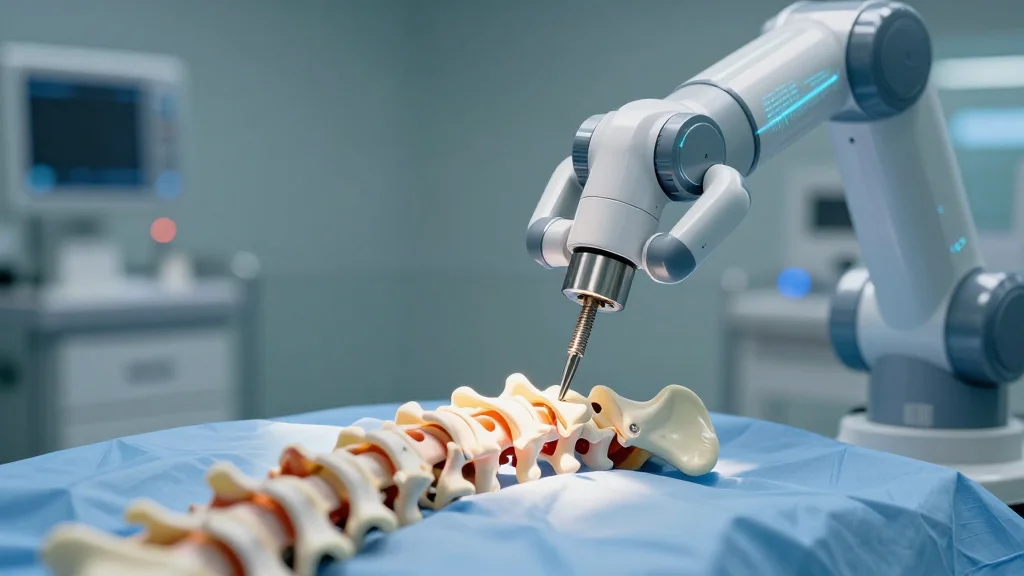
UC San Diego Health Performs First West Coast AI‑Robotic Spine Surgery

Why It Matters
The integration of AI with robotic assistance in spine surgery could redefine surgical precision and patient safety across the health‑tech sector. By automating alignment planning and customizing implants, the technology reduces human error and may lower the incidence of revision surgeries, a major cost driver in orthopedic care. If the clinical benefits are confirmed, the platform could spur broader investment in AI‑enhanced surgical tools, prompting manufacturers to develop more interoperable systems. Health insurers may also adjust coverage policies, balancing higher procedural fees against projected savings from fewer complications and shorter hospital stays.
Key Takeaways
- •UC San Diego Health performed the West Coast's first AI‑robotic spine fusion on April 27, 2026.
- •The system merges AI planning, advanced imaging, navigation and robotic screw delivery in one workflow.
- •AI models were trained on more than 40,000 prior spine cases to suggest optimal implant placement.
- •Early conference data show AI‑planned implants lead to fewer repeat surgeries.
- •Higher upfront cost is justified by potential reductions in revision surgery and recovery time.
Pulse Analysis
The debut of an AI‑driven robotic spine platform at UC San Diego Health signals a turning point for surgical robotics, moving from assistance to decision‑support. Historically, robotics have excelled at repeatable motions, while AI has been confined to pre‑operative planning. This convergence eliminates the traditional workflow gap where surgeons must pause to cross‑reference imaging, thereby streamlining the operation and reducing exposure to radiation. The real test will be whether the promised reduction in revision surgeries materializes at scale, because insurers will only reimburse higher‑priced technology if downstream savings are demonstrable.
From a competitive standpoint, the rollout puts UC San Diego Health ahead of peer institutions on the West Coast, potentially attracting patients seeking cutting‑edge care and top talent looking to work with advanced tools. Device manufacturers will likely accelerate development cycles to incorporate AI modules, creating a new market segment that blends hardware precision with software intelligence. This could lead to a wave of partnerships between health systems and AI firms, reshaping the revenue models of both sectors.
Looking forward, the key variables will be clinical outcomes, cost‑effectiveness and regulatory acceptance. If the longitudinal data confirm lower complication rates and faster recoveries, the platform could become a benchmark for spine surgery, prompting revisions to clinical guidelines and influencing Medicare’s coverage decisions. Conversely, if cost overruns or safety concerns emerge, adoption may stall, reinforcing the need for rigorous post‑market surveillance. The next twelve months will therefore be critical in determining whether AI‑robotic spine surgery moves from a headline‑making pilot to a mainstream standard of care.
UC San Diego Health Performs First West Coast AI‑Robotic Spine Surgery
Comments
Want to join the conversation?
Loading comments...