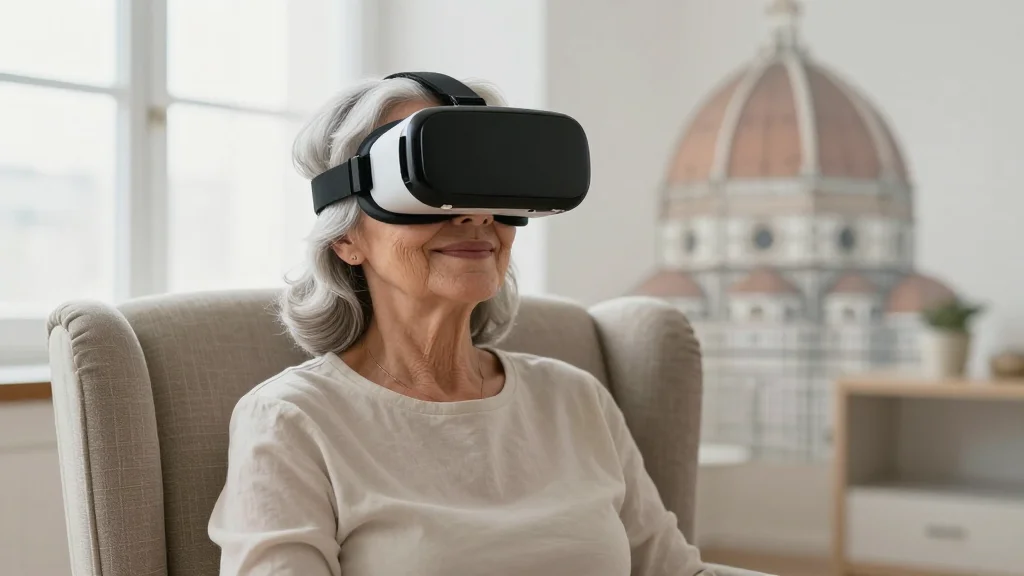
VR Headset Transports 82‑year‑old Nursing Home Resident to Florence, Boosting Senior Care

Companies Mentioned

Why It Matters
The deployment of VR in senior living addresses two pressing challenges: social isolation and cognitive decline. By offering realistic, transportive experiences, immersive tech can stimulate memory pathways and improve mood, potentially reducing reliance on medication. Moreover, the VA’s decision to fully reimburse Mynd’s therapy signals a possible policy shift that could unlock broader payer support, making such interventions financially viable for more facilities. If insurers begin to recognize VR as a reimbursable therapeutic modality, the market could see rapid scaling, driving down hardware costs and spurring innovation in content tailored to diverse cultural and medical needs. This would not only benefit seniors but also set a precedent for other chronic‑care populations.
Key Takeaways
- •Mynd Immersive demonstrated VR travel to 82‑year‑old Carol Foster at The New Jewish Home.
- •Company has raised over $8 million and serves ~800 health‑care facilities nationwide.
- •Annual facility subscription ranges from $1,800 to $3,000 per headset.
- •VA will prescribe and fully reimburse Mynd’s VR therapy for veterans at home.
- •VR market valued at nearly $10 billion, with senior‑care as a fast‑growing segment.
Pulse Analysis
The Mynd Immersive case underscores a pivotal moment where immersive technology moves from novelty to therapeutic mainstay in elder care. Historically, VR adoption in health has been hampered by high hardware costs and limited clinical evidence. Mynd’s subscription pricing, combined with a growing evidence base linking virtual travel to improved mood and memory recall, lowers the barrier for facilities that operate on thin margins.
Competitive dynamics are sharpening. While Rendever and Viva Vita focus on similar travel experiences, UprightVR’s emphasis on balance assessment introduces a functional health angle that could attract physical‑therapy budgets. Mynd’s advantage lies in its early partnership with the VA, a government payer whose endorsement can catalyze broader insurance acceptance. If outcome data from the upcoming VA pilots demonstrate measurable reductions in depression scores or medication usage, insurers may be compelled to create reimbursement codes, mirroring the path taken by telehealth during the pandemic.
Looking forward, the sector’s growth will hinge on content diversification and integration with health‑record systems. Personalized narratives that align with a resident’s life history could amplify therapeutic impact, while biometric sensors could provide clinicians with real‑time data on engagement and stress levels. As the technology matures, we may see a shift from episodic “field trips” to continuous, data‑driven therapeutic regimens, positioning VR as a core component of holistic senior‑care models.
VR headset transports 82‑year‑old nursing home resident to Florence, boosting senior care
Comments
Want to join the conversation?
Loading comments...