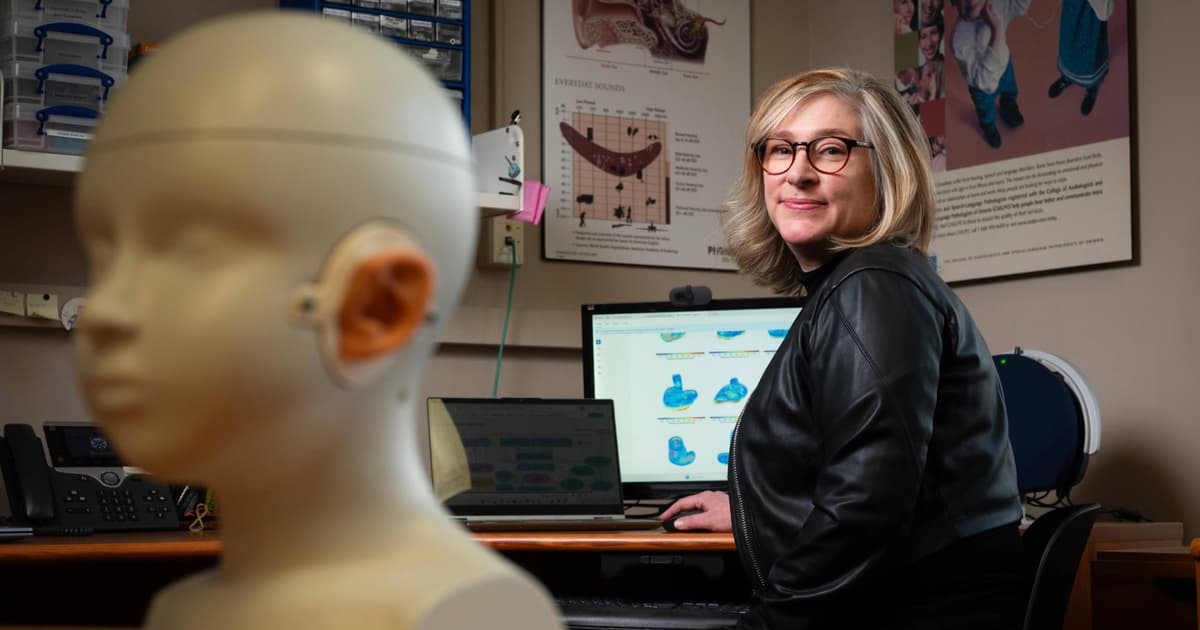
Western University Uses AI to Predict Ear Growth and 3D Print Earmolds
Why It Matters
Predicting ear growth and printing custom earmolds ahead of time can slash appointment delays, keeping children’s hearing aids functional during crucial developmental windows. This proactive model also promises global access to affordable, on‑demand hearing solutions.
Key Takeaways
- •AI predicts ear growth, enabling pre‑printed earmolds for children
- •$4.4 M Oberkotter grant funds four‑year ALLEars project
- •Mirroring technique halves ear impressions needed for young patients
- •Open‑source workflow aims to serve low‑income countries worldwide
- •3D‑printed earmolds reduce appointment frequency and hearing‑aid downtime
Pulse Analysis
Hearing loss affects roughly 34 million children worldwide, and for those who rely on hearing aids, a well‑fitted earmold is essential for sound transmission. Traditional workflows require frequent impressions and weeks‑long turnaround times, causing interruptions during the critical period when language skills are forming. Each replacement not only burdens families with additional appointments but also risks setbacks in auditory development. By shifting from a reactive to a predictive approach, the ALLEars initiative addresses a long‑standing clinical bottleneck, offering a template for how data‑driven manufacturing can improve pediatric care outcomes.
The core of the system is a machine‑learning engine trained on thousands of digital ear impressions, enabling it to extrapolate future ear geometry months ahead of time. A novel mirroring algorithm further reduces the need for bilateral scans by inferring the shape of the opposite ear, a boon for toddlers who cannot tolerate repeated molding. Once the AI outputs a predicted CAD file, advanced micro‑scale 3D printers fabricate the earmold using biocompatible resins, while custom firmware ensures dimensional fidelity. By releasing the entire workflow as open‑source, the team lowers barriers for audiology clinics and manufacturers, especially in resource‑constrained settings.
ALLEars sits at the intersection of two rapidly expanding markets: AI‑driven medical imaging and on‑demand additive manufacturing. Investors have already poured billions into similar platforms, as evidenced by Axial3D’s $18.2 million raise for patient‑specific implant pipelines. Scaling the earmold solution could unlock a multi‑billion‑dollar opportunity in pediatric audiology, while also providing a low‑cost, portable alternative for low‑income regions lacking local prosthetic labs. As hospitals adopt predictive‑fabrication models, the broader healthcare ecosystem may see reduced supply‑chain latency, higher patient adherence, and new revenue streams from digital‑first device services.
Western University Uses AI to Predict Ear Growth and 3D Print Earmolds
Comments
Want to join the conversation?
Loading comments...