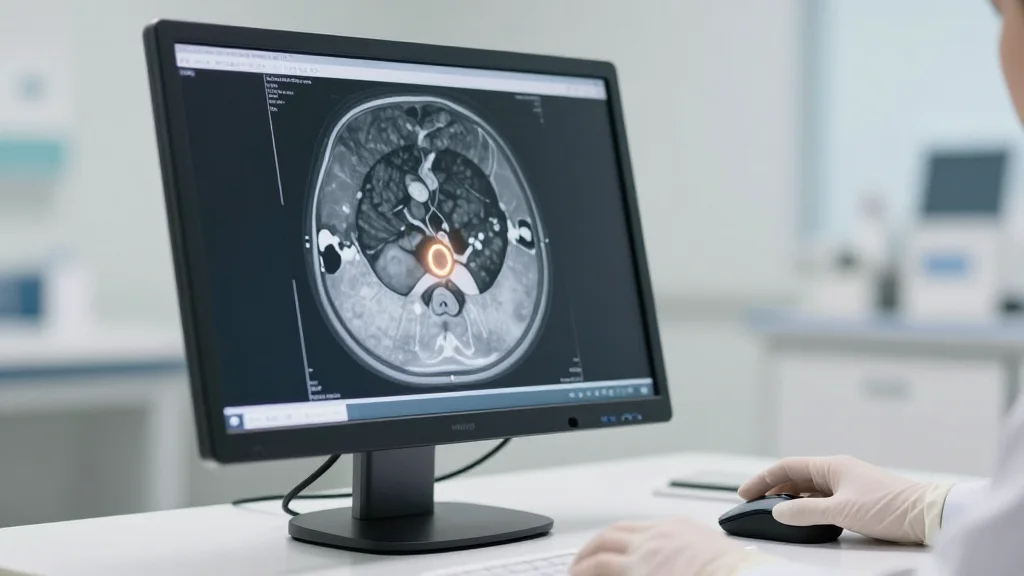
Whole-Body PET System Cuts Scan Time by over 80%
Companies Mentioned
Why It Matters
Accelerated scans boost patient throughput and reduce operational costs while improving diagnostic confidence, reshaping oncology imaging workflows.
Key Takeaways
- •LAFOV PET/CT cuts scan time to 2.5 minutes
- •Scan time reduced by 83% versus conventional scanners
- •Lesion detection rises, 68% of patients show extra lesions
- •Image quality metrics improve across noise, sharpness, conspicuity
- •Germanium‑oxide detectors with SiPMs drive sensitivity gains
Pulse Analysis
The emergence of long‑axis field‑of‑view PET/CT systems marks a pivotal shift in nuclear medicine hardware. By extending detector coverage to 128 cm and pairing germanium‑oxide crystals with silicon photomultipliers, manufacturers achieve markedly higher photon capture efficiency. This hardware advantage translates into superior signal‑to‑noise ratios, allowing clinicians to acquire diagnostic‑grade images in a fraction of the time required by traditional short‑axis LSO/LYSO scanners. The technology also proves versatile across a spectrum of radiotracers, from 18F‑FDG to 68Ga‑PSMA, reinforcing its broad clinical applicability.
From a workflow perspective, the 83% reduction in acquisition time reshapes patient throughput and scheduling dynamics. A 2.5‑minute scan enables multiple examinations per hour, easing bottlenecks in high‑volume oncology centers and potentially lowering per‑scan labor costs. Moreover, the study’s finding that LAFOV imaging uncovers additional small lesions in 68% of cases suggests a tangible diagnostic advantage, which could influence treatment planning and outcomes. Radiologists benefit from clearer images with less motion artifact, while patients experience shorter, more comfortable appointments.
Economically, the adoption curve for LAFOV PET/CT will hinge on capital expenditure versus long‑term efficiency gains. Early‑stage pricing remains premium, yet the promise of higher reimbursement through improved lesion detection and faster turnaround may justify the investment. Competitive pressure is mounting as GE HealthCare and Siemens Healthineers expand their LAFOV portfolios, prompting hospitals to evaluate total cost of ownership, including maintenance of silicon‑photomultiplier modules. As insurers recognize the clinical value of earlier and more accurate cancer staging, reimbursement frameworks are likely to evolve, further incentivizing the shift toward whole‑body, ultra‑fast PET imaging.
Whole-body PET system cuts scan time by over 80%
Comments
Want to join the conversation?
Loading comments...