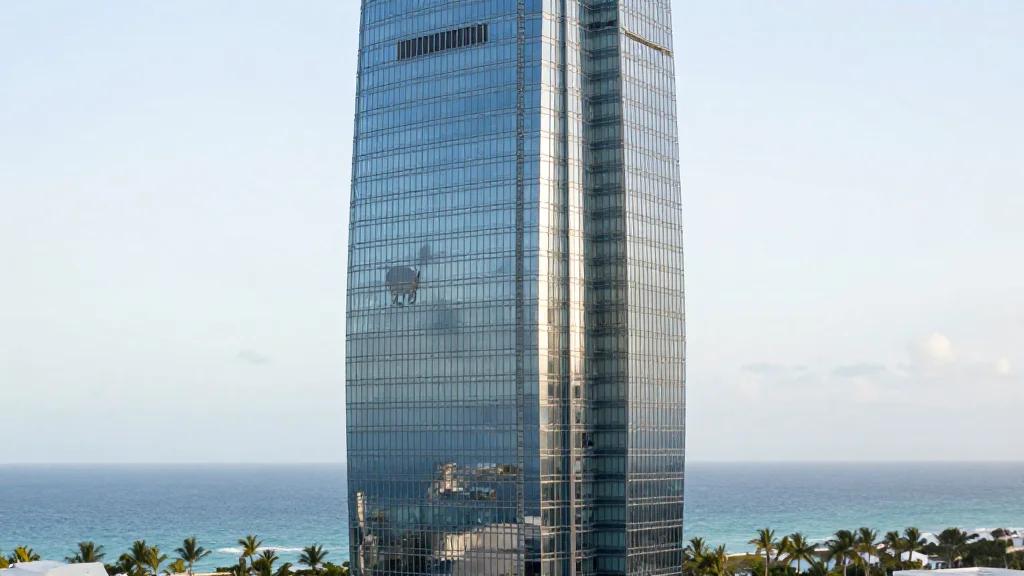
Citadel Expands Miami HQ, Ken Griffin Bets on Florida as NYC Tax Plan Looms

Companies Mentioned
Why It Matters
Citadel’s Miami expansion signals a tectonic shift in hedge‑fund geography, where tax policy and regulatory climate increasingly dictate where capital clusters. New York City, long the epicenter of asset‑management, faces a tangible risk of losing not only office space but also the ancillary ecosystem of law firms, data providers, and service vendors that thrive on proximity to large funds. For investors, the relocation could reshape liquidity flows, alter regional talent pools, and pressure other financial hubs—such as Austin and Dallas—to compete for the same high‑skill workforce. For municipal policymakers, the episode offers a cautionary tale: aggressive wealth‑tax proposals can trigger rapid capital flight, eroding tax bases that fund public services. The potential loss of $2.3 billion in taxes and hundreds of high‑paying jobs underscores how fiscal decisions reverberate far beyond headline‑grabbing political rhetoric, affecting everything from school funding to infrastructure projects.
Key Takeaways
- •Citadel adds several hundred thousand sq ft to its Brickell tower, targeting a 1.7 M‑sq‑ft, 54‑story headquarters.
- •Mayor Mamdani’s proposed luxury‑home tax highlighted Griffin’s $238 M Manhattan penthouse.
- •Citadel and its 2,500 employees have paid $2.3 B in NYC taxes over five years; Griffin has donated $650 M to charity.
- •New York Post warns a 10 % slowdown in the financial sector could cut 3,000 jobs and $168 M in tax revenue.
- •Apollo Global Management’s Marc Rowan is also scouting a “second headquarters” in Florida or Texas.
Pulse Analysis
Citadel’s Miami bet is less a reaction to a single tax proposal than a culmination of a multi‑year migration trend among elite asset managers. Since 2022, the firm has already shifted its global headquarters from Chicago to Miami, citing Illinois’ high tax burden and crime concerns. The latest expansion amplifies that narrative, positioning Miami as a de‑risking hub that offers regulatory predictability, a growing talent pipeline, and a lifestyle appeal that resonates with senior executives.
Historically, hedge funds have clustered in New York because of dense networks of prime brokers, legal counsel, and market data providers. However, digital connectivity and cloud‑based trading platforms have eroded the geographic friction that once made Manhattan indispensable. As firms like Citadel and Apollo plant deeper roots in Sun‑belt cities, we can expect a re‑balancing of ancillary service markets—law firms and fintech firms may follow the capital, while legacy vendors in New York scramble to retain relevance through specialization.
Policy‑wise, Mamdani’s pied‑à‑terre tax illustrates the perils of targeting a narrow wealth segment without a broader fiscal strategy. While the tax could raise $5‑$10 billion annually if enacted, the accompanying risk of capital flight may offset or even outweigh those gains. Cities competing for financial services will likely double‑down on incentives—tax abatements, workforce development grants, and streamlined permitting—to lure firms. For investors, the takeaway is clear: the hedge‑fund landscape is becoming increasingly fluid, and the next decade may see a constellation of regional financial centers rather than a single dominant metropolis.
Citadel expands Miami HQ, Ken Griffin bets on Florida as NYC tax plan looms
Comments
Want to join the conversation?
Loading comments...