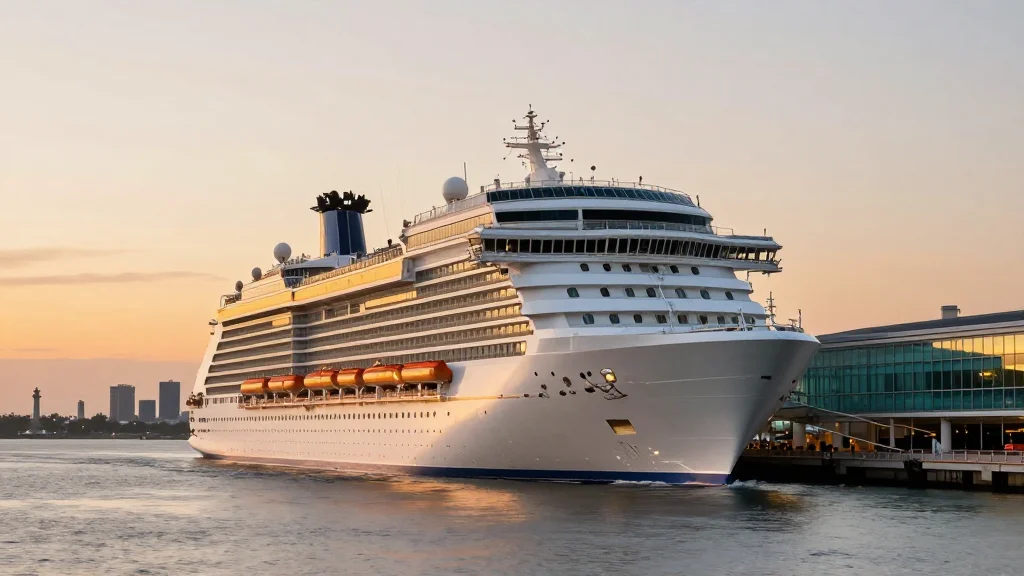
Icon Of The Seas Is Moving To Galveston, Not Florida.
Companies Mentioned
Why It Matters
The relocation gives Royal Caribbean a strategic foothold in a high‑growth, under‑served U.S. market while easing capacity pressure on Miami’s congested terminals, potentially reshaping the geography of American cruising.
Key Takeaways
- •Icon of the Seas to sail from Galveston in Aug 2027.
- •Galveston’s $2.4 bn master plan adds five new terminals by 2045.
- •Port projects 5 million passengers by 2030, rivaling Port Canaveral.
- •Texas drive‑to market reaches ~65 million households within 8‑hour drive.
- •Florida ports face capacity limits and heightened political risk.
Pulse Analysis
Royal Caribbean’s decision to homeport Icon of the Seas in Galveston marks a watershed moment for the U.S. cruise industry. The 236,000‑gross‑ton vessel, capable of carrying 7,600 guests, has been the flagship of the line since its 2024 debut. By shifting its most visible asset to the Gulf Coast, Royal not only frees a valuable dock at Miami but also signals confidence in Texas’s ability to support mega‑ship operations, from berthing and fueling to rapid turnaround. This bold move underscores the company’s long‑term vision of diversifying its geographic footprint beyond the traditional Florida corridor.
The Port of Galveston’s $2.4 billion, 20‑year expansion plan is the infrastructure backbone enabling the shift. New terminals slated for completion through 2045 will increase capacity, while projections of 5 million passengers by 2030 aim to outpace Port Canaveral and challenge Miami’s dominance. Crucially, Galveston taps into a massive drive‑to market: roughly 65 million households across Texas, Oklahoma, Arkansas, Louisiana, and the Mississippi River corridor lie within an eight‑hour car ride. Coupled with the proliferation of nonstop flights to Houston’s George Bush Intercontinental and Dallas‑Fort Worth, the Gulf Coast now offers comparable accessibility to Florida’s airports, reducing a historic barrier for inland travelers.
For the broader cruise sector, the Galveston relocation could trigger a re‑evaluation of homeport strategy. Florida’s ports are grappling with capacity constraints, lengthy permitting processes, and a volatile political climate that has introduced regulatory uncertainty. Texas presents a more cooperative environment, with state incentives and a willingness to invest in port infrastructure. If Royal successfully fills Icon’s capacity year‑round, other lines may follow suit, accelerating the decentralization of U.S. cruise operations and fostering competition that could benefit consumers through lower fares and expanded itineraries. The outcome will likely influence where future mega‑ships are built and deployed, reshaping the competitive map of North American cruising.
Icon Of The Seas Is Moving To Galveston, Not Florida.
Comments
Want to join the conversation?
Loading comments...