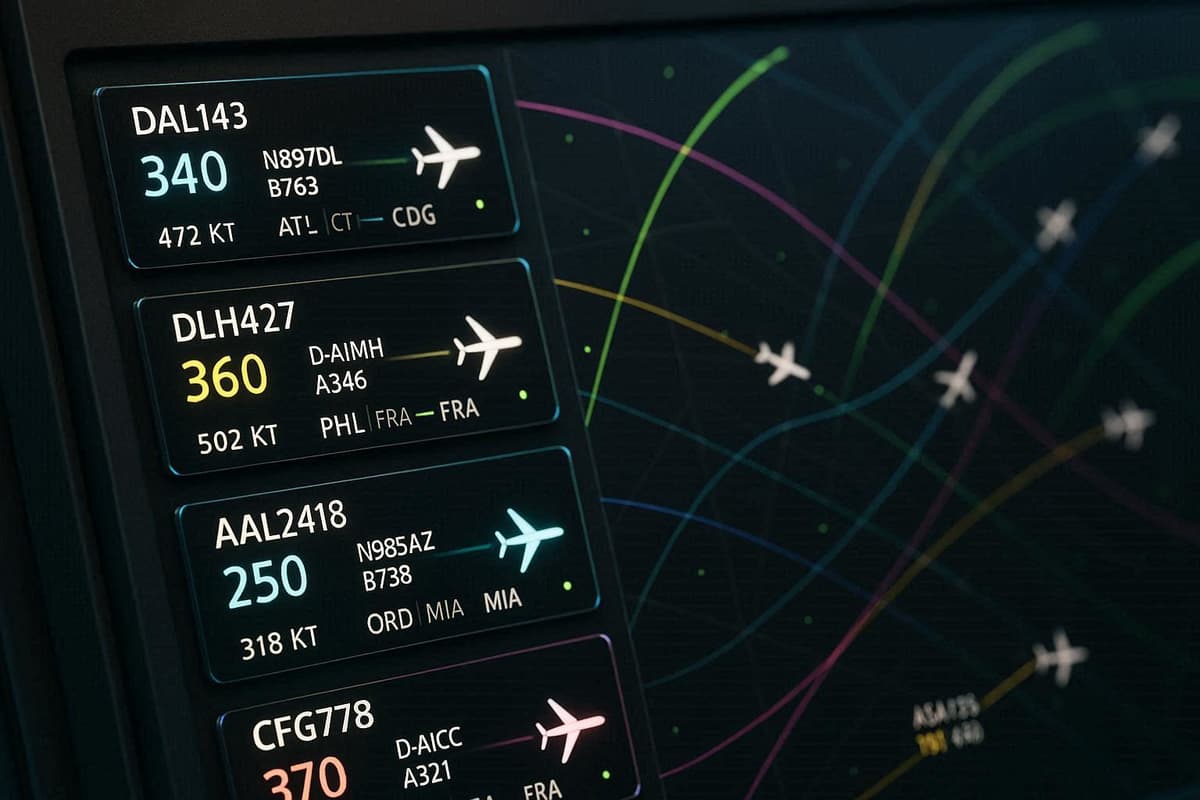
Washington D.C. Revolutionizes Air Traffic Control with Digital Flight Strips at Reagan National Airport
Companies Mentioned
Why It Matters
Digital strips boost operational efficiency and safety, accelerating the FAA’s nationwide ATC modernization and setting a template for other major U.S. airports.
Key Takeaways
- •DCA now uses Leidos‑powered digital flight strip system
- •Real‑time data shared across all controller workstations
- •Predictive tools help anticipate congestion before bottlenecks
- •Part of FAA’s $12.5 billion airspace modernization effort
- •Sets precedent for digital upgrades at other U.S. airports
Pulse Analysis
The shift from paper Flight Progress Strips to digital interfaces marks a pivotal moment in U.S. air traffic control. For decades, controllers relied on manually handled strips, a method still common in many parts of the world. International peers such as Canada and the United Kingdom completed their transitions years ago, prompting the FAA to prioritize a comprehensive upgrade to keep pace with global standards and growing traffic demands.
At Reagan National Airport, the new digital ground‑control system, developed by Leidos under the FAA’s Terminal Flight Data Manager program, replaces physical strips with a synchronized, real‑time display. Controllers can now access flight details, sequencing algorithms and congestion forecasts from any workstation, dramatically reducing the risk of human error. The predictive modeling tools enable proactive traffic management, smoothing taxiway flow and cutting ground delays in an airspace already constrained by limited runways and nearby federal zones.
Beyond DCA, the rollout signals a broader transformation of the National Airspace System. The $12.5 billion investment aims to modernize aging infrastructure across the country, with digital strips slated for other high‑traffic hubs. Industry stakeholders anticipate heightened safety margins, improved on‑time performance and a more resilient network capable of handling future growth. As more airports adopt the technology, the United States moves closer to a fully integrated, data‑driven air traffic management ecosystem.
Washington D.C. Revolutionizes Air Traffic Control with Digital Flight Strips at Reagan National Airport
Comments
Want to join the conversation?
Loading comments...