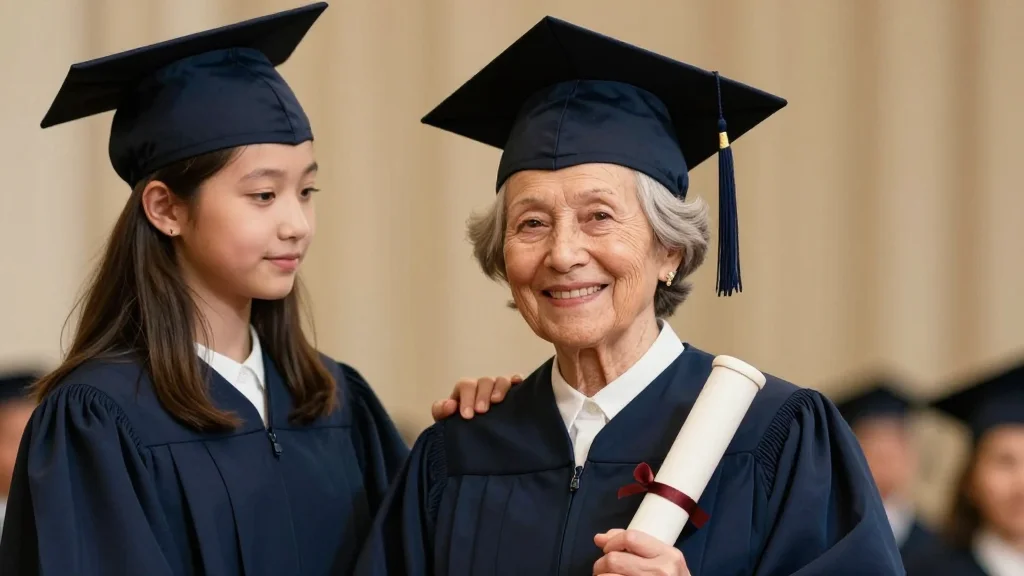
75-Year-Old Peggy Moore Earns Degree After 46-Year Hiatus, Inspiring Lifelong Learning

Why It Matters
Moore’s graduation spotlights a growing recognition that human potential is not bounded by age. As the population ages, societies that enable older adults to pursue education can tap into a reservoir of experience, mentorship, and civic engagement that benefits younger generations and the economy alike. Moreover, her story challenges entrenched narratives that equate youth with innovation, suggesting that resilience and perspective gained over decades are equally valuable assets. The ripple effect extends to policy and corporate strategy. If institutions can successfully integrate senior learners, they may unlock new models for workforce development, reduce age‑related skill gaps, and foster more inclusive cultures. Moore’s journey thus serves as both inspiration and a practical case study for educators, employers, and legislators seeking to harness the full spectrum of human potential.
Key Takeaways
- •Peggy E. Moore, 75, graduated from Temple University after a 46‑year hiatus.
- •She completed her degree alongside granddaughter Najah Siddiq, highlighting intergenerational learning.
- •Moore’s return to school was motivated by coping with the death of her eldest son.
- •Her story aligns with a 22 % rise in older adult college enrollment over the past decade.
- •Moore plans to pursue a graduate degree, signaling continued ambition beyond traditional retirement age.
Pulse Analysis
Moore’s achievement is more than a feel‑good anecdote; it signals a structural shift in how education systems view age. Historically, universities have marketed themselves to a narrow age band—typically 18 to 24—yet demographic data now shows a sizable and growing cohort of learners over 60. This cohort brings distinct motivations, such as personal fulfillment, career pivots, or community contribution, which differ from the employment‑driven goals of younger students. Institutions that adapt curricula, scheduling, and support services to accommodate these learners can differentiate themselves in a competitive higher‑education market.
From a market perspective, the surge in senior enrollment dovetails with corporate talent strategies that emphasize upskilling and reskilling across the lifespan. Companies facing talent shortages are increasingly valuing the soft skills—leadership, problem‑solving, emotional intelligence—that older workers like Moore possess. By partnering with universities to create joint programs, businesses can create pipelines that keep seasoned employees engaged while infusing fresh academic knowledge.
Looking forward, Moore’s next step—pursuing a graduate degree—could become a template for other senior students. If universities can showcase success stories that combine academic rigor with real‑world experience, they may attract funding, philanthropic support, and policy backing to expand adult‑focused pathways. The broader implication for the Human Potential space is clear: unlocking latent ambition at any age not only enriches individual lives but also strengthens the social and economic fabric of communities.
75-Year-Old Peggy Moore Earns Degree After 46-Year Hiatus, Inspiring Lifelong Learning
Comments
Want to join the conversation?
Loading comments...