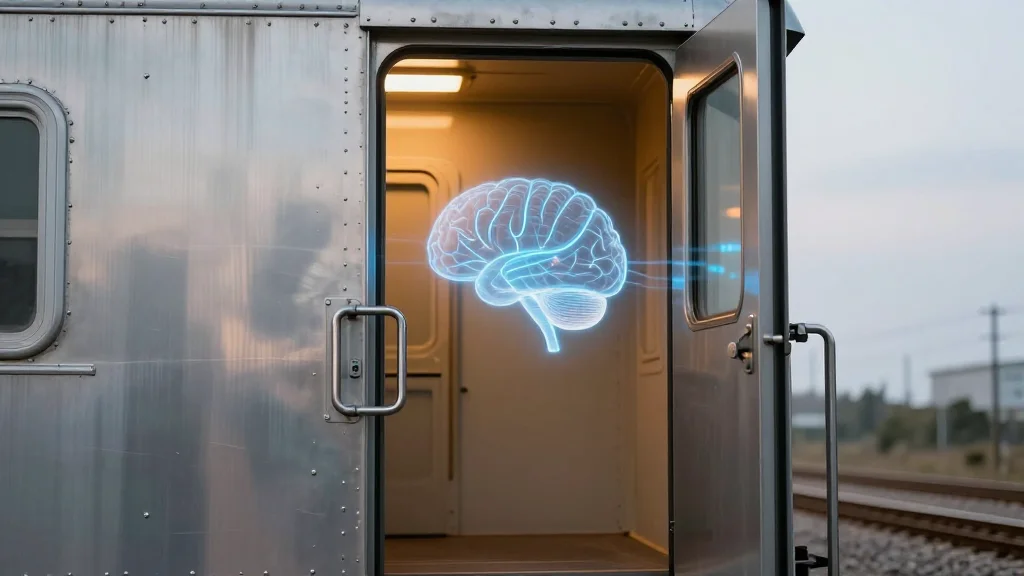
Coaching From the Caboose
Railway Age’s June 2026 issue launches "Coaching from the Caboose," a new column by executive coach Brenda Huizinga. The series applies neuroscience and somatic intelligence to help rail workers—from front‑line staff to C‑suite—improve mindset, energy, and results. Huizinga frames the caboose as a metaphor for a rear‑of‑train safety hub, linking it to personal performance monitoring. The first piece offers three actionable habits—self‑talk, joy, and micro‑energizers—and invites readers to book coaching sessions.

My Five Rules for a Perfect Week (And Why They Changed How I Plan Everything)
The author proposes a five‑rule framework for a "perfect week" that focuses on protecting core inputs—deep work, limited meetings, regular exercise, capped social events, and dedicated recovery—rather than chasing output metrics. Hitting all five criteria defines a successful week, even...

Emotionally Intelligent People Use a Simple 9-Word Question to Break Bad Habits, Make Better Decisions, and Build Stronger Relationships
A client, dubbed Roger, defends his volatile outbursts as part of his leadership style, despite creating a toxic workplace and high turnover. The author introduces a nine‑word question—“What important, long‑term goals are you sabotaging here?”—to shift focus from short‑term emotional...

11 Ways to Make Your Time Feel Less Rushed During a Busy Week
Laura Vanderkam’s new book *Big Time* reframes time as abundant, urging readers to view weeks rather than days to uncover hidden discretionary hours. She recommends simple half‑hour time‑tracking, dedicating an extra hour each week to preferred tasks, and carving out...

I Stopped Trying to “Find Myself” (And Started Building Myself Instead)
The author recounts a phone‑free walk that sparked a shift from the endless quest to "find" oneself toward a proactive "building" mindset. By likening personal growth to assembling a Lego set, the piece argues that incremental actions—rather than waiting for...
Women Who Rock: Foot Locker’s Michelle Wang on Having a Superpower
Michelle Wang, senior vice president and chief merchant at Foot Locker, urges people to identify their personal "superpower" and focus on innate strengths rather than perfection. She highlights the importance of women mentoring women, fostering confidence and a circle of...

How to Cultivate Your “Personal Power” As a Leader
Chris Lipp, a Tulane professor and executive coach, defines “personal power” as the internal belief in one’s ability to create impact, built on three pillars—control, agency, and action. He argues that this form of power, unlike formal hierarchy, can be...

How to Be Efficient in a World Full of Distractions
Robin Sharma notes that technology interrupts work every 11 minutes, and it takes about 25 minutes to regain focus. He contends that efficiency begins with self‑knowledge and is built on six variables—responsibility, ability, self‑motivation, self‑management, luck, and simplification. When these...

Woman Who Had to Re-Learn to Walk After Surgery Completes 551st Marathon
Australian endurance athlete Kaz Thorburn, who was told she would never play sport after spinal fusion surgery, has completed her 551st marathon in Sydney. After relearning to walk, she qualified for the Boston Marathon at age 55 and has finished...

A Psychologist’s Top 5 Signs Your Cognitive Load Is Too High
The article outlines five paradoxical signals that a leader’s cognitive load has exceeded a sustainable threshold, citing a 2011 Israeli judges study that showed decision quality plummets as mental resources wane. Overload creates a false sense of sharpness, heightened confidence,...
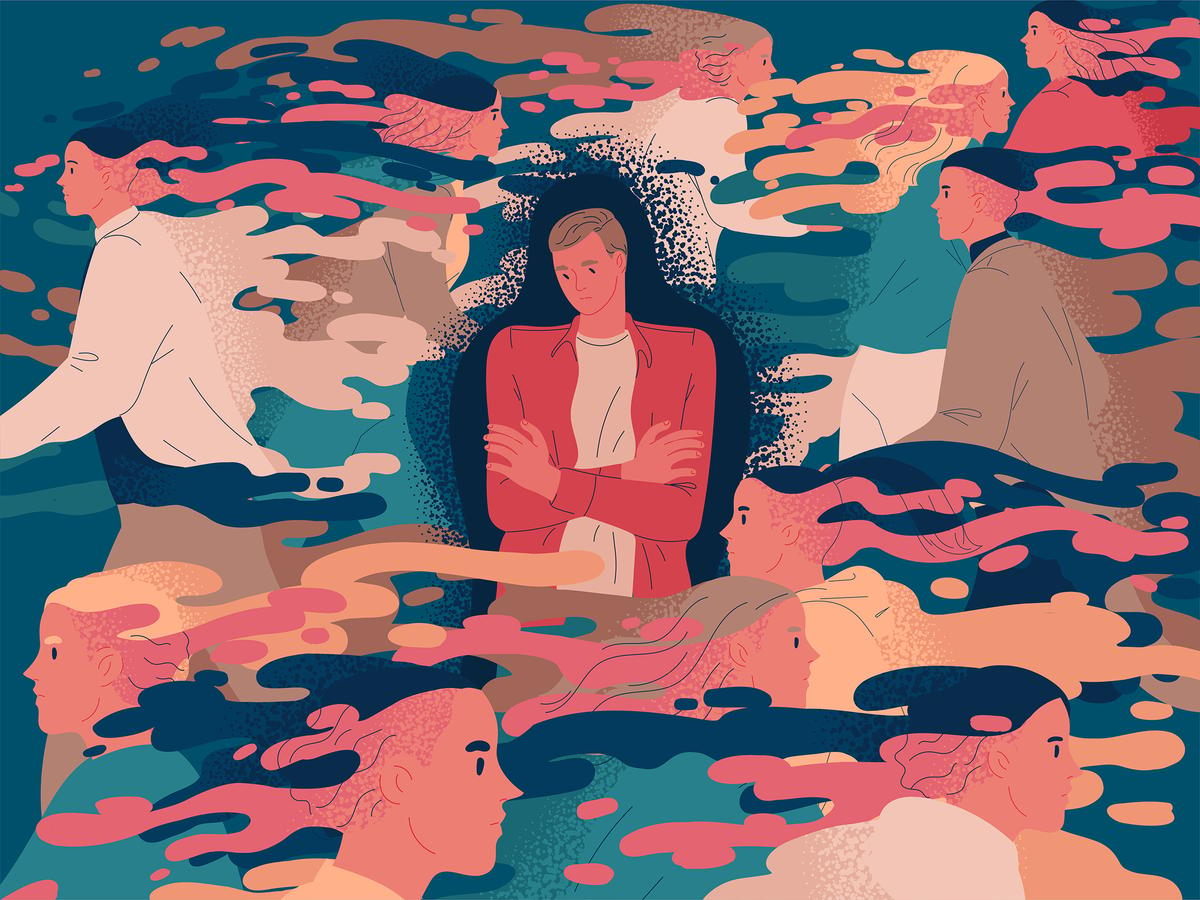
The Leader Everyone Relies on Is Often the One Nobody Checks On. Here’s How to Break the Pattern.
The article highlights a common leadership paradox: the most relied‑upon executives often appear invulnerable, yet they are the least checked on. Their habit of over‑functioning stems from early coping mechanisms that persist and intensify with success. The piece explains how...

Intellect Is Not Enough
Harvard’s Phi Beta Kappa literary exercises welcomed the class of 2026, honoring the top‑10% of undergraduates for academic excellence. Speakers, including poet Meghan O’Rourke and former president Larry Bacow, warned that intellect alone will not serve society; character, self‑control, and civic courage...

18 Habits to Become Smarter & Improve Your Intelligence
The article outlines 18 evidence‑backed habits that can boost cognitive performance, from daily reading and handwritten note‑taking to regular exercise and purposeful social interaction. Research cited shows these behaviors improve memory, emotional intelligence, and even delay dementia. The piece positions...
Laughing at You Behind Your Back
Seth Godin’s May 25, 2026 post argues that bold, generous, and creative leadership inevitably draws skeptics and criticism. He suggests that if you’re not hearing dissent, you may be holding back on risk‑taking or innovation. The piece frames criticism as a natural...

New Psychology Research Suggests a Brisk Walk Can Boost Your Creativity an Hour Later
A recent observational study of 157 young adults found that a brisk, moderate‑intensity walk lasting 10‑25 minutes can enhance verbal creativity about an hour later. The effect peaked 60‑70 minutes after exercise, while light activity of similar duration actually reduced...