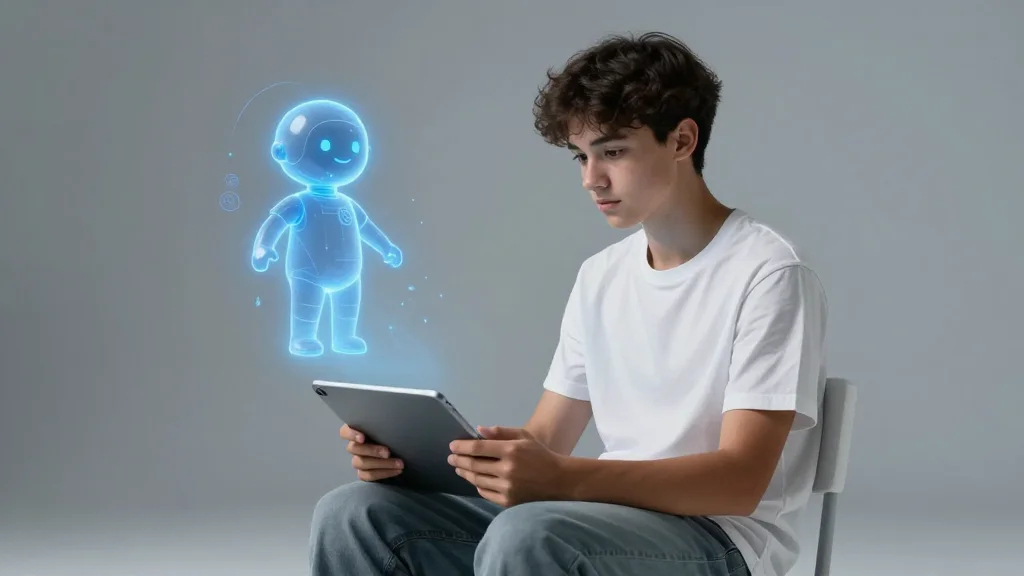
AI‑Assisted Pair Programming Boosts Novice Coders' Performance but Raises Workload and Stress

Why It Matters
The study provides the first empirical evidence that AI‑driven pair programming can materially improve novice coding outcomes, a key metric for scaling tech talent pipelines. At the same time, the documented rise in workload and negative affect signals a potential barrier to widespread adoption in educational settings, where student well‑being is a priority. Policymakers and curriculum designers will need to weigh these dimensions when deciding how deeply to embed generative AI in learning environments. Beyond classrooms, the results echo broader concerns about AI augmentation in the workplace: productivity gains may be offset by employee burnout if tools are not calibrated to human limits. Understanding and mitigating these trade‑offs will be essential for realizing the full promise of AI‑enhanced human potential.
Key Takeaways
- •Study posted on arXiv (April 2026) compared AI‑assisted vs. human‑only pair programming for novices.
- •AI‑assisted pairs outperformed human pairs on task correctness and speed.
- •Participants using AI reported higher NASA‑TLX workload scores and more negative affect.
- •Authors attribute performance gains to instant code generation, but stress to over‑reliance on AI suggestions.
- •Future work suggested: adaptive AI interfaces that monitor and respond to learner workload.
Pulse Analysis
The results of *Fast and Forgettable* arrive at a moment when educational institutions are racing to embed large language models into coding courses. Historically, pair programming has been championed for its collaborative learning benefits, yet it also demands strong communication skills that novices often lack. By inserting an AI partner, the study effectively removes the communication bottleneck, allowing students to focus on algorithmic reasoning. This explains the observed performance uplift.
However, the heightened cognitive load mirrors findings from human‑computer interaction research that any tool that reduces one type of effort often shifts the burden elsewhere. In this case, the mental effort of constantly evaluating AI‑generated code appears to outweigh the time saved. If unchecked, such strain could erode the long‑term retention of programming concepts, as learners may attribute success to the tool rather than their own reasoning.
From a market perspective, edtech firms developing AI coding assistants should treat these insights as a design imperative rather than a marketing footnote. Products that surface confidence scores, explain rationale, or allow users to set assistance levels could mitigate stress while preserving performance gains. In the broader human potential arena, the study underscores a recurring theme: augmentative technologies amplify capabilities but also amplify the need for human‑centric safeguards. The next wave of AI‑enhanced learning tools will likely be judged not just on speed or accuracy, but on how well they preserve learner well‑being and deep understanding.
AI‑Assisted Pair Programming Boosts Novice Coders' Performance but Raises Workload and Stress
Comments
Want to join the conversation?
Loading comments...