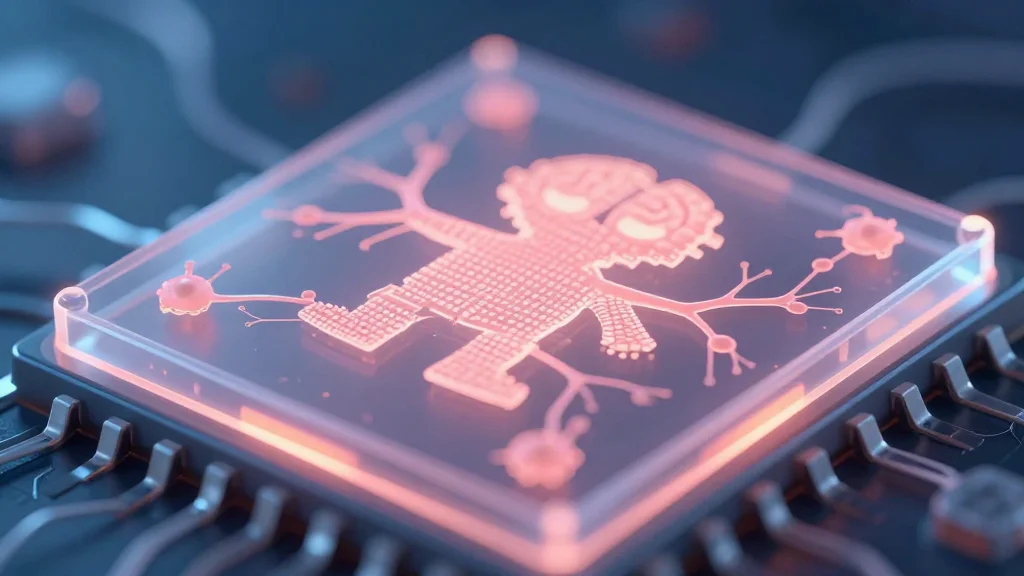
Australian Lab Grows Human Neurons That Can Play Doom, Opening New Frontiers in Neuro‑Gaming

Why It Matters
The demonstration that cultured human neurons can learn to play a complex video game blurs the line between biological and artificial intelligence, suggesting a future where brain‑based platforms augment human learning and rehabilitation. If refined, such systems could provide highly personalized cognitive training, potentially slowing age‑related decline or enhancing skill acquisition in ways conventional software cannot. Beyond personal development, the technology offers a novel testbed for neuroscience research, allowing scientists to observe learning dynamics in real time and evaluate pharmacological interventions with unprecedented fidelity. This could accelerate drug discovery for neurodegenerative diseases and reshape how we study brain plasticity.
Key Takeaways
- •Cortical Labs trained ~200,000 human brain cells to play Doom on a silicon CL1 chip
- •Neurons progressed from Pong to a 3D shooter, showing real‑time goal‑directed learning
- •Researchers convert game events into electrical stimulus patterns that drive neuron responses
- •CL1 platform is pitched for drug screening, robotics, and AI‑like learning tasks
- •Company plans to publish protocols and seek collaborations to expand neuro‑gaming applications
Pulse Analysis
Cortical Labs' achievement arrives at a moment when the neuro‑tech sector is racing to commercialize brain‑computer interfaces (BCIs) for both medical and consumer markets. Unlike invasive BCIs that read signals from implanted electrodes, this approach uses cultured neurons as a sandbox for learning, sidestepping many regulatory hurdles while still delivering biologically authentic computation. The move could carve out a niche for "biological computers" that complement, rather than replace, silicon AI.
Historically, attempts to harness living neural tissue for computation have been limited to simple pattern recognition or basic reflexes. By scaling to a game that requires spatial navigation, enemy detection, and decision‑making, Cortical Labs demonstrates a qualitative leap in complexity. This suggests that future iterations might tackle tasks such as language processing or adaptive control systems, potentially offering a new substrate for AI that learns in a more brain‑like fashion.
However, the path to market adoption is fraught with challenges. Maintaining viable neural cultures at scale, ensuring reproducibility, and addressing ethical concerns about using human‑derived cells for entertainment or training purposes will require robust frameworks. Moreover, the commercial viability hinges on whether the performance gains of biological computation outweigh the costs and logistical overhead compared with conventional GPUs and neuromorphic chips. If the company can demonstrate clear advantages—such as superior adaptability or lower energy consumption—it could attract investment from both biotech and AI investors, accelerating the convergence of these fields.
In the short term, the most realistic impact will be in research settings, where the CL1 chip can serve as a high‑throughput platform for testing neuropharmacological agents under dynamic, task‑oriented conditions. Over the next 12‑18 months, we can expect peer‑reviewed publications, pilot collaborations with pharmaceutical firms, and perhaps the first prototype neuro‑gaming headset that leverages cultured neurons for adaptive difficulty scaling. Whether this translates into a consumer‑grade self‑improvement tool will depend on advances in tissue engineering, regulatory clarity, and public acceptance of bio‑augmented entertainment.
Australian Lab Grows Human Neurons That Can Play Doom, Opening New Frontiers in Neuro‑Gaming
Comments
Want to join the conversation?
Loading comments...