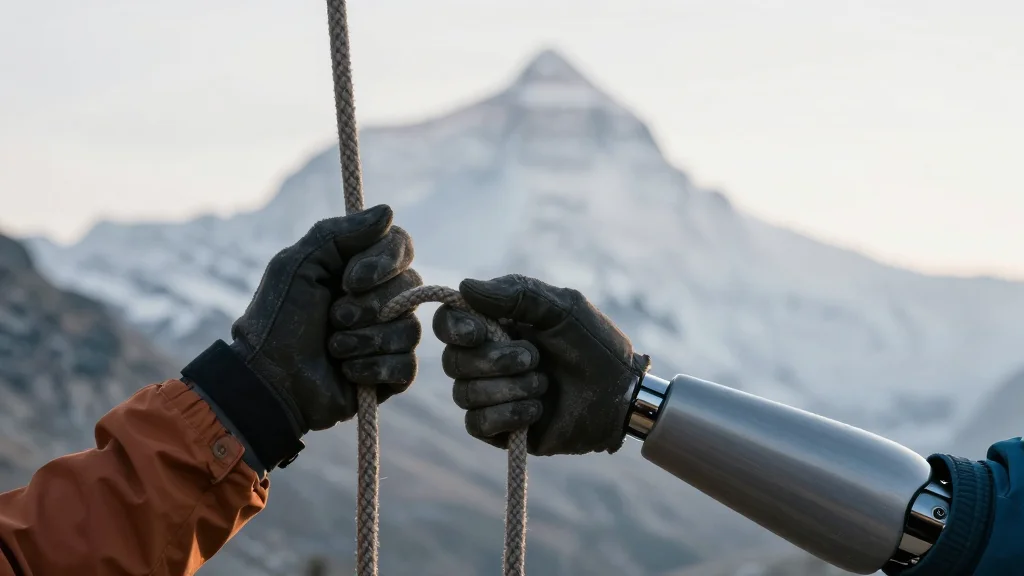
Double‑Amputee Rustam Nabiev Scales Everest Using Only His Hands

Why It Matters
Nabiev’s hand‑only Everest summit shatters preconceived limits on what bodies deemed ‘disabled’ can achieve in extreme environments. It provides a tangible case study for physiologists, engineers, and sports psychologists exploring how upper‑body conditioning, adaptive equipment, and mental resilience intersect to expand human performance boundaries. Moreover, the climb amplifies the conversation around inclusivity in adventure sports, potentially influencing policy, funding, and public perception of athletes with disabilities. By proving that a double‑amputee can conquer the planet’s highest mountain without prosthetics, the feat may inspire a new generation of climbers to pursue adaptive routes, prompting industry stakeholders to prioritize research and development of gear that accommodates a wider range of physical abilities. This could catalyze broader societal shifts toward recognizing and supporting diverse expressions of human potential.
Key Takeaways
- •Rustam Nabiev, a double‑amputee, reached Everest’s 8,848.86 m summit on May 20, 2026, using only his hands.
- •The ascent was confirmed by Nepalese Everest Base Camp officials and marked as the first hand‑only summit in mountaineering history.
- •Nabiev lost both legs in a 2015 barracks collapse in Omsk and has previously climbed Elbrus and Manaslu.
- •Adaptive climbing equipment and intensive upper‑body training enabled the feat, sparking interest in specialized gear for disabled athletes.
- •Nabiev plans to advocate for inclusive adventure sports and may attempt the Seven Summits using his hand‑only method.
Pulse Analysis
Rustam Nabiev’s Everest climb arrives at a moment when adaptive sports are gaining mainstream visibility, yet the market for truly specialized high‑altitude gear remains nascent. Historically, mountaineering equipment has been designed for able‑bodied climbers, with prosthetic solutions often retrofitted rather than purpose‑built. Nabiev’s success forces manufacturers to confront a design gap: creating hand‑centric harnesses, rope‑handling devices, and safety systems that can bear the unique stresses of a hand‑only ascent. Early adopters—small boutique firms in Europe and the United States—are likely to partner with physiotherapists and biomechanical engineers to prototype solutions, potentially attracting venture capital interested in the intersection of disability tech and extreme sports.
From a psychological perspective, Nabiev’s narrative reinforces the growing body of research linking trauma recovery with high‑risk achievement. His public statements about fighting “as long as there’s life left in you” echo resilience frameworks that emphasize purpose‑driven goal setting. Sports psychologists may cite his climb as a case study for post‑traumatic growth, influencing training curricula for athletes with disabilities. This could lead to increased funding for mental‑conditioning programs within national sports ministries, especially in countries seeking to showcase inclusive prowess on the world stage.
Looking ahead, the broader impact hinges on how quickly the climbing community adopts Nabiev’s methods. If elite expeditions begin to integrate hand‑only techniques, we could see a paradigm shift where adaptive climbing becomes a standard sub‑discipline rather than a novelty. Such a shift would not only expand participation rates but also reshape sponsorship models, as brands vie to align with stories that epitomize human perseverance. In the next 12‑18 months, monitoring equipment patents, sponsorship deals, and the emergence of new adaptive climbing competitions will be key indicators of whether this historic ascent translates into lasting industry transformation.
Double‑Amputee Rustam Nabiev Scales Everest Using Only His Hands
Comments
Want to join the conversation?
Loading comments...