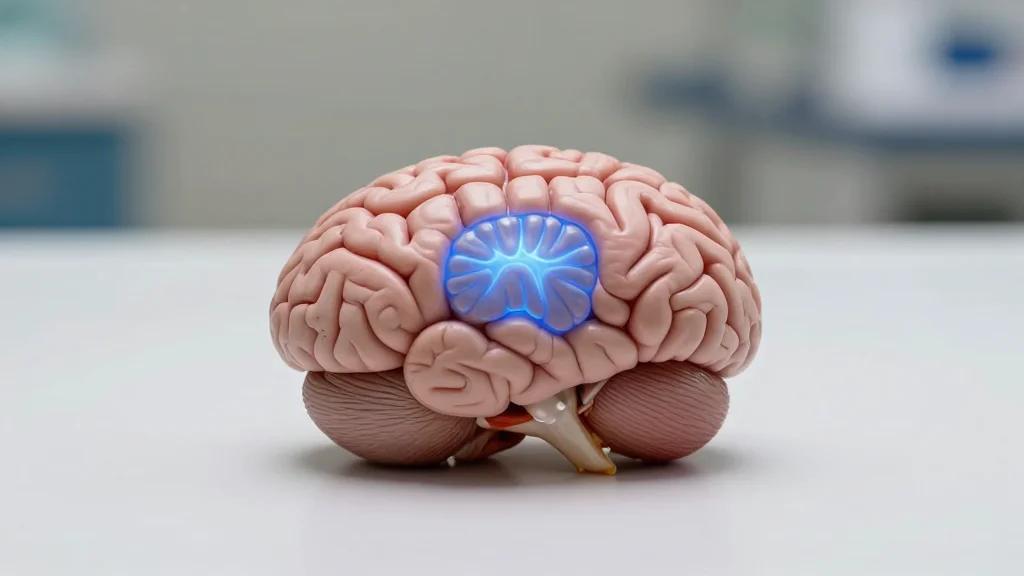
Early Brain Regions Found to Drive Decision‑Making, Upending Hierarchical Model

Why It Matters
The finding that decision‑related activity arises in primary sensory cortex reshapes a foundational assumption in cognitive neuroscience, suggesting that human judgment may be far more distributed and dynamic than the classic top‑down model implies. For the Human Potential field, this means new interventions could target sensory processing to improve decision quality, potentially enhancing learning, creativity, and resilience. In the AI arena, the research offers a biologically grounded blueprint for building systems that operate with the energy efficiency and adaptability of natural brains. If engineers can embed early decision loops into machine learning models, the next generation of AI could achieve higher performance with lower power consumption—a critical advantage as computational demand soars worldwide.
Key Takeaways
- •University of Illinois researchers recorded decision‑related signals in mouse primary somatosensory cortex (S1).
- •Findings published in PNAS challenge the hierarchical model that places decisions solely in frontal cortex.
- •Study used a naturalistic virtual‑reality environment where mice navigated using whisker input.
- •Lead author Yurii Vlasov argues the work could inspire AI designs that are more energy‑efficient and faster.
- •Implications include new neuro‑rehabilitation strategies and a shift toward distributed decision models in cognitive science.
Pulse Analysis
The early‑cortex decision signal overturns a paradigm that has guided both neuroscience and AI for decades. Historically, the brain was likened to a serial processor: sensory data entered lower areas, climbed a ladder of abstraction, and finally emerged as a decision in the prefrontal cortex. Vlasov’s work aligns with a growing body of evidence that the brain operates as a highly recurrent network, where feedback loops blur the line between perception and action. This reconceptualization mirrors a broader trend in AI toward neuromorphic and event‑driven architectures that eschew deep, monolithic layers for more distributed processing.
From a market perspective, the research could catalyze a wave of startups focused on “early‑decision” AI chips, promising orders of magnitude lower power draw—an attractive proposition for edge devices and autonomous systems. Companies that have invested heavily in conventional deep‑learning pipelines may need to reassess their roadmaps, potentially allocating R&D budgets to hybrid models that integrate sensory‑level decision modules.
Looking ahead, the translational path from mouse cortex to human cognition will be critical. If similar early decision signatures are confirmed in humans via non‑invasive imaging, we could see a new class of cognitive‑enhancement tools that train sensory‑motor loops rather than abstract reasoning alone. Such tools would dovetail with the Human Potential agenda of maximizing mental performance, offering a scientifically grounded complement to existing mindfulness and brain‑training programs.
Early Brain Regions Found to Drive Decision‑Making, Upending Hierarchical Model
Comments
Want to join the conversation?
Loading comments...