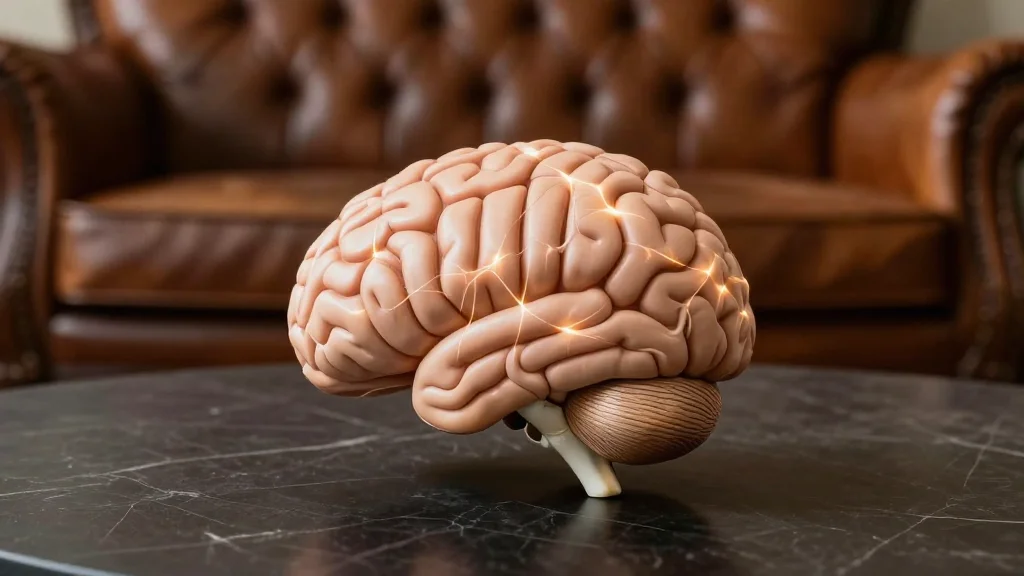
Freud Meets Predictive Brain Theory, Opening New Paths for Mental Health

Why It Matters
Linking psychoanalysis with predictive coding reframes mental disorders as problems of expectation management rather than purely symbolic conflicts. This perspective could broaden therapeutic toolkits, allowing clinicians to target both conscious narratives and underlying neural prediction errors. For the Human Potential field, it suggests that personal growth may be accelerated by interventions that consciously reshape predictive models, merging insight‑driven psychotherapy with brain‑based techniques. Moreover, the interdisciplinary bridge invites funding bodies and academic institutions to support joint research programs, potentially accelerating breakthroughs that benefit patients with treatment‑resistant conditions. By validating classic psychoanalytic concepts with modern neuroscience, the study also restores credibility to a discipline that has faced criticism for lacking empirical grounding.
Key Takeaways
- •Researchers publish Entropy paper linking Freud's psychoanalysis to predictive brain models
- •Quote: "For over 130 years, psychoanalysis has developed psychological theories about how predictions take place at a subjective level..."
- •Projection described as brain's active inference aligning subjective and physiological levels
- •Rigid symptoms framed as inflexible prediction models, suggesting new therapeutic targets
- •Call for interdisciplinary studies to develop biomarkers and personalized interventions
Pulse Analysis
The convergence highlighted by Stänicke’s team arrives at a moment when the mental‑health industry is seeking biologically grounded yet person‑centered approaches. Traditional psychoanalysis has long been dismissed by many neuroscientists for its lack of measurable constructs. By mapping its core concepts onto the predictive‑coding paradigm—a framework already influencing AI, robotics, and perception research—the authors provide a common language that could dissolve disciplinary silos.
Historically, attempts to reconcile Freud with brain science have stumbled over methodological gaps. This paper sidesteps those pitfalls by focusing on functional parallels rather than direct neural correlates, a strategy that may prove more fruitful for clinical translation. If future trials confirm that destabilizing maladaptive predictions reduces symptom severity, we could see a new class of hybrid therapies that blend narrative restructuring with precision‑targeted neurostimulation or computational modeling.
Looking ahead, the biggest challenge will be operationalizing these ideas in real‑world settings. Clinicians will need training to recognize prediction‑error dynamics in patients, while researchers must develop reliable metrics for “prediction rigidity.” Success will hinge on collaborative funding streams that bridge psychology departments, neuroscience labs, and digital‑health startups. Should these efforts coalesce, the Human Potential sector could witness a paradigm shift where personal transformation is engineered through both story and circuitry.
Freud Meets Predictive Brain Theory, Opening New Paths for Mental Health
Comments
Want to join the conversation?
Loading comments...