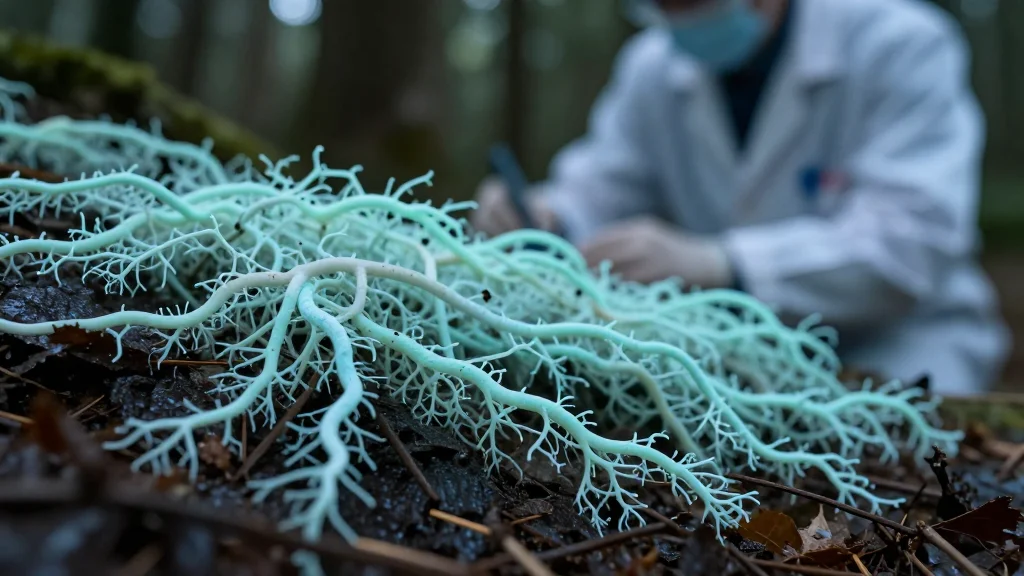
Merlin Sheldrake to Discuss Fungal Intelligence at UC Santa Cruz Deep Read Event

Why It Matters
Sheldrake’s insights bridge biology and philosophy, offering a concrete example of how natural systems can inform human behavior and societal structures. By highlighting fungi’s collaborative intelligence, the conversation challenges the dominant narrative of competition and individualism that often dominates personal development literature. This reframing could influence curricula in environmental studies, psychology, and leadership programs, encouraging a shift toward more network‑oriented, cooperative frameworks. Moreover, the Deep Read series demonstrates a growing institutional appetite for interdisciplinary public scholarship. By making cutting‑edge scientific ideas accessible to a broad audience, UC Santa Cruz is fostering a culture where scientific literacy and creative thinking intersect, potentially accelerating the adoption of ecological thinking in policy, business, and community initiatives.
Key Takeaways
- •Merlin Sheldrake will speak with historian Benjamin Breen on May 31 at 4 p.m. at UC Santa Cruz’s Quarry Amphitheater.
- •The event is part of the Humanities Institute’s seventh annual Deep Read series and is free and open to the public.
- •Two additional faculty salons—on May 19 and May 26—will explore fungal themes through history, environmental studies, poetry, and art.
- •Sheldrake’s book *Entangled Life* argues that fungal networks embody a distributed intelligence that can inspire new models of human creativity and collaboration.
- •The Deep Read program aims to translate scholarly insights into accessible public dialogue, supporting broader trends in citizen science and interdisciplinary education.
Pulse Analysis
The Deep Read conversation with Merlin Sheldrake arrives at a moment when the human potential narrative is increasingly anchored in ecological metaphors. Over the past decade, thought leaders from business, education, and wellness have borrowed concepts like ‘networked intelligence’ and ‘symbiotic collaboration’ to justify more inclusive, resilient practices. Sheldrake’s focus on fungi—organisms that literally knit ecosystems together—offers a scientifically grounded archetype for these ideas, moving the conversation from metaphor to observable biology.
Historically, the humanities have struggled to integrate hard science without diluting either discipline’s rigor. The Humanities Institute’s Deep Read model sidesteps this tension by pairing a scientist-author with historians and artists in a series of public salons. This format not only democratizes access to cutting‑edge research but also creates a feedback loop where artistic interpretation can inform scientific inquiry, echoing the interdisciplinary labs of the early 20th century that produced breakthroughs in both art and science.
Looking ahead, the ripple effects of this event could be significant. Universities may adopt similar public‑facing programs to showcase interdisciplinary research, while corporations seeking innovative problem‑solving frameworks might look to fungal network theory as a blueprint for organizational design. If the conversation succeeds in translating Sheldrake’s ecological insights into actionable strategies, it could accelerate a broader cultural shift toward viewing human potential through the lens of interdependence rather than competition.
Merlin Sheldrake to Discuss Fungal Intelligence at UC Santa Cruz Deep Read Event
Comments
Want to join the conversation?
Loading comments...