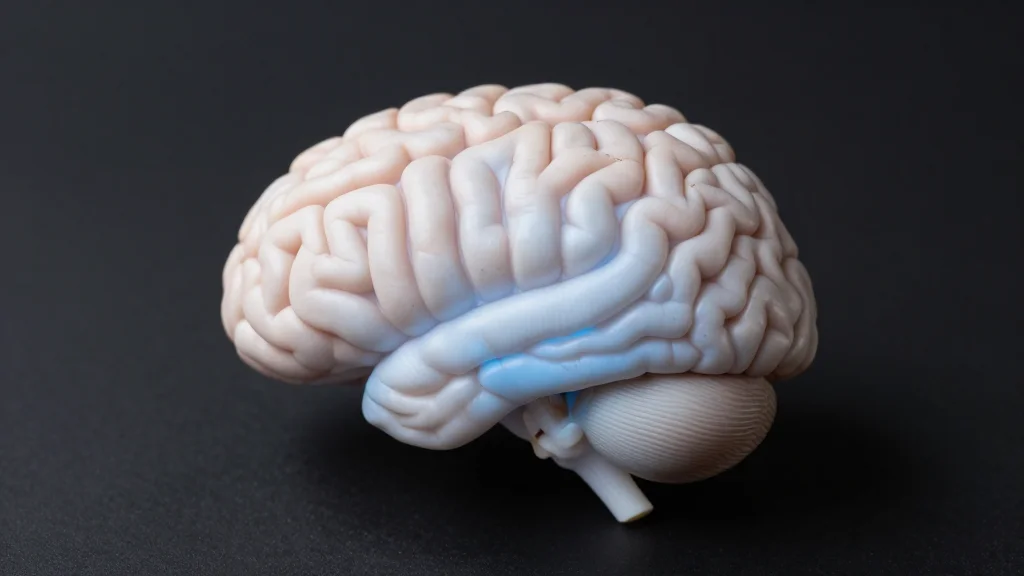
New Theory Says Imagination Works by Quieting Brain Activity

Why It Matters
Understanding imagination as a process of silencing background brain activity reshapes foundational assumptions about creativity, learning, and mental health. If the brain’s default chatter can be selectively muted to produce vivid mental images, new training regimes could be designed to enhance this capacity, potentially improving problem‑solving, artistic expression, and emotional regulation. Moreover, the theory offers a mechanistic target for clinical research into conditions where imagination is blunted, opening avenues for interventions that restore the brain’s ability to sculpt internal experiences. Beyond individual benefits, the model could influence how organizations cultivate innovative cultures. By emphasizing practices that reduce internal neural noise—such as mindfulness or controlled rest periods—companies might foster environments where employees can more readily generate novel ideas, thereby amplifying collective human potential.
Key Takeaways
- •Paper in Psychological Review proposes imagination works by suppressing background brain activity.
- •Brain uses ~20% of body’s energy, with 99% devoted to internally generated neural firing.
- •Theory challenges the feedforward model that adds top‑down signals to visual processing.
- •Potential applications include meditation‑based creativity training and new clinical approaches.
- •Future research will need high‑resolution imaging to verify selective silencing during imagination.
Pulse Analysis
The silencing hypothesis arrives at a moment when the neuroscience community is increasingly focused on the brain’s default mode network and its role in internally driven cognition. Historically, imagination was framed as a constructive overlay on sensory pathways, but recent advances in resting‑state fMRI have highlighted the richness of spontaneous activity. This new theory leverages that shift, positioning inhibition—not excitation—as the engine of mental imagery. If validated, it could reconcile disparate findings: why some people report vivid daydreams during quiet moments, and why certain meditative states enhance creative insight.
From a market perspective, the idea dovetails with a growing wellness industry that markets mindfulness and neurofeedback tools as creativity boosters. Companies developing brain‑computer interfaces may pivot to incorporate metrics of background activity suppression, offering users real‑time feedback on their imaginative capacity. Meanwhile, academic institutions might redesign curricula to include training in neural quieting techniques, aligning educational practices with the emerging science of imagination.
Looking ahead, the key test will be empirical. Demonstrating that imagined tasks produce measurable reductions in baseline neural firing, distinct from mere attentional shifts, will be essential. Should the data support the theory, we could see a cascade of interdisciplinary collaborations—neuroscientists, psychologists, technologists, and educators—all converging on methods to harness the brain’s inherent silence as a catalyst for human potential.
New Theory Says Imagination Works by Quieting Brain Activity
Comments
Want to join the conversation?
Loading comments...