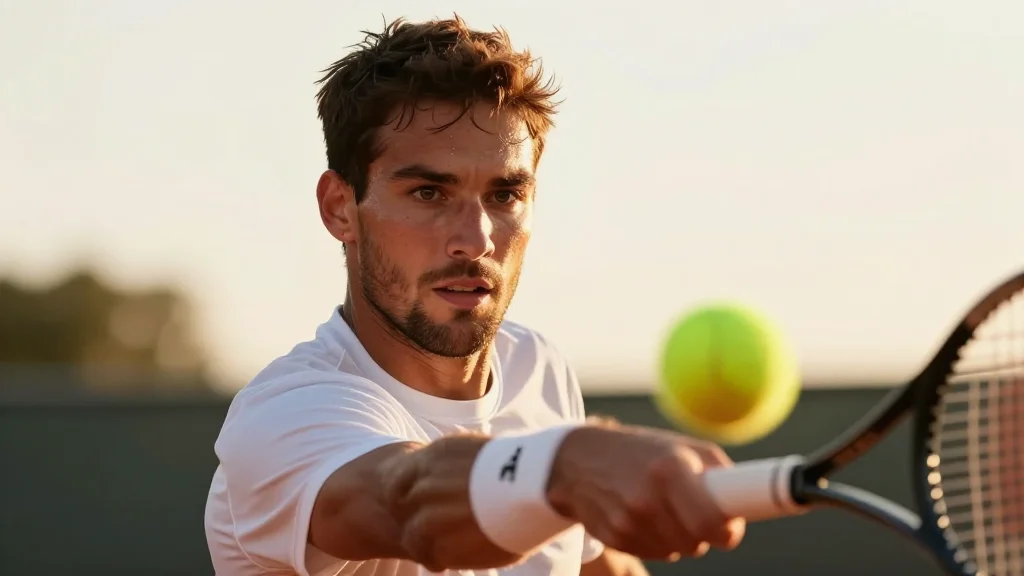
Sinner’s Mastery Mindset Fuels Monte Carlo Victory, Sets Clay Benchmark

Why It Matters
Sinner’s emphasis on a mastery mindset reframes the conversation around human potential from innate talent to cultivated skill. In an era where performance metrics dominate, his example shows that deliberate practice and psychological resilience can be systematically developed, offering a roadmap for professionals in any high‑stakes domain. The broader lesson extends to education, corporate leadership, and creative industries, where short‑term results often eclipse long‑term growth. By spotlighting a world‑class athlete who deliberately built his mental framework before achieving fame, the story challenges institutions to embed process‑oriented training at early stages, potentially raising overall performance standards.
Key Takeaways
- •Sinner defeated Alcaraz to win the Monte Carlo Masters on April 12
- •He attributes the win to a "mastery mindset" of deliberate practice and mental resilience
- •Sports psychologist Jeff Greenwald calls Sinner the "poster child for mastery"
- •Sinner’s next major test is the French Open, where he aims for a career Grand Slam
- •The mindset shift highlights a replicable model for peak performance across fields
Pulse Analysis
Sinner’s victory is more than a tennis headline; it signals a cultural shift toward process‑centric excellence. Historically, elite athletes have been celebrated for raw talent, but the modern performance economy rewards those who can sustain high output under pressure. Sinner’s early adoption of a mastery mindset—prioritizing incremental improvement over immediate wins—mirrors trends in tech and finance where continuous learning loops replace one‑off breakthroughs. Companies that embed similar philosophies see higher employee engagement and innovation rates, suggesting a cross‑industry transferability of Sinner’s approach.
From a competitive dynamics perspective, Sinner’s mindset could force rivals to reevaluate their mental training regimes. Alcaraz’s recent wrist injury and Sinner’s psychological edge may catalyze a broader adoption of sports psychology services, mirroring how data analytics reshaped tennis strategy a decade ago. If Sinner captures Roland Garros, the narrative will likely cement the mastery mindset as a decisive factor in elite sport, prompting sponsors and academies to invest in mental resilience programs.
Looking forward, the key question is scalability. While Sinner’s personal discipline is evident, replicating it across diverse populations requires structured curricula, mentorship, and cultural buy‑in. Organizations that can translate his individualized process into systematic training will likely see a measurable uplift in performance metrics, echoing the broader human potential agenda of turning mindset into measurable outcomes.
Sinner’s Mastery Mindset Fuels Monte Carlo Victory, Sets Clay Benchmark
Comments
Want to join the conversation?
Loading comments...